Brain Death: Do We Know Enough?


The following is my article published in the National Catholic Bioethics Quarterly (Spring 2016): 55-59. © 2016 The National Catholic Bioethics Center Quarterly.

Abstract. Every year, people make decisions based on trust in the certainty of diagnoses of brain death. These decisions range from signing an organ donation card to withdrawing life support from a loved one. Two recent developments have revived concerns about medical standards for determining brain death. One is a recent study on variability in brain death policies in the United States; the other is the filing of a federal lawsuit to rescind the death certificate of Jahi McMath, a teenager who appears to have survived a 2013 declaration of brain death. The author examines these developments and asks whether trust in the certainty of brain-death determinations is currently warranted.

Nancy Valko, RN, ALNC, is a legal nurse consultant and a spokesperson for the National Association of Prolife Nurses. A registered nurse since 1969, she has worked mostly in critical care as well as hospice, oncology, and home health. She is a past co-chair of the St. Louis Archdiocesan Respect Life Committee. She received the People of Life award from the US Conference of Catholic Bishops in 2015.

—————————————————————————

Two recent developments on the controversial issue of brain death have revived concerns about the medical standards currently used for determining brain death. One was the publication of a JAMA Neurology study of 508 US hospitals, titled “Variability of Brain Death Policies in the United States,” by Dr. David Greer et al., which found major variations in their policies for determining brain death. The study concluded that “hospitals should be encouraged to implement the 2010 AAN [American Academy of Neurology] guidelines to ensure 100% accurate and appropriate determination of brain death.”1

The other development surrounds a federal lawsuit pushing to rescind the death certificate of Jahi McMath. McMath, a teenager from Oakland, California, was declared brain dead two years ago but is apparently still surviving and may be showing some signs of improvement.2

Every year, people make decisions—to withdraw life support from loved ones or to sign organ donation cards—based on trust in the certainty of a diagnosis of brain death. Is such trust warranted?

A Short History of US Brain-Death Policies

Although the concept of irreversible coma was first introduced in 1959, the cur- rent legal and medical concept of brain death gained widespread acceptance after the publication, in 1968, of “A Definition of Irreversible Coma,” the report of the Ad Hoc Committee of the Harvard Medical School to Examine the Definition of Brain Death.

The stated purpose of the Harvard report was “to define irreversible coma as a new criterion for death,” because new technology such as ventilators could maintain a patient “whose heart continues to beat but whose brain is irreversibly damaged.” The committee noted that “obsolete criteria for the definition of death can lead to controversy in obtaining organs for transplantation.” The Harvard paper laid out four conditions for a diagnosis of brain death: (1) unreceptivity and unresponsitivity, (2) no movement or breathing, (3) no reflexes, and (4) a flat electroencephalogram, providing confirmatory data that should be utilized “when available.”3

Starting in the early 1970s, various state legislatures and courts acted to turn brain death into a legally recognized standard for determining death by loss of all brain function. Patients declared brain dead could then be removed from life support measures, like mechanical ventilation, without legal ramifications or their organs could be harvested while their hearts were still beating and a ventilator kept their lungs functioning.

In 1981, the US Uniform Determination of Death Act formally added “irreversible cessation of all functions of the entire brain, including the brain stem” to the legal definition of death.4 However, while the act set the general legal standard for determining brain death, it did not dictate the medical criteria. Many state laws  just cite “accepted medical standards” for determining brain death. Over the years, efforts were made to standardize these medical criteria, most recently by the AAN guidelines established in 2010.5

Not All Hospitals Comply with the Guidelines

In an interview with Medscape, David Greer, the lead author of the study in JAMA Neurology, expresses concern that not all of the 508 US hospitals surveyed were “100% compliant” with the 2010 guidelines by the American Academy of Neurology. Of the hospitals surveyed, the Medscape article notes that only “about a third of policies (33.1%) required specialist expertise in neurology or neurosurgery, but 150 policies had no mention of who could perform the determination.” 6 The article also notes that not all hospital policies require testing of lower brainstem function to establish the loss of all brain function, and not all comply with other AAN recommendations such as establishing the cause of the brain dysfunction, the absence of effects of specific medications like sedatives, and crucial aspects of the apnea test.

One of the potentially disastrous consequences of these inconsistencies in hospital testing policies is that a person can be treated as a living patient at one hospital but declared brain dead at another.

Would full compliance with the 2010 guidelines “ensure 100% accurate and appropriate determination of brain death”? Probably not, given the findings of the 2010 report updating the AAN guidelines.7 Eelco Wijdicks et al. observe that “many of the details of the clinical neurologic examination to determine brain death can- not be established by evidence-based methods. The detailed brain-death evaluation protocol that follows is intended as a useful tool for clinicians. It must be emphasized that this guidance is opinion-based. Alternative protocols may be equally informative.” They also note that there is “insufficient evidence” to determine such crucial standards as “the minimally acceptable observation period to ensure that neurologic functions have ceased irreversibly,” “the comparative safety of techniques used for apnea testing,” and the accuracy of “newer ancillary tests [in confirming] the cessation of function of the entire brain.”8

The significance of these criteria is highlighted in a 2012 article, “A Survey of American Neurologists about Brain Death: Understanding the Conceptual Basis and Diagnostic Tests for Brain Death,” by Ari Joffe et al.9 The authors note, “It has been shown that some brain functions continue after accurately clinically diagnosed BD (brain death), including EEG activity in 20%, evoked potential activity in 5%, and hypothalamic neuroendocrine function in > 50%. These activities may be explained by the finding that continued brain blood flow occurs in 5–40% of BD patients, and pathologic destruction of brain does not occur in more than 40% of BD patients (even after over 24–48 hr. of maintained circulation).”10 Thus there seems to be reasonable cause for concern whether even 100 percent compliance with AAN guidelines would completely ensure the accuracy of a diagnosis of brain death or the validity of some critical brain-death tests.

Jahi McMath

In December 2013, thirteen-year-old Jahi McMath suffered cardiac arrest after undergoing surgery for sleep apnea at Children’s Hospital Oakland, in California. Although doctors managed to resuscitate her, they declared McMath brain dead and prepared to remove the ventilator. Hoping she might recover, however, the family insisted that it remain in place.

After several court battles, a judge permitted McMath’s family to transfer her to a facility in New Jersey that allowed the continued use of the ventilator. Two years later, McMath’s family is still fighting, suing in federal court have her death certificate rescinded.11 According to the family’s attorneys, “Jahi does not fulfill California’s statutory definition of death, which requires the irreversible absence of all brain function, because she exhibits hypothalamic function and intermittent responsiveness to verbal commands.” 12

A ruling to rescind McMath’s death certificate would have profound implications for the medical and legal determination of brain death, especially since her initial diagnosis was confirmed by multiple doctors in a well-respected hospital.

McMath is not the first person to survive for a prolonged time after a brain- death diagnosis. Alan Shewmon, MD, studied approximately 175 cases of long-term survival after a declaration of brain death, for periods ranging from one week to more than fourteen years.13 In other cases, pregnant women declared brain dead have been able to gestate unborn babies for weeks or months until a healthy delivery.14

Most concerning of all are cases like that of Zach Dunlap, a young man from Oklahoma who was declared brain dead after an all-terrain vehicle accident in 2008. Testing showed no blood flow to his brain, and Dunlap was being considered for organ donation when a relative discovered a physical response from Zach. Four months later and already making plans to return to work, Dunlap appeared on NBC’s Today show, where he told hosts that he heard a doctor say he was dead, and it “just made me mad inside.”15

Alarmingly, there have been other reported “near misses” like Dunlap’s that also did not lead to rigorous medical investigations to determine what went wrong with the initial brain-death determinations. Yet experts continue to maintain that there is “no documented report of patients regaining brain function after being declared brain dead,” although some allow that “maybe mistakes happened and they weren’t reported.”16

Persistent Controversies

Controversy about brain death has simmered for years in bioethical and medical circles. Influential  experts such as Robert Truog and Franklin Miller argue that doctors should drop the rule requiring that people be declared dead before vital organs are taken, and instead merely obtain “valid informed consent for organ donation from patients or surrogates before the withdrawal of life-sustaining treatment in situations of devastating and irreversible neurologic injury.”17

The Catholic Church has been involved in the controversy over brain death since the Harvard report cited Pope Pius XII’s 1957 address “The Prolongation of Life” to support its recommendations.18 Since then, there have been several papal statements and conferences on the determination of brain death. Collectively, these are widely seen to indicate a cautious acceptance of the concept of brain death that is based on the assurance of medical certainty to provide moral certainty.

When the issue is death, medical ethics must be backed up by accurate medical facts. In the case of the legal and medical definition  of brain death as “irreversible cessation of all functions of the entire brain, including the brain stem,”19 medical science, not philosophical speculation, must provide the proof beyond a reasonable doubt.

When cases like those of McMath and Dunlap are routinely dismissed instead of rigorously investigated to establish the facts, medical certainty is not achieved and medical integrity is undermined. In addition, when hospitals set their own standards and policies for determining brain death without external accountability, lives—as well as the essential and necessary trust in the health care system—can and possibly will be lost.

Footnotes:

1. David M. Greer et , “Variability of Brain Death Policies in the United States,” JAMA Neurology 73.2 (February 1, 2016): 213, doi: 10.1001/jamaneurol.2015.3943.3943. The updated AAN guidelines are presented in Eelco F. M. Wijdicks et al., “Evidence-Based Guideline Update: Determining Brain Death in Adults—Report of the Quality Standards Subcommittee of the American Academy of Neurology,” Neurology 74.23 (June 8, 2010): 1911–1918.

2. McMath et v. State of California et al., no. 4:2015cv06042 (N.D. Cal. Dec. 23, 2015); see David DeBolt and Malaika Fraley, “Jahi McMath: Family Sues in Federal Court to Have Brain-Dead Girl Declared Alive,” Mercury News, December 24, 2015, http://www.mercurynews.com/.

3. Ad Hoc Committee of the Harvard Medical School to Examine the Definition of Brain Death, “A Definition of Irreversible Coma,” JAMA 6 (August 5, 1968): 337, doi: 10.1001/jama.205.6.337. P. Mollaret and M Goulon identified irreversible coma in their essay “Le Coma Dépassé (memoire preliminaire),” Revue Neurologique 101.1 (July 1959): 3–15.

4.National Conference of Commissioners on Uniform State Laws, Uniform Determination of Death Act, approved 1980/1981, http://www.uniformlaws.org/.

5. Allison Gandey, “New Brain Death Guidelines Issued,” com, June 10, 2010, http://www.medscape.com/.

6. Pauline Anderson, “Not All Hospital Brain Death Policies Comply with Guidelines,” com, December 30, 2015, http://www.medscape.com/, emphasis added.

7. Wijdicks et al , “Evidence-Based Guideline Update.”

8. Ibid. 1911, 1914, emphasis added.

9. Ari Joffe et , “A Survey of American Neurologists about Brain Death: Understanding the Conceptual Basis and Diagnostic Tests for Brain Death,” Annals of Intensive Care 2.1 (February 17, 2012): 1–8, doi: 10.1186/2110-5820-2-4.

10. Ibid, 4

11. DeBolt and Fraley, “Jahi McMath”

12. Winkfield v. Children’s Hospital Oakland, no. RG-15760730, first amended com plaint (CA, Ct. Alameda County, Nov. 4, 2015), para. 36, original emphasis.

13. Alan Shewmon, “Chronic ‘Brain Death’: Meta-Analysis and Conceptual Con- sequences,” Neurology 51.6 (December 1998): 1538–1545.

14. Majid Esmaeilzadeh et , “One Life Ends, Another Begins: Management of a Brain-Dead Pregnant Mother—A Systematic Review,” BMC Medicine 8.74 (November 18, 2010): doi: 10.1186/1741-7015-8-74.

15. Natalie Morales, “‘Dead’ Man Recovering after ATV Accident,” NBC News, March 24, 2008, nbcnews.com/.

16. Pauline Anderson, “Not All Hospital Policies ”

17. Robert Truog and Franklin G. Miller, “The Dead Donor Rule and Organ Transplantation,” New England Journal of Medicine 359.7 (August 14, 2008): 675, doi: 10.1056/NEJMp0804474.

18. Ad Hoc Committee of Harvard Medical School, “Definition of Irreversible Coma,” 88 note 1, citing Pius XII, “The Prolongation of Life,” Address to an International Congress of Anesthesiologists (November 24, 1957), The Pope Speaks 4 (Spring 1958): 393–398.

19. Commissioners on Uniform State Laws, “Uniform Determination of Death Act,” sec 1.
Caring for Difficult People

As nurses, we have the privilege to get to know and help all kinds of people we might never have had a chance to meet otherwise on a very personal basis. Sometimes we care for them during some of the most stressful times in their lives.

Doctors and nurses are supposed to treat everyone according to the highest medical and ethical standards without regard to race, gender, socioeconomic status, nationality, etc. but, like everyone else, we can find some individuals particularly difficult.

One incident that changed my perspective on caring for difficult people happened many years ago when I was a young nurse.

I used to pride myself on keeping my cool in any tense situation until the day I almost lost it with a difficult patient.

A young man with drug addiction was admitted to our floor and he incessantly and loudly demanded more pain medication from all his doctors and nurses. No one could reason with him.

Then one day, he came up to me and screamed in my face. I couldn’t calm him and, despite my best intentions, I could feel my anger rise and my face turn red.

Suddenly, an unexpected thought flashed through my mind: “This is the face of Jesus!” At that moment, I was looking directly into this young man’s eyes and I felt a wave of empathy.

Although I did not say a word, the young man’s face suddenly changed and he stepped back almost as if he had been struck. He stopped yelling and started talking. In the end, he actually apologized for his behavior and admitted that he needed help. He was never verbally abusive to any of us after that.

I was stunned by this remarkable change and it changed my perspective. As I tell younger nurses now, it is usually easy to care for pleasant people but it is the difficult ones that need us the most and who often can teach us how to really respect every life.

Perhaps there is a lesson here not just for nurses but for everyone in this current climate of anger and division in our society: When we respect and recognize the intrinsic value in every human being, we really do have a chance to achieve a more just and peaceful society.

A Surprise Wedding Present

As most of you know, my daughter Marie died by suicide in 2009. I believe in an all merciful God who loves my daughter even more than I ever could. I trust in Him and I know that my Marie is with Him.

However, I knew that our whole family and especially Marie’s little sister Joy would especially miss her when Joy was planning her wedding this year.

I don’t usually pray for something personal except for help with more wisdom, patience, etc. but  Joy and Marie were especially close and Joy had been Marie’s maid of honor in 2005. The two of them even lived together for the last few months of Marie’s life.

When Joy was younger, the three of us would often talk about Joy’s possible future wedding  and Marie would tease Joy about probably becoming a” bridezilla”. Marie promised that she would personally keep her little sister in line if that happened.

So I knew that there could be a shadow over Joy’s happiness at her wedding and I prayed for a sign that Marie was at peace.

However, I was totally stunned when, the week before Joy’s wedding, a package came from Kentucky with a carefully wrapped, thirty year old letter inside. The package was from  Marie’s older but then close friend Stephanie who had moved away in 1983.

Stephanie wrote that she just happened to find a letter Marie had written to her at age 7 and had to send it to me. The letter was even typewritten! Who knew that Marie could figure out a typewriter?

The letter contained a lot of spelling mistakes but it was hilarious to read Marie’s description of her life at age 7. Marie even wrote down each family member’s age which told us how old she was at the time. (See photo: Marie’s letter at age 7 to Stephanie)

Marie wrote about how her older brother was nice and mean sometimes. Marie also wrote about her little sister Joy and how she ate a “dede” bug. All I could do was smile.

What a wonderful wedding present for Joy and all of us!  At the wedding, we all felt that Marie was there and celebrating with us.

As my late mother often used to say, “God is good!”

Here is the proof:

Joy and Chris wedding pic favorite

Joy and Chris May 21, 2016


Canada and Assisted Suicide for Psychiatric Patients

My first husband and the father of my children was a caring man and dedicated psychiatrist who himself eventually became disabled by mental illness. Early in our marriage, I helped him write his medical journal articles and we planned to eventually include me in his psychiatric practice to work with the families of his patients. As a nurse, I always believed that families were ideally the best support system for patients and our goal was to improve the care and outcomes of people with mental illness.

Tragically, my husband’s mental illness worsened despite intensive treatment. He ultimately abandoned our family and lived the next 26 years in and out of hospitals and assisted living places before he died of natural causes in 2014.

Thus I have a unique perspective on the legal, medical and personal aspects of mental illness.

At one point, a family member sympathetically suggested that it might be better for everyone if he committed suicide. I was horrified. You don’t give up on sick people and I told this person that I would do anything in my power to stop him if he tried to kill himself. Suicide would be the ultimate tragedy.

Canada and Its New Assisted Suicide Law

In February 2015, the Canadian Supreme Court ruled unanimously in the Carter v. Canada case to legalize physician-assisted suicide for competent, consenting adults whose suffering is due to a “grievous and irremediable” medical condition and gave Parliament a year to develop a regulatory regime along these “parameters.”

The Parliamentary Special Joint Committee on Physician-Assisted “Dying” suggested that the “grievous and irremediable” criterion includes nonterminal medical conditions, including psychiatric disorders.

The federal government’s Bill C-14, on the other hand, defined “grievous and irremediable” as an “advanced state of irreversible decline in capabilities” in a person for whom “natural death has become reasonably foreseeable.”  The Senate ultimately passed the bill but the controversy about assisted suicide for psychiatric patients is still raging.

In a June 21, 2016 commentary in the Canadian Medical Association Journal “Should assisted dying for psychiatric disorders be legalized in Canada?”, authors Scott Y.H. Kim MD PhD and Trudo Lemmens LLM DCL warn against this.

As they note:

In Belgium and the Netherlands, medical assistance in dying has been provided to people with chronic schizophrenia, posttraumatic stress disorder, severe eating disorders, autism, personality disorders and even prolonged grief.

The authors conclude that:

Because of the necessarily broad criteria used to regulate assisted dying (in Canada), legalizing the practice for psychiatric conditions will likely place already vulnerable patients at risk of premature death.

However, others like Belgium psychiatrist Joris Vandenberghe, MD, PhD disagree:

“I think the current approach taken by the Canadian government is a bit too strict because it doesn’t fully recognize the enormous impact that psychiatric disorders can have on patients,” Dr Vandenberghe told Medscape Medical News. (Emphasis added)

However, even Dr. Vandenberghe recognizes the problems while still calling for more “safeguards”:

“I am generally not opposed to our euthanasia legislation and agree that patients suffering from psychiatric conditions should not be excluded from our legislation. However, extra precautions are urgently needed.

“I’m not happy with the way things work here [in Belgium]. Sometimes euthanasia is used with insufficient reluctance on the part of the healthcare professionals involved. We’re missing opportunities for treatment, and we need more safeguards,” said Dr. Vandenberghe.

So for me, the answer lies in a thorough evaluation of a patient prior to euthanasia. There really is no time pressure in psychiatric disorders, and if you have a multidisciplinary committee involved in the evaluation, you can take care of lot of the concerns we now have about euthanasia in the setting of psychiatric illness.”

The reality is that very few psychological or psychiatric referrals are even now made for anyone considering assisted suicide either in the US or in Europe. The answer is not more “safeguards” for assisted suicide practitioners to disregard while enjoying virtual legal immunity but rather an emphatic “No!” from the public as well the legal and medical systems. We also need an unbiased media to publicly expose the real facts about legalized medical killing.

 Conclusion

I have seen both the legal and medical systems often fail people with mental illness like my ex-husband who desperately need treatment and safety.

On the medical side, I begged for direction from my ex-husband’s doctors about what I could do to help him but I was told that there was nothing I could do or not do since the doctors were seeing him regularly. I was not allowed to even know his diagnosis without his permission.

On the legal side, I had problems getting supervised visitation even after a hostage situation.  Due to almost constant harassment, I had multiple orders of protection violated without adequate legal response. And despite being on mental illness disability, my ex-husband was allowed to file and lose several frivolous lawsuits-until he ran out of money.

It was a heartbreaking situation.

However, I always hoped that my ex-husband would improve so that he could at least have a better relationship with his children. Even though that did not happen, I am grateful that he did not die by suicide, assisted or otherwise.

Unfortunately, my family’s experience is not unique among families with a member who is mentally ill.

If our medical and legal systems are already often failing people with mental illness and their families, how can we allow them the power to “assist” our loved ones’ suicide?

That would be the ultimate betrayal of an already stigmatized and vulnerable group of people.

Protecting Abortion, Ignoring Safety

This is the official statement of the National Association of Pro-life Nurses on the Whole Women’s Health v. Hellerstatd decision of the U.S. Supreme Court:

The National Association of Pro-life Nurses joins the chorus of astonished Americans who are in disbelief that the Supreme Court of the United States has turned their backs on American women who procure abortions in facilities which do not meet the same health and safety standards as other facilities performing similar invasive procedures.

In Whole Women’s Health V. Hellerstadt the Supreme Court has once again sacrificed the health and well-being of women to political correctness in its 5-3 decision. This is the real War on Women. As the American Association of Pro-Life OB Gyns says (see statement below), it is Supreme Stupidity as it drastically reduces the safety of abortion across the United States. If the Texas law and similar other state laws across the country incur an “undue burden” on the abortion industry, do not similar laws governing the safety and health standards of other free-standing clinics also place an undue burden on the operators thereby negating the justification of such laws?

This is a sad day for the health of Americans everywhere with its far reaching implications and for those of us in the medical profession who are forced to observe these tragic decisions. Such is the state of political correctness in America today.

For Immediate Release from The American Association of Pro-Life Obstetricians and Gynecologists:   

SUPREME STUPIDITY:  Common Sense Health and Safety Requirements for Elective Abortion Struck Down by Supreme Court.

As a professional body of 4000 physicians and reproductive health care professionals,   the American Association of Pro-Life Obstetricians and Gynecologists exists to defend both the lives of pregnant women and their unborn children.   AAPLOG is greatly concerned about the impact of the Supreme Court decision in Whole Women’s Health v. Hellerstadt,  the Texas Clinic Regulations case.    By striking down common sense health and safety regulations that apply to all standard surgical procedures,   the Supreme Court has not only taken away the ability of State Governments to regulate the practice of medicine within their borders but has also made elective abortion mills exempt from controls of any kind.

This politically motivated decision  by the Supreme Court will drastically reduce the safety of abortions across the country, as now abortion clinics and abortionists will be accountable to no one for the conditions inside their walls.   Surgical abortion carries all the risks of any other surgery, and offices which perform abortion should have to meet the same safety standards as those who perform any other comparable surgery.   Medical abortion frequently leads to severe hemorrhage resulting in the need for emergency surgery and transfusions.   Today’s Supreme Court ruling means that abortion clinics across the nation are now permitted to be incapable of responding to these known and predictable surgical emergencies.

The people of Texas clearly wanted to protect women who undergo elective abortion from the Gosnell-type situations in which the woman’s life is put in jeopardy by substandard conditions.   The 5 unelected Justices in the Supreme Court today prevented the State of Texas from regulating the practice of medicine within Texas.   

Abortionists do not face the kind of accountability and safety environments in which all other physicians operate.   Today the Supreme Court made abortionists immune from peer accountability and immune from state regulation.    This lack of accountability legally minimizes the safety of women undergoing abortion procedures.

Those who promote elective abortion as a “medical” procedure desire the status of medicine, without the responsibility of patient safety or accountability.  This Supreme Court decision puts abortionists and their substandard practices above the law.   This decision will effectively allow abortionists to practice without meeting basic safety requirements.   If the Supreme Court really cared about women’s health, this was an exceedingly stupid decision.

 The American Association of Pro-Life Obstetricians and Gynecologists is a professional organization of over 4000 Reproductive Health Care physicians, midwives and others across the country.   AAPLOG exists to provide an evidence based defense of both the pregnant woman and her unborn child.  

media@aaplog.org

Communciations@aaplog.org

Office:  202 230-0997

My Submission to the New Zealand Parliment on Physician-assisted Suicide

On January 30, 2016, I wrote this submission to the New Zealand Parliament’s Health Committee. Today I received an email that it was accepted.

Here is my submission:

Please Reject Physician-assisted Suicide by Nancy Valko, RN ALNC

Nancy Valko, RN ALNC

I have been a registered nurse in the US since 1969. After working in critical care, hospice, home health, oncology, dialysis and other specialties for 45 years, I am currently working as a legal nurse consultant and volunteer. Over the years, I have cared for many suicidal people as well as people who attempt suicide.

I have served on medical and nursing ethics committees, served on disability and nursing boards. I have written and spoken on medical ethics-especially end of life issues-since 1984.

Submission

marievalko Picture of Marie Valko 1979-2009

As a nurse and the mother of a suicide victim, I am alarmed to learn that New Zealand is considering the legalization of physician-assisted suicide. I beg you to uphold the legal and ethical standard that the medical profession must not kill their patients or help them kill themselves. Suicide is a tragedy to be prevented if possible, not a civil right. I am also willing to make an oral submission to the New Zealand parliament.

My Daughter Marie Killed Herself Using an Assisted Suicide Technique

In 2009, I lost a beautiful, physically well 30-year-old daughter, Marie, to suicide after a 16-year battle with substance abuse and other issues. Her suicide was like an atom bomb dropped on our family, friends and even her therapists.

Despite all of our efforts to save her, my Marie told me that she learned how to kill herself from visiting suicide/assisted suicide websites and reading Derek Humphry’s book Final Exit. The medical examiner called Marie’s suicide technique “textbook final exit” but her death was neither dignified nor peaceful.

Marie was not mere collateral damage in the controversy over physician-assisted suicide. She was a victim of the physician-assisted suicide movement, seduced by the rhetoric of a painless exit from what she believed was a hopeless life of suffering.

Suicide Contagion

Adding to our family’s pain, at least two people close to Marie became suicidal not long after her suicide. Luckily, these two young people received help and were saved, but suicide contagion, better known as “copycat suicide”, is a well-documented phenomenon. Often media coverage or publicity around one death encourages other vulnerable people to commit suicide in the same way.

Study Shows Legalizing Physician-Assisted Suicide is Associated with an increased rate of Total Suicides

A recent article in the Southern Medical Journal titled “How Does Legalization of Physician-Assisted Suicide Affect Rates of Suicide?” came to these conclusions:

“Legalizing PAS has been associated with an increased rate of total suicides relative to other states and no decrease in nonassisted suicides. This suggests either that PAS does not inhibit (nor acts as an alternative to) nonassisted suicide, or that it acts in this way in some individuals but is associated with an increased inclination to suicide in other individuals.”

The Health and Economic Costs of Suicide

My Marie was one of the almost 37,000 reported US suicides in 2009. In contrast, only about 800 assisted-suicide deaths have been reported in the past 16 years in Oregon, the first state to legalize physician-assisted suicide. According to the Centers for Disease Control (CDC) suicide was the 10th leading cause of death for Americans in 2012, with “More than 1 million people reported making a suicide attempt in the past year” and “More than 2 million adults reported thinking about suicide in the past year.” The CDC estimates that suicide “costs society approximately $34.6 billion a year in combined medical and work loss costs”, not to mention the emotional toll on families.

Obviously our real health-care crisis here is a staggering and increasing rate of suicides, not the lack of enough assisted suicides.

Brittany Maynard

There was a media frenzy in October 2014 when of Brittany Maynard, a young newlywed woman with a brain tumor, announced plans to commit physician-assisted suicide on November 1 and raise money to have physician-assisted suicide legalized in all US states. There was an immediate and unprecedented media frenzy surrounding Ms. Maynard’s tragic story that routinely portrayed her pending assisted suicide as “heroic” and even counting down the days to her suicide. Personally, I thought this looked like a crowd on the street shouting for a suicidal person on a window ledge to jump.

In the end, Brittany hesitated for a day before she went through with her pledge to take the lethal overdose.

Now, assisted suicide supporters even deny that physician-assisted suicide is suicide, insisting that media stories use euphemisms like “aid-in-dying” and “death with dignity” in cases like Ms. Maynard’s to make assisted suicide more palatable to the public. However, this defies common sense when the definition of suicide is the intentional taking of one’s own life.

Physician-assisted Suicide and Medical Discrimination

I have been a registered nurse for 46 years, working in intensive care, oncology, hospice and home health among other specialties. Personally and professionally, I have cared for many people who attempt or consider killing themselves.

Some of these people were old, chronically ill or had disabilities. Some were young and physically healthy. A few were terminally ill. I cared for all of them to the best of my ability without discrimination as to their condition, age, socioeconomic status, race or gender. I will do anything to help my patients — except kill them or help them kill themselves.

Suicide prevention and treatment works, and the standards must not be changed just because some people insist their desire for physician-assisted suicide is rational and even a civil right

Tolerating Evil

Years ago, one of my daughters was caught after she did something she knew was wrong. “But it looked so good!” she wailed. I told her that if evil looked like it really was, no one would choose it.

I thought of this incident when I read Kathleen Parker’s June 10, 2016 USA op-ed titled “Freedom to kill and permission for sick people to die”.

In the article, Ms. Parker reveals her struggle:

“Here, I should confess my own ambivalence. Basically, I’d like to have the means to end my own life on my own terms when my body has clearly called it quits. I’m just not sure I like the idea of the state and doctors lending a hand.”

Many people can find physician-assisted suicide alluring when they ponder their own potential demise. As a former hospice nurse myself, I recognized this in some of my patients even before assisted suicide was legalized. However, with care and treatment, we were able to help these patients live as well as possible before death. And I never saw a patient go on to die by suicide or assisted suicide.

It is a myth that a personal choice for assisted suicide will not affect others or have far-reaching consequences.

Ms. Parker’s conclusion recognizes this:

“As more than a dozen other states consider similar legislation, it isn’t irrational to wonder whether, in tampering with our medical culture of healing, we aren’t inviting unintended consequences that we’ll live — or die — to regret.”

The truth of her conclusion became starkly obvious when a few days after California’s new assisted suicide law took effect,  one doctor immediately opened up a dedicated assisted suicide clinic in San Francisco.

Dr. Lonnie Shavelson, 64 and a long-time supporter of assisted suicide, was an emergency room doctor for 29 year and then spend 7 years at an Oakland clinic for immigrants and refugees before taking a 2 year break.

His new assisted suicide business could be quite lucrative. Although Medicare will not pay for assisted suicide costs, Shavelson says he will charge $200 for an initial patient evaluation. If the patient is deemed qualified under California law, Shavelson said he would charge another $1800 for more visits, evaluations and legal forms..

Like the past so-called “back alley” abortionists, Shavelson defends his business by claiming that “..the demand (for assisted suicide) is so high, that the only compassionate thing to do would be to bring it above ground and regulate it.”

We cannot afford to be ambivalent or tolerant about evil, whether it is abortion, assisted suicide, terrorism, etc. Evil never limits itself because evil always seeks to expand unless it is stopped

We only have to look at Canada, the Netherlands, Belgium and other countries where assisted suicide has already expanded to direct euthanasia and, in some of those countries, even without consent and for virtually any psychological, emotional or physical condition.

“If We are Blessed with Children…”

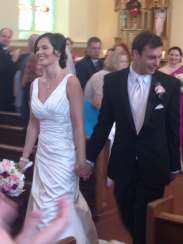
Joy and Chris were married May 21, 2016. Joy is my daughter and both families were thrilled when Chris proposed. The ceremony was solemnly and beautifully performed at Immaculate Conception Church in Dardenne Prairie, Mo. where they will live. The wedding reception was great fun and went off without a hitch.

But one of the most moving times for me first came at Joy’s bridal shower. Chris was videotaped answering questions like “What do you like most about Joy?” for a bridal shower game played by the guests. Points were given for every right answer Chris and Joy predicted the other would say.

One question was “How many children do you want?” Chris answered “If we are blessed with children, we will take them one at a time.”

That answer caused a stir among the young women at the shower. One remarked that you could tell that Joy and Chris went to Natural Family Planning classes during the Pre-Cana preparation for their marriage.

Actually, they did and they learned about fertility awareness to naturally achieve or postpone pregnancy. Such classes are also available to people of any religion or none at all through groups like the Couple-to-Couple League. There are even fertility awareness methods to find the causes and treat infertility through Naprotechnology.

It is common today to hear newlywed couples talk about not necessarily having children at all or postponing off having children indefinitely for various reasons like finishing school, achieving financial stability or establishing careers. It is as if children are an just another option rather than a blessing.

With the myriad of glossy contraceptive commercials, free contraceptives under Obamacare promoted as “reproductive health” and sex ed courses in schools focused on how to avoid pregnancy and STDs, it is not surprising that many of today’s young adults also often view sex as recreation or “tryouts” rather than a physical/emotional union that can produce children.

Joy and Chris are also very health conscious. That is another big reason they were attracted to Natural Family Planning. They have seen the damage caused by abortion, the risks of hormonal contraception, single parents who are struggling,  and couples coping with infertility. They take marriage and childbearing seriously.

But best of all, they also see their adorable nieces and nephews and friends’ children growing up with loving, committed parents who are wonderful role models. This another reason they are excited by the prospect of parenthood.

Life is a challenge with many surprises and marriage requires a lot but I salute Joy and Chris for trying to make a great start!


“34% of ‘Pro-Choice’ Women Who See This Viral Video Turn Against Abortion”

After my daughter Karen who had both Down Syndrome and a severe heart defect died in 1983, I never discouraged people from asking questions. Any questions. I felt the answers to the questions could educate people about the enormous gains made by people with Down Syndrome and how families and their children with disabilities could not only survive but thrive.

But one day when a nice woman asked if I had prenatal testing and what I would have done if I knew about my daughter’s conditions before birth, I changed my answer.

Instead of talking about Down Syndrome, I asked the woman if she knew how abortions are done. When she answered no, I asked her if she would want to know. Very tentatively, she said yes.

So I simply described the basic procedures as they were then done in the 1980s in each of the 3 trimesters of pregnancy. I just used simple clinical terms to describe each procedure in a short period of time.

However, this woman’s reactions were stunning. She was totally horrified and blurted out “You couldn’t do that to your baby!” She admitted that she had no idea how abortions were done before this.

Exactly the point. The real issue is not how wanted a baby is or how “perfect” he or she must be but rather how a baby must be horribly killed to “solve” a problem.

This woman’s reaction opened my eyes to the power of the truth, even if that truth is considered “politically incorrect.”

Today we have the power of the internet and other social media. Now a former abortionist is changing minds and hearts through a video about abortion on the internet that has been watched over 42 million times so far.

Please see the LifeNews.com article and video titled “34% of “Pro-Choice” Women Who See This Viral Video Turn Against Abortion”. And please share this article and video with others. Doing this could not only change other minds and hearts but, most importantly, even help save a life!

“Flash of light” Not Needed to Prove Conception


In a May 23, 2016 National Catholic Register article ” Contrary to Reports, There is No Flash of Light at Conception”, writer Stacy Trasancos takes some people who wrote about the amazing research article and video to task  for exaggerations:

“At conception, there is no flash of light, no burst of fireworks, no sparks flying, no fiat lux, no scientific proof of ensoulment, no vindication of doctrine by this research. There is a misunderstanding.”

She is right that claims of ensoulment  or actual “fireworks” in the mother are wrong and inaccurate.

But while I understand Ms. Trasancos’ point about  the over excitement by some writers, the phenomenon itself actually is a pretty big deal.

I am a nurse, not a scientist, but I read the scientific article myself  before I wrote a recent blog on the research.

The researchers were not trying to make a theological or philosophical point but rather reporting a testing phenomenon:

“We monitored calcium and zinc dynamics in individual human eggs using selective fluorophores following activation with calcium-ionomycin, ionomycin, or hPLCζ cRNA microinjection. These egg activation methods, as expected, induced rises in intracellular calcium levels and also triggered the coordinated release of zinc into the extracellular space in a prominent “zinc spark.”

The truly relevant point is that there IS a moment of  “human egg activation”. Using fluorescence to show a chemical reaction accompanying that moment of activation enhances the reality of  when life begins-a fact that Justice Blackmun in the Roe v. Wade abortion decision said was unresolvable because so many people disagreed.

As I wrote about years ago,  the photos of the “sperm injection” mode of IVF  (in vitro fertilization) developed over 20 years ago and pre-implantation genetic diagnosis (PGD)  before implantation of the new life back into the mother should have been proof enough of when life begins, even for a Supreme Court justice.

No fluorescence or sparks necessary.