My Submission to the New Zealand Parliment on Physician-assisted Suicide

On January 30, 2016, I wrote this submission to the New Zealand Parliament’s Health Committee. Today I received an email that it was accepted.

Here is my submission:

Please Reject Physician-assisted Suicide by Nancy Valko, RN ALNC

Nancy Valko, RN ALNC

I have been a registered nurse in the US since 1969. After working in critical care, hospice, home health, oncology, dialysis and other specialties for 45 years, I am currently working as a legal nurse consultant and volunteer. Over the years, I have cared for many suicidal people as well as people who attempt suicide.

I have served on medical and nursing ethics committees, served on disability and nursing boards. I have written and spoken on medical ethics-especially end of life issues-since 1984.

Submission

marievalko Picture of Marie Valko 1979-2009

As a nurse and the mother of a suicide victim, I am alarmed to learn that New Zealand is considering the legalization of physician-assisted suicide. I beg you to uphold the legal and ethical standard that the medical profession must not kill their patients or help them kill themselves. Suicide is a tragedy to be prevented if possible, not a civil right. I am also willing to make an oral submission to the New Zealand parliament.

My Daughter Marie Killed Herself Using an Assisted Suicide Technique

In 2009, I lost a beautiful, physically well 30-year-old daughter, Marie, to suicide after a 16-year battle with substance abuse and other issues. Her suicide was like an atom bomb dropped on our family, friends and even her therapists.

Despite all of our efforts to save her, my Marie told me that she learned how to kill herself from visiting suicide/assisted suicide websites and reading Derek Humphry’s book Final Exit. The medical examiner called Marie’s suicide technique “textbook final exit” but her death was neither dignified nor peaceful.

Marie was not mere collateral damage in the controversy over physician-assisted suicide. She was a victim of the physician-assisted suicide movement, seduced by the rhetoric of a painless exit from what she believed was a hopeless life of suffering.

Suicide Contagion

Adding to our family’s pain, at least two people close to Marie became suicidal not long after her suicide. Luckily, these two young people received help and were saved, but suicide contagion, better known as “copycat suicide”, is a well-documented phenomenon. Often media coverage or publicity around one death encourages other vulnerable people to commit suicide in the same way.

Study Shows Legalizing Physician-Assisted Suicide is Associated with an increased rate of Total Suicides

A recent article in the Southern Medical Journal titled “How Does Legalization of Physician-Assisted Suicide Affect Rates of Suicide?” came to these conclusions:

“Legalizing PAS has been associated with an increased rate of total suicides relative to other states and no decrease in nonassisted suicides. This suggests either that PAS does not inhibit (nor acts as an alternative to) nonassisted suicide, or that it acts in this way in some individuals but is associated with an increased inclination to suicide in other individuals.”

The Health and Economic Costs of Suicide

My Marie was one of the almost 37,000 reported US suicides in 2009. In contrast, only about 800 assisted-suicide deaths have been reported in the past 16 years in Oregon, the first state to legalize physician-assisted suicide. According to the Centers for Disease Control (CDC) suicide was the 10th leading cause of death for Americans in 2012, with “More than 1 million people reported making a suicide attempt in the past year” and “More than 2 million adults reported thinking about suicide in the past year.” The CDC estimates that suicide “costs society approximately $34.6 billion a year in combined medical and work loss costs”, not to mention the emotional toll on families.

Obviously our real health-care crisis here is a staggering and increasing rate of suicides, not the lack of enough assisted suicides.

Brittany Maynard

There was a media frenzy in October 2014 when of Brittany Maynard, a young newlywed woman with a brain tumor, announced plans to commit physician-assisted suicide on November 1 and raise money to have physician-assisted suicide legalized in all US states. There was an immediate and unprecedented media frenzy surrounding Ms. Maynard’s tragic story that routinely portrayed her pending assisted suicide as “heroic” and even counting down the days to her suicide. Personally, I thought this looked like a crowd on the street shouting for a suicidal person on a window ledge to jump.

In the end, Brittany hesitated for a day before she went through with her pledge to take the lethal overdose.

Now, assisted suicide supporters even deny that physician-assisted suicide is suicide, insisting that media stories use euphemisms like “aid-in-dying” and “death with dignity” in cases like Ms. Maynard’s to make assisted suicide more palatable to the public. However, this defies common sense when the definition of suicide is the intentional taking of one’s own life.

Physician-assisted Suicide and Medical Discrimination

I have been a registered nurse for 46 years, working in intensive care, oncology, hospice and home health among other specialties. Personally and professionally, I have cared for many people who attempt or consider killing themselves.

Some of these people were old, chronically ill or had disabilities. Some were young and physically healthy. A few were terminally ill. I cared for all of them to the best of my ability without discrimination as to their condition, age, socioeconomic status, race or gender. I will do anything to help my patients — except kill them or help them kill themselves.

Suicide prevention and treatment works, and the standards must not be changed just because some people insist their desire for physician-assisted suicide is rational and even a civil right
Tolerating Evil

Years ago, one of my daughters was caught after she did something she knew was wrong. “But it looked so good!” she wailed. I told her that if evil looked like it really was, no one would choose it.

I thought of this incident when I read Kathleen Parker’s June 10, 2016 USA op-ed titled “Freedom to kill and permission for sick people to die”.

In the article, Ms. Parker reveals her struggle:

“Here, I should confess my own ambivalence. Basically, I’d like to have the means to end my own life on my own terms when my body has clearly called it quits. I’m just not sure I like the idea of the state and doctors lending a hand.”

Many people can find physician-assisted suicide alluring when they ponder their own potential demise. As a former hospice nurse myself, I recognized this in some of my patients even before assisted suicide was legalized. However, with care and treatment, we were able to help these patients live as well as possible before death. And I never saw a patient go on to die by suicide or assisted suicide.

It is a myth that a personal choice for assisted suicide will not affect others or have far-reaching consequences.

Ms. Parker’s conclusion recognizes this:

“As more than a dozen other states consider similar legislation, it isn’t irrational to wonder whether, in tampering with our medical culture of healing, we aren’t inviting unintended consequences that we’ll live — or die — to regret.”

The truth of her conclusion became starkly obvious when a few days after California’s new assisted suicide law took effect,  one doctor immediately opened up a dedicated assisted suicide clinic in San Francisco.

Dr. Lonnie Shavelson, 64 and a long-time supporter of assisted suicide, was an emergency room doctor for 29 year and then spend 7 years at an Oakland clinic for immigrants and refugees before taking a 2 year break.

His new assisted suicide business could be quite lucrative. Although Medicare will not pay for assisted suicide costs, Shavelson says he will charge $200 for an initial patient evaluation. If the patient is deemed qualified under California law, Shavelson said he would charge another $1800 for more visits, evaluations and legal forms..

Like the past so-called “back alley” abortionists, Shavelson defends his business by claiming that “..the demand (for assisted suicide) is so high, that the only compassionate thing to do would be to bring it above ground and regulate it.”

We cannot afford to be ambivalent or tolerant about evil, whether it is abortion, assisted suicide, terrorism, etc. Evil never limits itself because evil always seeks to expand unless it is stopped

We only have to look at Canada, the Netherlands, Belgium and other countries where assisted suicide has already expanded to direct euthanasia and, in some of those countries, even without consent and for virtually any psychological, emotional or physical condition.

“If We are Blessed with Children…”

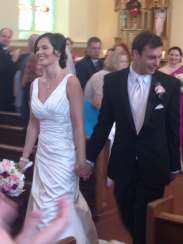
Joy and Chris were married May 21, 2016. Joy is my daughter and both families were thrilled when Chris proposed. The ceremony was solemnly and beautifully performed at Immaculate Conception Church in Dardenne Prairie, Mo. where they will live. The wedding reception was great fun and went off without a hitch.

But one of the most moving times for me first came at Joy’s bridal shower. Chris was videotaped answering questions like “What do you like most about Joy?” for a bridal shower game played by the guests. Points were given for every right answer Chris and Joy predicted the other would say.

One question was “How many children do you want?” Chris answered “If we are blessed with children, we will take them one at a time.”

That answer caused a stir among the young women at the shower. One remarked that you could tell that Joy and Chris went to Natural Family Planning classes during the Pre-Cana preparation for their marriage.

Actually, they did and they learned about fertility awareness to naturally achieve or postpone pregnancy. Such classes are also available to people of any religion or none at all through groups like the Couple-to-Couple League. There are even fertility awareness methods to find the causes and treat infertility through Naprotechnology.

It is common today to hear newlywed couples talk about not necessarily having children at all or postponing off having children indefinitely for various reasons like finishing school, achieving financial stability or establishing careers. It is as if children are an just another option rather than a blessing.

With the myriad of glossy contraceptive commercials, free contraceptives under Obamacare promoted as “reproductive health” and sex ed courses in schools focused on how to avoid pregnancy and STDs, it is not surprising that many of today’s young adults also often view sex as recreation or “tryouts” rather than a physical/emotional union that can produce children.

Joy and Chris are also very health conscious. That is another big reason they were attracted to Natural Family Planning. They have seen the damage caused by abortion, the risks of hormonal contraception, single parents who are struggling,  and couples coping with infertility. They take marriage and childbearing seriously.

But best of all, they also see their adorable nieces and nephews and friends’ children growing up with loving, committed parents who are wonderful role models. This another reason they are excited by the prospect of parenthood.

Life is a challenge with many surprises and marriage requires a lot but I salute Joy and Chris for trying to make a great start!


“34% of ‘Pro-Choice’ Women Who See This Viral Video Turn Against Abortion”

After my daughter Karen who had both Down Syndrome and a severe heart defect died in 1983, I never discouraged people from asking questions. Any questions. I felt the answers to the questions could educate people about the enormous gains made by people with Down Syndrome and how families and their children with disabilities could not only survive but thrive.

But one day when a nice woman asked if I had prenatal testing and what I would have done if I knew about my daughter’s conditions before birth, I changed my answer.

Instead of talking about Down Syndrome, I asked the woman if she knew how abortions are done. When she answered no, I asked her if she would want to know. Very tentatively, she said yes.

So I simply described the basic procedures as they were then done in the 1980s in each of the 3 trimesters of pregnancy. I just used simple clinical terms to describe each procedure in a short period of time.

However, this woman’s reactions were stunning. She was totally horrified and blurted out “You couldn’t do that to your baby!” She admitted that she had no idea how abortions were done before this.

Exactly the point. The real issue is not how wanted a baby is or how “perfect” he or she must be but rather how a baby must be horribly killed to “solve” a problem.

This woman’s reaction opened my eyes to the power of the truth, even if that truth is considered “politically incorrect.”

Today we have the power of the internet and other social media. Now a former abortionist is changing minds and hearts through a video about abortion on the internet that has been watched over 42 million times so far.

Please see the LifeNews.com article and video titled “34% of “Pro-Choice” Women Who See This Viral Video Turn Against Abortion”. And please share this article and video with others. Doing this could not only change other minds and hearts but, most importantly, even help save a life!

“Flash of light” Not Needed to Prove Conception


In a May 23, 2016 National Catholic Register article ” Contrary to Reports, There is No Flash of Light at Conception”, writer Stacy Trasancos takes some people who wrote about the amazing research article and video to task  for exaggerations:

“At conception, there is no flash of light, no burst of fireworks, no sparks flying, no fiat lux, no scientific proof of ensoulment, no vindication of doctrine by this research. There is a misunderstanding.”

She is right that claims of ensoulment  or actual “fireworks” in the mother are wrong and inaccurate.

But while I understand Ms. Trasancos’ point about  the over excitement by some writers, the phenomenon itself actually is a pretty big deal.

I am a nurse, not a scientist, but I read the scientific article myself  before I wrote a recent blog on the research.

The researchers were not trying to make a theological or philosophical point but rather reporting a testing phenomenon:

“We monitored calcium and zinc dynamics in individual human eggs using selective fluorophores following activation with calcium-ionomycin, ionomycin, or hPLCζ cRNA microinjection. These egg activation methods, as expected, induced rises in intracellular calcium levels and also triggered the coordinated release of zinc into the extracellular space in a prominent “zinc spark.”

The truly relevant point is that there IS a moment of  “human egg activation”. Using fluorescence to show a chemical reaction accompanying that moment of activation enhances the reality of  when life begins-a fact that Justice Blackmun in the Roe v. Wade abortion decision said was unresolvable because so many people disagreed.

As I wrote about years ago,  the photos of the “sperm injection” mode of IVF  (in vitro fertilization) developed over 20 years ago and pre-implantation genetic diagnosis (PGD)  before implantation of the new life back into the mother should have been proof enough of when life begins, even for a Supreme Court justice.

No fluorescence or sparks necessary.


Could Brittany Maynard Have Been Saved?

This week, CBS’ “60 Minutes” TV show reported that FDA has just granted “breakthrough status” for an innovative treatment for glioblastoma brain cancer that was first reported by 60 Minutes on March 29, 2015.

Brittany Maynard had glioblastoma and died by physician-assisted suicide on November 1, 2014, just 5 months before the original TV segment aired.

Brittany Maynard was a young newly wed who, with enormous media publicity and the support of the pro physician-assisted suicide group Compassion and Choices, announced her intention to commit assisted suicide and asked for donations to the Brittany Maynard Foundation to raise money to help Compassion and Choices fight for legalization of physician-assisted suicide throughout the US.

Using Brittany’s story and foundation, Compassion and Choices was finally successful after years of failed attempts to get a physician-assisted suicide law passed in California.

Did Brittany, her doctors or Compassion and Choices know about the promising clinical trials for glioblastoma reported by “60 Minutes” before Brittany took her life with a physician ordered lethal overdose?

Although reported medical breakthroughs are frequent and often over-hyped or prove disappointing, information is available at ClinicalTrials.gov, a registry and results database of publicly and privately supported clinical studies of human participants conducted around the world. This service was developed by the National Institutes of Health and the Food and Drug Administration and made available to the public in February 2000.

The Decision to Forego Treatment

According to Brittany’s own words:

After months of research, my family and I reached a heartbreaking conclusion: There is no treatment that would save my life, and the recommended treatments would have destroyed the time I had left…

And

I probably would have suffered in hospice care for weeks or even months. And my family would have had to watch that.

No one is ethically obligated to try any experimental or unduly burdensome treatment for such conditions but many people do so not only for a possible cure but also to potentially gain more time or to advance medical research. I saw this when I was an oncology nurse and also in my personal life.

For example, a few years ago, a friend developed a usually terminal lung cancer and agreed to try  an unusual and massive combination of chemotherapy and radiation. As explained by her doctors, the side effects were very tough on her but today she is happy, active and enjoying her life and her grandchildren. Her cancer continues to be in remission. Success stories like this were unimaginable of when I first became a nurse.

But while treatment of a serious or terminal condition can be a personal choice, killing oneself-with or without medical assistance-must not be treated as just another valid treatment “option”.

Hard Cases Make Bad Law

“Hard cases make bad law” is an old legal adage that means that an extreme case is a poor basis for a general law that would cover a wider range of less extreme cases. This is particularly true when it comes to physician-assisted suicide where the slippery slope expanding the pool of potential victims has become a superhighway.

I also remember when AIDS, not glioblastoma, was the “hard case” used to justify physician-assisted suicide in the 1990s because it was also considered terminal.

But by 1998, the CDC issued the first national treatment guidelines for the use of antiretroviral therapy in adults and adolescents with HIV  Today, AIDS is no longer considered an automatic death sentence and those with AIDS can even achieve normal lifespans.

But how many despairing people in the 1990s resorted to suicide, assisted or not, when the treatment for AIDS was so close?

Conclusion

Hope can be life-enhancing as well as life-saving.

Sadly, as one brain tumor expert poignantly wrote, Brittany Maynard’s “suicide was a blow to fellow brain tumor patients who were living in hope”.


My Most Memorable Mother’s Day

Mother’s Day has always been special to me since my children were born although I always thought I should be thanking my children for making me a mom instead of them thanking me.

However, Mother’s Day 1998 was my most memorable for another reason.

My oldest daughter Marie had just started college and dating the first boy she said she loved when she found out she was pregnant. The young man offered to marry her but she thought about some serious problems they both had and felt she had to refuse.

Over the next several months, Marie was torn between keeping her baby and choosing adoption. When she considered the most important question of what would be best for the baby, she finally decided on open adoption. It was not an easy decision and we were both heartbroken by the realization that Marie would not be raising the baby herself.

Unfortunately, due to the unwed pregnancy, there was almost no support from extended family members. In addition, most of Marie’s friends supported her rejection of abortion but not her decision for adoption. However, I was proud and awed by Marie’s heroic determination to give her baby the best life possible.

It was a difficult time but then on Mother’s Day that year, a card came in the mail from a priest friend of mine that brought a big ray of sunshine and truth to the situation. 

It was a beautiful Mother’s Day card for Marie!

Marie and I both smiled and cried because it was such a wonderful acknowledgement of Marie’s eternal motherhood as well as the gift of life. I can never thank that priest enough for his timely encouragement.

Four months later, Marie’s daughter was born and released to a wonderful couple who sent pictures every month.

Later on, when Marie’s daughter grew older, she called Marie every Mother’s Day and because of the generosity of her parents, she saw Marie often until Marie’s untimely death in 2009.

This thoughtful priest’s kindness in 1998 should remind us all that Mother’s Day should always be special whatever the circumstances and whether or not our children are in our arms or just in our hearts.


Sparks Fly at Conception-Literally

I remember the shock I felt when I first read these words in the 1973 Roe v. Wade abortion decision:

“We need not resolve the difficult question of when life begins. When those trained in the respective disciplines of medicine, philosophy, and theology are unable to arrive at any consensus, the judiciary, at this point in the development of man’s knowledge, is not in a position to speculate as to the answer.”

I could not believe that anyone could deny the obvious: life begins at conception.

Just 5 years later, the first child conceived through in vitro fertilization was born. While I recognize the several ethical problems with this procedure, I thought that at least this obviously proved that life begins at conception since the process was monitored from the beginning. Unfortunately, not to the pro-abortion movement that then pivoted to we don’t know when human personhood begins.

Ironically, presidential candidate Hilary Clinton recently revealed the hypocrisy of this pivot when she said “The unborn person doesn’t have constitutional rights” on NBC’s Meet the Press TV show. (Emphasis added)

Flash of Light

But now researchers at Northwestern University have discovered a flash of light that occurs at the moment of conception To see the video of this phenomenon, go to the link at LifeNews.com.

Here is the science behind this:

“The bright flash occurs because when sperm enters and egg it triggers calcium to increase which releases zinc from the egg. As the zinc shoots out, it binds to small molecules which emit a fluorescence which can be picked up my camera microscopes.

Over the last six years this team has shown that zinc controls the decision to grow and change into a completely new genetic organism.

In the experiment, scientists use sperm enzyme rather than actual sperm to show what happens at the moment of conception.

“These fluorescence microscopy studies establish that the zinc spark occurs in human egg biology, and that can be observed outside of the cell,” said Professor Tom O’Halloran, a co-senior author.”

And

Dr. Teresa Woodruff, a professor at Northwestern said, “We discovered the zinc spark just five years ago in the mouse, and to see the zinc radiate out in a burst from each human egg was breathtaking. It was remarkable.”

An Ethical Downside

Regrettably, the scientists say that the intensity of the flash of light also appears to indicate the egg’s quality and the embryo’s future health. This could allow more in vitro fertilization embryo selection with the destruction of embryos thought to be of lesser “quality”.

Therefore, instead of celebrating this physical proof of conception, Dr. Eve Feinberg, who co-authored the study, said

 “Often we don’t know whether the egg or embryo is truly viable until we see if a pregnancy ensues… If we have the ability up front to see what is a good egg and what’s not, it will help us know which embryo to transfer, avoid a lot of heartache and achieve pregnancy much more quickly.”

However, real heartache comes with infertility, desperate medical procedures to obtain a baby by any means possible, and the termination of life both inside and outside the womb.

But in the meantime, we can still rejoice in the apparent discovery of a true “spark of the Divine”.


Why Are Suicide Rates Climbing after Years of Decline?

After years of declines, the US suicide rate rose 24% over 15 years according to a new report from the national Centers for Disease on suicide rates in the US from 1999-2014.  The suicide rate rose for everyone between the ages of 10-74 between 1999-2014.

National media like the Wall Street Journal  and CNN   speculated that the economic downturn, drugs and lack of mental health resources could be factors in the 24% increase.

However, one huge factor was totally ignored: the legalization and promotion of physician-assisted suicide.

The Legalization of Physician-Assisted Suicide and Suicide Contagion

It must not be dismissed as mere coincidence that the new rise in suicides correlates to the implementation of the first physician-assisted suicide law in Oregon.

A 2012 report on suicide trends and risk factors for the Oregon Health Authority found the state’s overall suicide rate had risen 41 percent higher than the national rate . This is the “regular” suicide rate. Physician-assisted suicides are not included.

Since Oregon, four more states (California, Vermont, and Washington) have legalized physician-assisted suicide via legislation with a Montana supreme court ruling in favor of assisted suicide but without a regulatory framework. But it is only now that the media is noticing a suicide rate that has been increasing for 15 years.

There is a well-known and recognized suicide contagion effect after reported suicides. Both national media guidelines   and  World Health Organization guidelines   warn against media glamorization or normalization of suicide by the media that could lead to more suicides.

Yet, since the legalization in Oregon, the media has become increasingly positive in reporting on physician-assisted suicide. This reached a peak when People magazine devoted it cover story  and some subsequent issues to Brittany Maynard , her impending assisted suicide, and her Compassion and Choices led foundation to raise money to promote the legalization of physician-assisted suicide throughout the US.

That’s not just glamorizing or normalizing physician-assisted suicide. That’s advertising.

And it is having an enormous effect. Now the media is bowing to the pro-assisted suicide movement’s propaganda by changing even the terminology. Instead of physician-assisted suicide, news reports now use more soothing terms like “death with dignity”, “aid in dying” or “physician-assisted death”.

Make no mistake. This is a calculated tactic to increase support of physician-assisted suicide by denying reality.

Why Don’t  Physician-Assisted Suicide Laws Require Psychiatric or Psychological Evaluation?

As most of you may know,  I am the mother of a physically healthy 30 year old daughter who killed herself in 2009 using a technique the medical examiner called “textbook Final Exit”, the title of a book she read by assisted suicide supporter Derek Humphry. But I am also an RN with 46 years of experience who has cared for terminally or seriously ill people considering even physician-assisted suicide who changed their minds after suicide prevention and treatment interventions.

I am appalled that no physician-assisted suicide law actually requires a psychiatric or psychological evaluation before a person is given the lethal overdose prescription. For example in Oregon, the physician-assisted suicide law only states If in the opinion of the attending physician or the consulting physician a patient may be suffering from a psychiatric or psychological disorder or depression causing impaired judgment, either physician shall refer the patient for counseling.”   (Emphasis added)  Not surprisingly, very few such evaluations are currently done, according to Oregon’s annual reports.

That stands in stark contrast to the standard evaluations given to other suicidal patients.

There must be no medical discrimination based on a predicted  prognosis when it comes to standard suicide prevention and treatment interventions. Suicide for any reason is always a tragedy to be prevented when possible.

The terrible despair that leads to suicide must not be ignored in favor of a cold piece of paper with a lethal prescription.


What Is-Or Should Be- the Future of Nursing?

In a recent Medscape News article “Back to the Future of Nursing: What Progress Have We Made?” , Laura A. Stokowski, RN, MS reported on the results five years after the national Institutes of Medicine (IOM) issued a 2010 report titled “The Future of Nursing: Leading Change, Advancing Health” that was designed to be:

“a wake-up call that exposed the many barriers that prevented the nursing profession from contributing fully to the healthcare system: an aging workforce, regulatory restrictions on nursing practice, fragmentation of healthcare, limited capacity of the nursing education system, and lack of workforce data. It was also a catalyst for finding solutions to these problems.”

The followup report titled “Assessing Progress on the Institute of Medicine Report The Future of Nursing” came out in December 2015 and reported only some progress in their key questions:

  -Have scope-of-practice barricades been pushed aside? Are nurses being permitted to practice to the full extent of their education and licensure?

-Are more nurses earning baccalaureate, master’s, and doctoral degrees?

-Are new graduate nurses being transitioned to the profession more safely and effectively through nurse residency programs?

-Does the ethnic composition of the nursing workforce more closely match the level of diversity in the general population?

-Have opportunities expanded for leadership and interprofessional collaboration in healthcare?

If you are a nurse and were unaware of all this, you are not alone. As a full-time ICU nurse, neither I nor my fellow nurses were aware of this study at that time. The only change we noticed was when our hospital suddenly announced  that every RN must have a BSN by 2021 or be terminated.

I wish we had been asked for our input!

WILL MORE DEGREES, DIVERSITY AND EXPANDED RESPONSIBILITIES REALLY HELP NURSING?

Instead of the IOM focus on these issues, I would propose  at least four measures to really help the majority of us who work in health care institutions to provide the quality care we want for our patients as well as to reduce the stresses of nurses that often lead to burnout and quitting the profession.

 1. Consider bringing back the head nurse

When I started nursing over 47 years ago, we had head nurses who knew the patients, doctors and staff by working with them daily to make sure care was coordinated, staffing was adequate,  and problems were addressed quickly.

Now we have managers and other administrators who often are not RNs and who are often rarely seen or available because of endless meetings. The formerly close working relationships with head nurses have now become almost adversarial relationships with managers as cost containment measures, endless new policies based on legal risk, mandated government regulations, inadequate staffing etc., grind down nurses.

 2. Try retention incentives instead of signup bonuses

Years ago when there was a nursing shortage, signup bonuses were offered to potential nurse employees. I was asked by a director of nurses if I thought the bonuses were high enough.

I told this director that it might be better to try retention bonuses since the newly employed nurses we trained often left after the required year of service to get a signup bonus at another hospital. This wasted the money and time used to assign a precepting nurse to support the temporary new nurse during the weeks-long orientation to our hospital policies and procedures.

A retention bonus would help keep our good, experienced nurses who were already familiar with the doctors, other staff, departments and hospital policies. Such nurses are also often excellent resources for the rest of the staff. This could help prevent some mistakes caused by inexperience or unfamiliarity. In addition, such bonuses could also save money  and increase staff morale by reducing a high turnover rate.

3. Don’t automatically force nurses to get a BSN (bachelor’s degree in nursing)

As I wrote in my March blog “Is it Time for a Two-Track Nursing Education System?”, there is a lack of openings in many BSN programs, not to mention the time stresses and money involved in trying to coordinate full-time 12 hour hospital shifts while  caring for a family and taking classes on a deadline.

Yet there will always a need for excellent bedside nurses who strive to improve their skills, whether or not they decide to pursue a BSN. I believe that it should be a choice, not a requirement, to seek an advanced degree only in nursing.

In the meantime, I believe we should improve basic nursing education, especially by increasing clinical experience and providing mentoring to new graduates.

4. Good nurses deserve to have both conscience and whistle blower rights respected

An April, 2016  Medscape News article “Two Nurses Who Spoke Up, Lost Their Jobs, and Sued”  chronicled the years-long battle of 2 nurses who discovered and reported patient safety problems at their hospitals and lost their jobs as a result of their patient advocacy efforts. Unfortunately, being a good nurse does not automatically provide job security or protection.

Good nurses need both conscience and whistle blower rights protected. Despite rapid changes in historic ethical  and legal principles involving life-termination and abortion issues, most nurses still don’t want to actively participate. Neither do most nurses want to be intimidated from reporting medical incompetence or serious violations of standards involving patient safety.

However, good nurses often find themselves  at risk of harassment or even termination if they refuse to participate in deliberate life-ending decisions or refuse to ignore actual or potential harms to their patients.

Unfortunately, the American Nurses Association and state boards of nursing do not offer much help to nurses in such difficult situations. As the Medscape News article states, even though one nurse cited documents from the American Nurses Association (ANA) code of ethics  which say that nurses have a professional responsibility to protect patient safety:

 “The tricky part—and this is where an experienced attorney is helpful—is understanding the ins and outs of state laws that describe the exceptions to “at will” employment. If an employee reports a patient safety problem and/or is a member of a protected class (older, or a minority), the employer will probably try to prove that the employee was fired for another reason—poor performance, for example. A court will weigh the evidence and decide whether the public policy at issue is more important than upholding the doctrine of at-will employment.”

CONCLUSION

Nurses share a special bond and I am proud to be part of a truly noble profession.  But we need to be able to speak out without fear to insist on the highest standards to improve our healthcare system for both ourselves and especially our patients’ sake.