Abortion pills: Where are they legal and illegal?

In a January 8, 2025, article by the Catholic News Agency titled Abortion pills: Where are they legal and illegal?, author Jonah McKeown writes:

“As states continue to legislate on abortion in the post-Roe v. Wade landscape, a major point of contention as a new presidential administration takes office is the two-drug medication abortion regimen, commonly referred to as the abortion pill.

Abortions done via medication, also called chemical abortions, currently account for about half of the abortions that are done in the United States every year. However, many states restrict the use of abortion pills, specifically the first drug in the two-drug regimen, mifepristone. (Emphasis added)”

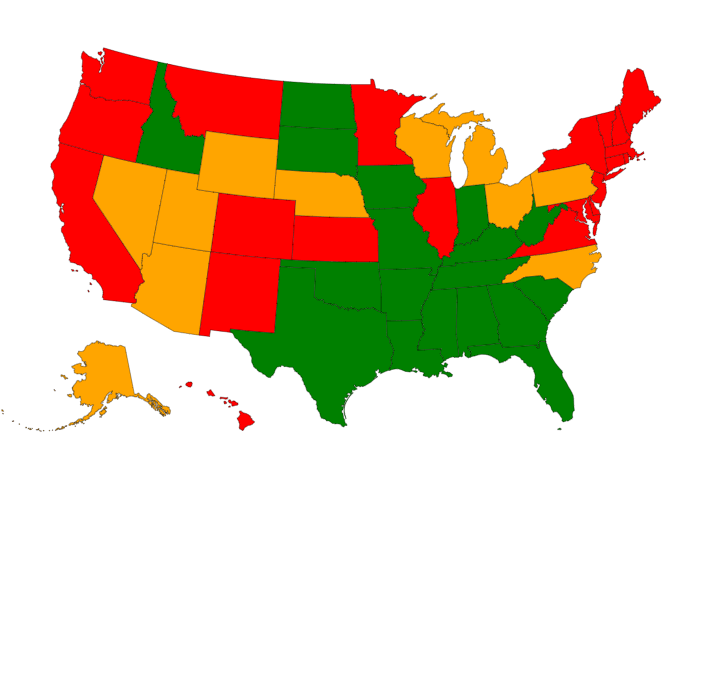
Take a look at the map below to see where abortion pills are legal, and where they aren’t:

Green is illegal, yellow is limited, and red is legal (go to Abortion pills: Where are they legal and illegal? to click on each state’s specific law)

As the author states:

“At the federal level, mifepristone is approved to abort an unborn child up to 10 weeks’ gestation, having been first approved for such use in 2000. 

The drug kills the child by blocking the hormone progesterone, which cuts off the child’s supply of oxygen and nutrients. A second pill, misoprostol, is taken between 24 to 48 hours after mifepristone to induce contractions and expel the child’s body.

Several states, most of which have some pro-life laws in place, have also passed restrictions on abortion pills designed to protect women, including requirements that only physicians may dispense them. These states include Alaska, Arizona, Florida, Georgia, Iowa, Michigan, Nebraska, Nevada, North Carolina, Ohio, Pennsylvania, South Carolina, and Utah. (Emphasis added)”

and

“A large number of states — most of them concentrated in a contiguous cluster in the South and Midwest — ban abortion in most cases but provide exceptions in cases where the life of the mother is at risk or in cases of rape, incest, or fetal anomaly. In these states, access to abortion pills is likely to be very limited or prohibited entirely. 

States with total bans on abortion pills include Alabama, Arkansas, Idaho, Indiana, Kentucky, Louisiana, Mississippi, Missouri, North Dakota, Oklahoma, South Dakota, Tennessee, and Texas. “

However, as Mr. McKeown. also writes,

” just because these states have bans on abortion pills in place does not mean the drugs are not accessible; women in those states can still receive them in the mail. Under then-President Donald Trump during the COVID-19 pandemic in 2020, the FDA was given the ability to distribute the drug via mail. The administration of President Joe Biden eventually solidified the practice as a norm in 2023. (Emphasis added)

A group of state attorneys general, led by Missouri, is currently suing the Food and Drug Administration (FDA) over its deregulation of the drug, arguing that abortion drugs have been “flooding states like Missouri and Idaho [where abortion is otherwise regulated] and sending women in these states to the emergency room.”

In addition, Texas Attorney General Ken Paxton recently filed a lawsuit against an abortionist in New York, alleging that she illegally provided abortion drugs to a woman in Texas, which killed the unborn child and caused serious health complications for the mother.”

Sadly, as Mr. McKeown writes:

President-elect Trump has committed to keeping abortion pills accessible during his second term — a major disappointment for pro-life advocates, who have urged Trump to use the FDA’s power to enforce a Comstock Act prohibition on the delivery of “obscene” and “vile” products through the mail, which includes the delivery of anything designed to produce an abortion.”

CONCLUSION

As I wrote in my June 16, 2024 blog “The Supreme Court Rejects Challenge by Pro-life Doctors on Abortion Pill“:

“As Life News reported on June 13, 2024:

“The Supreme Court on Thursday rejected a challenge to the abortion pill mifepristone, meaning the abortion drug will be widely available to continue killing babies and injuring doctors nationwide.

The 9-0 decision says the pro-life doctors who brought the case do not have standing – they were not injured, and so the court does not interveneThat’s even though they sued on behalf of women who were injured by the abortion drug by the thousands – including women who have been killed.” (Emphasis added)”

I have a personal interest in this because I had an unwed daughter who became pregnant and started bleeding without telling me because of embarrassment.

She went to a local ER, where the doctors said she was just having a miscarriage and sent her home.

When the pain and bleeding increased, she called me. I took her back to the ER to demand an ultrasound.

As I suspected as a nurse, her pregnancy was ectopic and emergency surgery was performed.

Afterward, the surgeon showed me the picture he had taken (unasked) during the surgery to remove the then-deceased first-trimester baby, my grandchild. The picture was personally so sad to see but I was comforted that the surgeon cared enough to take a picture of this tiny person and show respect.

We need more respect and help for women with an unexpected pregnancy and their babies than a pill without medical safeguards!”

Related

“Safer Than Tylenol” is Deliberate Medical Abortion Disinformation February 26, 2023

Planned Parenthood Sues Kansas to Challenge a New State Law Requiring Abortion Reversal Information to be Provided Before Abortion June 12, 2023

SUPREME COURT RULES THAT STATES MAY DEFUND PLANNED PARENTHOOD

Supreme Court clears way for states to kick Planned Parenthood out of Medicaid – POLITICO

A stunning 6-3 Supreme Court decision on June 26, 2025 has now cleared the way for states to exclude Planned Parenthood from their Medicaid programs, concluding that federal law doesn’t allow health care providers or patients to sue if a state violates a provision of federal law guaranteeing the Medicaid patients can visit their preferred provider.

According to Politico:

“The decision rejected a challenge to South Carolina’s 2018 expulsion of Planned Parenthood from its Medicaid program. It will likely allow other conservative states to similarly expel reproductive and sexual health clinics — shrinking the already narrow network of providers available in the health insurance program for low-income Americans.”

and

“Defunding” Planned Parenthood is a goal of many conservatives, who object to its abortion services. Federal law has long banned federal money from being used for abortions. But Planned Parenthood clinics provide many other health care services that are typically eligible for payment under Medicaid.

Thursday’s ruling will make it easier for states to deprive Planned Parenthood — and other clinics that provide abortions — from receiving Medicaid payments for any of their non-abortion-related care.”

BACKGROUND

As I wrote in my December 14, 2018 blog, “Why is the US Supreme Court Ducking the Issue of States Defunding Planned Parenthood?”:

Most of Planned Parenthood’s federal funding is from Medicaid reimbursements for preventive care, and some is from Title X. At least 60% of Planned Parenthood patients rely on public health programs like Medicaid and Title X for preventive and primary care.” (Emphasis added)

According to a Lozier Institute Report, in its latest report 2016-2017, Planned Parenthood received “$543.7 million in funds from all levels of government in that fiscal year…primarily from the Medicaid program”. (All emphasis added)

CONCLUSION

Ironically, although the brief by Planned Parenthood of Gulf Coast  to the Supreme Court insisted that their clinics “..provide essential medical care to thousands of low-income Louisiana residents through Medicaid” and “offer a range of services, including annual physical exams, screenings for breast cancer and cervical cancer, contraception, pregnancy testing and counseling, and other preventative health services”, the reality is that there are many more places, such as federally qualified community health centers (which do not provide abortions) that provide more comprehensive health care services than those offered by Planned Parenthood.

On a personal note, several years ago my late daughter Marie secretly went to a Planned Parenthood clinic for a possible sexually transmitted disease. She finally admitted this to me when her symptoms grew worse. I immediately took her to my own gynecologist who had to perform surgery to remove part of her cervix to deal with the damage.

Planned Parenthood had missed the diagnosis.

MY “WORST” PATIENT

I was a newly divorced mother of three young children when I returned to nursing to support our little family.

I had been a happily stay-at-home mom for years until my husband had a mental breakdown, took all our money, and fled the state after one of our children died, but I was grateful to find a job on an oncology unit and some childcare.

I was a little nervous about being a working nurse again, but when I started my first day back, I was startled by loud shouting from a patient’s room, even through the door was closed.

I asked what was going on and the other nurses told me that the patient was abusive and shouting all the time, even though he didn’t seem in pain.

The other nurses said they had all agreed to change nurses every day because he was so nasty and they told me I was going to be assigned to him later.

I read the man’s chart and talked to the man’s doctor to ask him what was going on. I was shocked when the doctor said he thought the man was “evil”! I asked the doctor “Like Hannibal Lecter in the movie Silence of the Lambs?” He said yes and I felt a cold chill.

So I made a plan.

When my turn came up to care for the man, I asked to have him all week on the night shift. “No problem!”, the other nurses said.

The first night, the man didn’t sleep and kept shouting loudly. He ignored my questioning so I sat next to his bed and tried to understand what he was shouting.

I discovered that he was enraged and cursing God Himself. I listened quietly until he stopped.

After a while, I held his hand and every time he started to yell again, I replied “God still loves you” over and over until he eventually he fell asleep,

This went on night after night until one night he stopped and slept through the night.

The next day, he woke up and said he wanted to take a walk so I took him to the hallway just as the day shift came in.

The man smiled at them and said “Good morning, ladies!” Everyone was stunned but his whole attitude changed from then on.

Weeks later, I met a student nurse who asked how he was doing. She said she had made a big mistake with his portacath IV access and had to have it replaced surgically. She was devastated but when she apologized, he told her not to worry and that he was fine.

The student told me that she was the nicest patient she ever had!

I told her my story and said that sensitively caring for the most difficult patients can be the greatest reward of all!

Share this:

Reblog

Like

FEEDING IS NOT EXTRAORDINARY CARE– DECISION IN THE NANCY CRUZAN CASE ADDS TO THE LIST OF EXPENDABLE PEOPLE

Before the famous Terri Schiavo food and water case gained national attention 20 years ago, Dr. Harvath and I wrote this Op-Ed in the St. Louis Post-Dispatch (no longer online) about the Nancy Cruzan casw, an earlier case of withdrawing food and water from a “so-called “vegetative state”‘ My family was furious when it was pusblished and told me that I was being “mean” to the family.

Unfortunately, such removal has become common and even recently, has resulted in a brother’s death.

Not surprisingly, so-called “assisted suicide” is now allowed in many states and countries

Nancy Valko, RN

Here is our op-ed:
Friday, August 12, 1988
FEEDING IS NOT EXTRAORDINARY CARE– DECISION IN THE NANCY CRUZAN CASE ADDS TO THE LIST OF EXPENDABLE PEOPLE

By Susan Harvath and Nancy Guilfoy Valko                                                                    

Just a few years ago the Missouri Legislature passed a ”living will” law that specifically excluded food and water from the kinds of care that may be withdrawn from a patient. In 1984, the National Conference of Catholic Bishops stated that legislation should ”recognize the presumption that certain basic measures such as nursing care, hydration, nourishment and the like must be maintained out of respect for the human dignity of every patient.”

Therefore, it is hoped that the Missouri Court of Appeals will overturn the recent Circuit Court decision that would deny tube feedings for Nancy Cruzan, a severely disabled woman cared for at the Missouri Rehabilitation Center. The anguish felt by the Cruzan family, which initiated the suit, is understandable. However, directly causing the death of an innocent person – even for reasons of mercy – violates that person’s basic human rights.

The Cruzan case is perceived by many to be an issue of allowing a person to die. Cruzan has been categorized by some experts as being in a ”persistent vegetative state,” an unfortunate and imprecise term at best. However, she is not dying or brain-dead. Rather, she is severely disabled from brain damage and needs no special technology to survive. Withdrawing her feeding tube would not ”allow” her to die – it would ”force” her to die. She would not die from her injuries, but rather from starvation and dehydration.

Also, starvation and dehydration cause a protracted, agonizing death in a fully conscious person. Some experts have stated that Cruzan would feel no pain if her feedings were stopped. Yet Cruzan’s nurses have testified that she has cried, smiled and even laughed in response to stimuli.

The possibility of pain during the length of time before death occurs has led some to propose lethal injections as a more ”humane” way to cause death than starvation. The passive euthanasia of withdrawing feeding logically leads to active euthanasia by injection or other means. Both are unacceptable.

A recent trend has been to classify tube feedings as medical treatment. However, unlike other medical treatments, denial of food from any person (sick or healthy, in or out of coma) will always result in that person’s death.

Ethically, treatments may be withdrawn if they are useless or burdensome to the patient. However, tube feedings are not excessively expensive or burdensome to the patient and do maintain life and prevent the discomfort of hunger and thirst. In deciding what treatment may ethically be withdrawn one must be careful to judge the treatment itself, not the ”quality” of the patient’s life. A person’s limitations do not decrease a person’s humanity or worth.

In the past few years, we have seen many court cases similar to Cruzan’s in other states. Some have involved people less severely disabled than Cruzan. A recent case in North Dakota resulted in a judgment that even feedings by mouth may be stopped. In most cases, it is not the patient who requests that feedings be stopped but rather a third party, usually a family member. Often, as in the Nancy Cruzan case, there is no clear and convincing evidence that the patient would even want the feedings stopped.

Some courts have gone even further and have stated that third parties do not need the approval of a court before a patient’s food and water is withdrawn unless there is disagreement, for example, among family members. This trend has unfortunate implications for all people with mental impairments.

There is a vast difference between not prolonging dying and causing death. In the last two decades, we have seen killing promoted as a humane and compassionate response to unwanted unborn children, newborns with handicaps, and the terminally ill. Let us not add a new category of people (the non-dying, severely disabled) to the list of expendable human lives.

Nancy Guilfoy Valko, R.N., is co-chairperson, and Sue Harvath is program director of the St. Louis Archdiocesan Pro-Life Committee.

Shocking New York Times Article Shows Planned Parenthood in Crisis

In a shocking February 15, 2025, New York Times article titled A Crisis at Planned Parenthood: What to Know, author Katie Benner writes that “Planned Parenthood clinics around the country are facing complaints of substandard health care and poor morale amid chronic funding problems, a New York Times investigation found.” (Emphasis added)

She also writes that:

“While Planned Parenthood is synonymous with abortion, the organization also provides basic health care to millions of​ Americans who have few other options. Financial strains now undermine those services.

New York Times review found that the clinics have been in decline for decades, undermined by structural and political headwinds and left to make do as national leaders prioritized the fight for abortion rights over finding a more sustainable way to fund health care. (Emphasis added)

Planned Parenthood’s health care operation has shrunk from a high of 5 million patients served across 900 clinics in the 1990s to 2.1 million patients and 600 clinics today, with staff members complaining that patient care is compromised by low salaries, chronic understaffing, high turnover, inadequate training and aging facilities.” (Emphasis added)

Katie Benner also writes: “Here are four takeaways from the reporting:

“Planned Parenthood may need structural reform

Few people outside the organization understand that there is a significant difference between the Planned Parenthood Federation of America, the national office that most people associate with the brand, and the 49 Planned Parenthood affiliates located across the country. The national office does not provide health care. Rather, it funds legal, political, and public opinion work that supports abortion rights. The clinics are run by the affiliates, which are stand-alone nonprofit organizations.

The affiliates have been buffeted for years by political challenges that hurt their ability to raise the money necessary to cover procedures that patients cannot afford.

For the past two decades, leaders say they had to prioritize the fight for abortion rights over clinics because the political fight was fundamental to the organization’s ability to operate. They argue that the organization managed to deliver quality health care, despite increasing financial constraints. Yet clinics have degraded over time.” (All emphasis added)

Clinics nationwide face financial problems

“While affiliates in more liberal states like New York and California have had an easier time fund-raising than their counterparts in states with a strong anti-abortion sentiment, rising health care costs and the lingering effects of the pandemic have taken a financial toll on all clinics. Planned Parenthood of Greater New York — one of the few places where abortion is still legal up to 24 weeks — said that a budget shortfall would force it to restrict later-term abortion services, effectively implementing a 20-week abortion ban. (All emphasis added)

Planned Parenthood of Northern California made a hard funding choice “last March when it ended a prenatal care program that served 200 to 250 low-income women a month. And Planned Parenthood of Northern New England expects to run an $8 million deficit over the next three years.

While affiliates in more liberal states like New York and California have had an easier time fund-raising financial toll on all clinics. Planned Parenthood of Greater New York — one of the few places where abortion is still legal up to 24 weeks — said that a budget shortfall would force it to restrict later term abortion services, effectively implementing a 20-week abortion ban.

Planned Parenthood of Northern California made a hard funding choice last March when it ended a prenatal care program that served 200 to 250 low-income women a month. And Planned Parenthood of Northern New England expects to run an $8 million deficit over the next three years.” (All emphasis added)

Patients have felt the effects

“Patients and employees said that clinics are operating like “ a conveyor belt” for patients, leading to botched IUD placements and abortions, patients prepped for the wrong procedures, and other errors, according to legal filings, complaints and interviews. (All emphasis added)

Planned Parenthood has been accused of improperly implanting a birth control device and causing nerve damage; inserting an IUD in a woman who was four months pregnant, and failing to upload sexually transmitted infection test results into charts, leading patients to wrongly believe that their results were negative.”

Employees are feeling the pressure

Employees said there has been constant pressure to more than double the number of patients seen from the present 2.1 million, to help bring in more revenues, with management asking staff to see more than four patients an hour. That is in line with a trend in health care, widely unpopular with both patients and doctors, to keep primary care visits to about 15 minutes. But clinic staff members said that they needed more than 10 to 15 minutes to care for patients who often face literacy and language barriers or face social ills like housing insecurity, abuse and poverty.

Staff members who have decried the conditions are beginning to unionize to push back on demands that they say undermine Planned Parenthood’s mission.”

CONCLUSION

Although abortion is supposed to be only about a woman’s right to choose, the repercussions for all involved are devastating. Abortion is not the answer and we all need to offer help and support to desperate women and their families.

Trump Pardons 23 Pro-Life Activists the Day before the March for Life

In a January 23, 2025 article in the New York Post titled “Trump pardons ‘peaceful’ pro-lifers imprisoned for protesting outside abortion clinics” states:

” President Trump pardoned nearly two dozen pro-life activists Thursday who were convicted under a federal law of illegally trying to block abortion clinic entrances or otherwise keep women from undergoing the procedure.

The pardons, Trump said in the Oval Office, will go to 23 “peaceful protestors” who were prosecuted under the Biden administration. He did not reveal the names of those who will be pardoned. 

“Twenty-three people were prosecuted who should not have been prosecuted. Many of them are elderly people. They should not have been prosecuted,” the president said. “This is a great honor to sign this.”

The Freedom of Access to Clinic Entrances (FACE) Act, enacted in 1994 by former President Bill Clinton, prohibits use of physical force, threat of physical force, or physical obstruction to injure, intimidate or otherwise interfere with “any class of persons [in] obtaining or providing reproductive health services.”

The law also has the same stipulations allowing free access to places of worship — but conservatives say Democratic administrations have been more interested in prosecuting abortion clinic obstruction.”

MY FIRST TIME AT AN ABORTION CLINIC

I was a new nurse when Roe v Wade legalized abortion.

I was shocked and saddened while my other medical colleagues thought this was great.

“What would you do if you found out you were pregnant?”, they asked.
I told them I would have the baby and consider adoption. They thought that was crazy.

I later joined the St. Lous Archdiocese Pro-Life Commitee, the first in the US, and donated items to the Birthright organization that offers “free, confidential resources to any woman regardless of age, race, circumstances, religion, marital status or financial situation.”

In 1987, I was invited to join a group holding signs outside the Planned Parenthood Clinic in St. Louis offering information and help to the women entering. I was nervous walking with my then 2-year-old daughter but there were strict rules about staying on the sidewalk and I was relieved to see the signs with phone numbers and offers to help the women entering the clinic.

But suddenly my 2-year-old daughter dropped my hand and ran to play on the grass in front of the clinic. I panicked, picking her up and running to the sidewalk. I had heard that we could be arrested. Luckily, we weren’t.

CONCLUSION

I am glad President Trump pardoned those peaceful pro-life people but being pro-life is about more than picketing.

Every pro-life person I know is also a person who reaches out to anyone in need.

I know I have been blessed by helping single moms in difficult circumstances, families caring for children with disabilities, people considering suicide, women regretting their abortion, older people facing their impending death, and others.

Being pro-life is not just about ending the horror of legalized abortion but rather about cherishing and caring for all lives!

That is why I am so proud of the National Association of Pro-life Nurses’ button that simply says “I care”.

Great News: Governor Finally Vetoes Delaware Assisted Suicide Bill

In an excellent article in the Christian Post on June 28, 2024, reporter Samantha Kamman reported:

““A national coalition of pro-life nurses (NAPN, the National Association of Pro-life Nurses) says they “will not comply” with Delaware’s assisted suicide bill that passed in the Senate Tuesday as the state’s lone Catholic diocese is calling on people of faith to urge Democratic Gov. John Carney to veto the legislation. “

Ms Kamman explains that:

H.B. 140 passed in the Senate with an 11-10 vote and will become law unless Carney vetoes it. Under the proposed law, adult patients who are “terminally ill” or have received the prognosis that they have six months or less to live can request or self-administer drugs to hasten their deaths.

Both the individual’s attending physician or attending advanced practice registered nurse (APRN) and a consulting physician or APRN must agree on the patient’s condition and decision-making capacity. Two waiting periods must pass before the patient can receive the drugs to end their life, and medical professionals who prescribe the medication must provide the patient the opportunity to rescind the request to kill themselves. 

The law would also grant immunity to medical professionals who offer life-ending drugs to patients, so long as they are “acting in good faith and in accordance with generally accepted health-care standards under this Act.” As the bill states, those “acting with negligence, recklessness, or intentional misconduct do not have criminal or civil immunity.” (All emphasis added)”

Ms. Kamman reported NAPN’s response:

“The National Association of Pro-Life Nurses, which has advocated against assisted suicide legislation for over 30 years, condemned the bill, calling it a “moral catastrophe that corrupts the very soul of healthcare.”

Marie Ashby, NAPN’s executive director, argued in a statement to The Christian Post that the bill “preys” on “the desperate and devalues the disadvantaged,” adding that it offers “poison as a perverse form of mercy” to people society deems “inconvenient.”

“Legitimate healthcare heals; it doesn’t kill,” Ashby added. “This law perverts our profession’s sacred duty, turning nurses from guardians of life into agents of death. We will not be silent. We will not comply.”

NAPN President Dorothy Kane contends, “Delaware has chosen death over dignity, despair over hope.” (All emphasis added)

Conclusion-Great News

On September 20, 2024, Delaware Governor Johns Carey vetoed HB 140, saying that:

“As I have shared consistently, I am simply not comfortable letting this piece of legislation become law. For the reasons set forth above, I am hereby vetoing House Bill 140 with House Amendment 1 by returning it to the House of Representatives without my signature.” (Emphasis added)

“Jessica Rodgers, Coalitions Director for the Patients’ Rights Action Fund told LifeNews she was delighted by the news.

“Thanks to the tireless efforts of Delaware advocates who have shown up year after year after year, assisted suicide will not be coming to their state. I have been amazed and humbled at the work of these doctors, nurses, disability rights advocates, and all who care for their vulnerable neighbors,” she said. “Time and again when the call was put out to take action, they answered. And you answered- you called and emailed Governor Carney’s office and you made the difference.”

And just in time!

Gallup Poll: Most Americans Favor Legal Euthanasia

A shocking Gallup poll titled Most Americans Favor Legal Euthanasia published on August 2, 2024, stated that 71% of Americans polled “believe doctors should be ‘allowed by law to end the patient’s life by some painless means if the patient and his or her family request it’.”

and

“Sixty-six percent of Americans believe doctors should ‘be allowed by law to assist the patient to commit suicide’” for terminal patients living in severe pain who request it.”

That is a change from polling in 1950 showing only 36% support for “ending a patient’s life through painless means”. (All emphasis added)

However, as Gallup reports,:

” Most U.S. subgroups are somewhat more inclined to support doctors ending patients’ lives through painless means than to agree with doctors assisting patients in dying by suicide. Among the exceptions are Democrats and women, who are about equally likely to say both euthanasia and doctor-assisted suicide should be legal. Democrats (79%) are more likely than Republicans (61%) or independents (72%) to favor legal euthanasia.” (Emphasis added)

The Perceived Morality of Doctor-Assisted Suicide

Gallup says that:

“Americans’ feelings on the morality of doctor-assisted suicide are more mixed than their views on its legality, with a slim majority (53%) agreeing that the procedure is morally acceptable and 40% calling it morally wrong. More than half of Americans have considered doctor-assisted suicide as morally acceptable since 2014. In contrast, from 2001 to 2013, this sentiment was generally at or below 50%.” and that “Religiosity has the most significant impact on one’s perceptions of morality regarding this question.”

Not surprisingly, Gallup reports that “Americans in regions allowing doctor-assisted suicide are also among the most likely to say it is moral.” (All emphasis added)

CONCLUSION

Tragically, so many Americans are falling for the lie that it is better to be made dead than disabled or dying. Assisted suicide laws are tragically wrong and I have personally testified against them. It’s not about politics. It’s about medical ethics and trust in our healthcare system.

For decades, I have personally and professionally cared for many patients, friends, and relatives who were disabled or dying- either at home or in a health facility.

Pain can be controlled without killing the patient but, just as important, is helping both the patient’s and family’s emotional distress and fears.

I ask two questions: what do you want and what are you afraid of?

With patients, fear of a terrible death or being a burden on the family are usually the biggest fears. With families, fear of not being able to care for their loved ones adequately can be overwhelming. Luckily, there are many options and services available. Families and friends also need support and encouragement. Loneliness can be devasting and laughter can be therapeutic for everyone.

I have found that when patients and their relatives are allowed to talk honestly and get the support they need, relationships and old regrets can mended. A good death is possible.

I feel blessed as a nurse to witness the healing power of caring.

Share this:

We Will Not Comply

In an excellent article in the June 28, 2024 Christian Post Reporter titled “‘Despair over hope’: Pro-life nurses group ‘will not comply’ with Delaware’s assisted suicide bill”,

As reporter Samantha Kamman reported:

“A national coalition of pro-life nurses (NAPN, the National Association of Prolife Nurses) says they “will not comply” with Delaware’s assisted suicide bill that passed in the Senate Tuesday as the state’s lone Catholic diocese is calling on people of faith to urge Democratic Gov. John Carney to veto the legislation. “

Ms Kamman explains that:

H.B. 140 passed in the Senate with an 11-10 vote and will become law unless Carney vetoes it. Under the proposed law, adult patients who are “terminally ill” or have received the prognosis that they have six months or less to live can request or self-administer drugs to hasten their deaths.

Both the individual’s attending physician or attending advanced practice registered nurse (APRN) and a consulting physician or APRN must agree on the patient’s condition and decision-making capacity. Two waiting periods must pass before the patient can receive the drugs to end their life, and medical professionals who prescribe the medication must provide the patient the opportunity to rescind the request to kill themselves. 

The law would also grant immunity to medical professionals who offer life-ending drugs to patients, so long as they are “acting in good faith and in accordance with generally accepted health-care standards under this Act.” As the bill states, those “acting with negligence, recklessness, or intentional misconduct do not have criminal or civil immunity.” (All emphasis added)

THE RESPONSE

The National Association of Pro-Life Nurses, which has advocated against assisted suicide legislation for over 30 years, condemned the bill, calling it a “moral catastrophe that corrupts the very soul of healthcare.”

Marie Ashby, NAPN’s executive director, argued in a statement to The Christian Post that the bill “preys” on “the desperate and devalues the disadvantaged,” adding that it offers “poison as a perverse form of mercy” to people society deems “inconvenient.”

“Legitimate healthcare heals; it doesn’t kill,” Ashby added. “This law perverts our profession’s sacred duty, turning nurses from guardians of life into agents of death. We will not be silent. We will not comply.”

NAPN President Dorothy Kane contends, “Delaware has chosen death over dignity, despair over hope.” (All emphasis added)

CONCLUSION-two personal stories

My Daughter Marie Killed Herself Using an Assisted Suicide Technique

In 2009, I lost a beautiful, physically well 30-year-old daughter, Marie, to suicide after a 16-year battle with substance abuse and other issues. Her suicide was like an atom bomb dropped on our family, friends and even her therapists.

Despite all of our efforts to save her, my Marie told me that she learned how to kill herself from visiting suicide/assisted suicide websites and reading Derek Humphry’s book Final Exit. The medical examiner called Marie’s suicide technique “textbook final exit” but her death was neither dignified nor peaceful.

Marie was not mere collateral damage in the controversy over physician-assisted suicide. She was a victim of the physician-assisted suicide movement, seduced by the rhetoric of a painless exit from what she believed was a hopeless life of suffering.

Adding to our family’s pain, at least two people close to Marie became suicidal not long after her suicide. Luckily, these two young people received help and were saved, but suicide contagion, better known as “copycat suicide”, is a well-documented phenomenon. Often media coverage or publicity around one death encourages other vulnerable people to commit suicide in the same way.

The Effect on our Healthcare System

Think the assisted suicide won’t affect you or our healthcare system?

Think again.

As I wrote in my 2018 blog “They are Lying to Us“:

“Several years after Oregon’s law was passed, I was threatened with termination from my job as an intensive care unit nurse after I refused to participate in a deliberate overdose of morphine that neither the patient nor his family requested after an older patient experienced a crisis after a routine surgery.

The patient had improved but did not wake up within 24 hours after sedatives used with a ventilator were stopped. It was assumed that severe brain damage had occurred and doctors recommended removing the ventilator and letting the patient die.

However when the ventilator was removed, the patient unexpectedly continued to breathe even without oxygen support. A morphine drip was started and rapidly increased but the patient continued to breathe.

When I refused to participate in this, I found no support in my hospital’s “chain of command” so I basically stopped the morphine drip myself, technically following the order to “titrate morphine for comfort, no limit.”

The patient eventually died (without food or other treatment) after I left but ironically, a later autopsy requested by the family showed no lethal condition or brain injury as suspected.

The physician who authorized the morphine demanded that I be fired.

I was spared because I argued that I followed the order to “titrate morphine for comfort” by stopping the morphine when he was comfortable!

The family never knew the real story.

We need to reject legalized healthcare provider assisted suicide not only for seriously ill, elderly and disabled but also for ourselves, our loved ones and the integrity of our medical system!

The Supreme Court Rejects Challenge by Pro-life Doctors on Abortion Pill

As Life News reported on June 13, 2024:

“The Supreme Court on Thursday rejected a challenge to the abortion pill mifepristone, meaning the abortion drug will be widely available to continue killing babies and injuring doctors nationwide.

The 9-0 decision says the pro-life doctors who brought the case do not have standing – they were not injured, and so the court does not intervene. That’s even though they sued on behalf of women who were injured by the abortion drug by the thousands – including women who have been killed.” (Emphasis added)

The US Supreme Court decision acknowledged that the Mifeprex pill was approved in 2000 but also that:

“FDA placed additional restrictions on the drug’s use and distribution, for example requiring doctors to prescribe or to supervise prescription of Mifeprex, and requiring patients to have three in-person visits with
the doctor to receive the drug.
” (Emphasis added)

The Cout also acknowledges that the restrictions were relaxed further by the FDA (Federal Drug Administration) when:

“In 2021, the FDA announced that it would no longer enforce the initial in-person visit requirement. Four pro-life medical associations and several individual doctors moved for a preliminary injunction that would require the FDA either to rescind
approval of mifepristone or to rescind the FDA’s 2016 and 2021 regulatory actions. Danco Laboratories, which sponsors Mifeprex, intervened to defend FDA’s actions.”

Now as the Wall Street Journal reports:

Twenty-six states and D.C. allow telehealth for medication abortion. The remaining states have restrictions that supersede federal guidance: 14 ban abortion throughout pregnancy, and the remaining 10 have various combinations of in-person requirements, such as mandatory ultrasounds and visits to doctors and counselors.” (Emphasis added)

WHAT COULD GO WRONG?

As Dr. Christina Francis, an Ob-Gyn doctor herself, wrote in a May 2021 article titled “The government’s abortion pill policy puts mothers’ lives at risk”:

“One of the most significant reasons why an in-person visit has been required is for proper medical oversight as well as a physical exam and ultrasound. These visits are meant to accurately assess the gestational age of a woman’s pregnancy, as well as rule out ectopic pregnancy, which is life-threatening. The difference in size of an 8-week-old and 12-week-old preborn child is significant”

CONCLUSION

I have a personal interest in this because I had an unwed daughter who became pregnant and started bleeding without telling me because of embarrassment.

She went to a local ER where the doctors said she was just having a miscarriage and sent her home.

When the pain and bleeding increased, she called me. I took her back to the ER to demand an ultrasound.

As I suspected as a nurse, her pregnancy was ectopic and emergency surgery was performed.

Afterward, the surgeon showed me the picture he had taken (unasked) during the surgery to remove the then-deceased first-trimester baby, my grandchild. The picture was personally so sad to see but I was comforted that the surgeon cared enough to take a picture of this tiny person and show respect.

We need more respect and help for women with an unexpected pregnancy and their babies than a pill without medical safeguards!