The Choice Was “Comfort Care” or a Trial of Life

In a November 19, 2025, article by Kevin Reece titled “”Micro-preemie’ born at less than one pound thrives after state-of-the-art careMicro-preemie’ born at less than one pound thrives after state-of-the-art care”, he describes a mother’s dilemma when Annie Babcock gave birth to a daughter at just 24 weeks gestation:

“Annie Babock was in trouble. The baby she was carrying had been diagnosed with intrauterine growth restriction and Annie, her pregnancy at just 24 weeks gestation, was diagnosed with preeclampsia and placental abruption. 

Her doctors in Bedford delivered a sentence she will never forget.

“They said we can either deliver here and do comfort care and let the baby pass, or go to Texas Health in Fort Worth and do a trial of life.” (Emphasis added)

THE PARENTS CHOOSE THE TRIAL OF LIFE

“Nora Babcock was born March 10. She weighed 13.1 ounces and was just 10.5 inches long – roughly the size of a soda can. Rushed into the Neonatal Intensive Care Unit at Texas Health Harris Methodist Fort Worth, Nora would need prolonged respiratory assistance and a delicate procedure to repair a heart defect. It would be 10 days before Annie Babcock was able to hold her. 

“It was terrifying,” Annie Babcock said. 

“It was our first bonding experience, but it sure was scary,” she said of holding her tiny daughter while the infant was supported by multiple wires, monitors, and tubes.

EIGHT MONTHS LATER

“She came home July 10,” Babcock said. “So we’ve been in the NICU more days than we’ve been out of the NICU.”

Nora weighs 10 pounds now and is, according to her doctors, the picture of health.

“It was a huge shock when they said she was going to be born at 24 weeks,” Babcock said. “I had no idea a baby less than a pound could be born and also live. It was terrifying, but also like miraculous.”

“You look at her now, and it’s hard to even think about that,” Owen Babcock said of his daughter’s precarious start at life.

“When she was born so small I didn’t think she could live,” Annie Babcock said. “And the nurses are like, no, she’s going to thrive.”

A DOCTOR SPEAKS

“A case like Nora is still quite rare, mostly because of her size,” said Dr. Megan Schmidt, neonatologist at Pediatrix Neonatology of Texas and Texas Health Harris Methodist Fort Worth Hospital

Nora is considered a “micro-preemie” – a baby born before 26 weeks gestation or less than 2.2 pounds.

You’re really battling against nature,” Schmidt said. “And trying to get this body that is not ready to be in this world and be in the outside world, you’re trying to force it to stay in this outside world and to function. It takes highly highly specialized care to even be able to have a chance to have these babies survive.”

“These sorts of things and these innovations that have been developed over the last 10-plus years are things that are making big changes for our babies now,” Schmidt said. “We couldn’t have done these things as early as 30 years ago that we can do now. So there is hope.”

The Parents Speak

“Just the advancements that have been made over the last decade are incredible,” said Owen Babcock.

Owen and Annie Babcock will tell you they have taken a “ridiculous” amount of pictures. They were also allowed to keep Nora’s first blood pressure cuff – barely big enough to fit on an adult finger.

“I think of this little fighter who was ready to come into the world too soon, but she was ready to come fighting, and she never gave up,” Annie Babcock said while looking at the handprints and footprints the hospital gave them – the footprint barely the size of an adult thumb.

“I will tell her she’s the strongest person I’ve ever met in my whole life,” Annie Babcock said when asked what she will tell her daughter when she is older. “I really hope she’s a neonatologist someday. I’m trying to manifest it.”

There is a photo wall in the Babcock’s dining room that includes the phrase – “I still remember the days I prayed for the things I have now.” After their ordeal, they are truly thankful

“I can’t thank Dr. Schmidt enough for just believing in her and not like never giving up hope,” Annie Babcock said.

Hope that they want other parents of preemie babies to know is possible for them too.

“What they do as their work,” she added, “it’s amazing.”

CONCLUSION

This story is heartwarming but also disturbing.

The choice between “comfort care” and more aggressive care can mean life or death for any critically ill person of any age. Families deserve ALL pertinent information and options!

Please Read: I Was Almost Scammed by AI

I had heard of scams where family members were called by someone who claimed to have kidnapped a family member and demanded ransom money, but I had never heard of what happened to me.

Yesterday, I received a frantic phone call from my daughter, who said her car had hit the rear end of the vehicle in front of her when it stopped suddenly, leaving a dent in the car she hit. She was hysterical and said that two men exited the vehicle and told her not to call the police or take pictures. I asked where she was and that I would come, but one man took her phone away and told me not to call the police because they had illegal drugs in the car. They told me they would kill her if the police came.

I told them that I just wanted to pick up my daughter, and they said they would tell me directions to a nearby Walmart on the phone.

I frantically started driving, but the directions were wrong. I kept asking the man where to go, but he just called me horrible names and said that he and his friend were going to rape my daughter. She was screaming hysterically in the background.

I called 911 from my car, explained the situation, and gave the 911 operator the number that the men had used to contact me.

Then I called my daughter and found that she was safe and sound at home!

She told me that she had heard of these scams using AI (artificial intelligence) to replicate the voices of victims. This was news to me.

The St. Louis County Police Department is continuing to investigate this case.

I wanted to write this blog to warn others of this scam.

Share this:

Abortion pills: Where are they legal and illegal?

In a January 8, 2025, article by the Catholic News Agency titled Abortion pills: Where are they legal and illegal?, author Jonah McKeown writes:

“As states continue to legislate on abortion in the post-Roe v. Wade landscape, a major point of contention as a new presidential administration takes office is the two-drug medication abortion regimen, commonly referred to as the abortion pill.

Abortions done via medication, also called chemical abortions, currently account for about half of the abortions that are done in the United States every year. However, many states restrict the use of abortion pills, specifically the first drug in the two-drug regimen, mifepristone. (Emphasis added)”

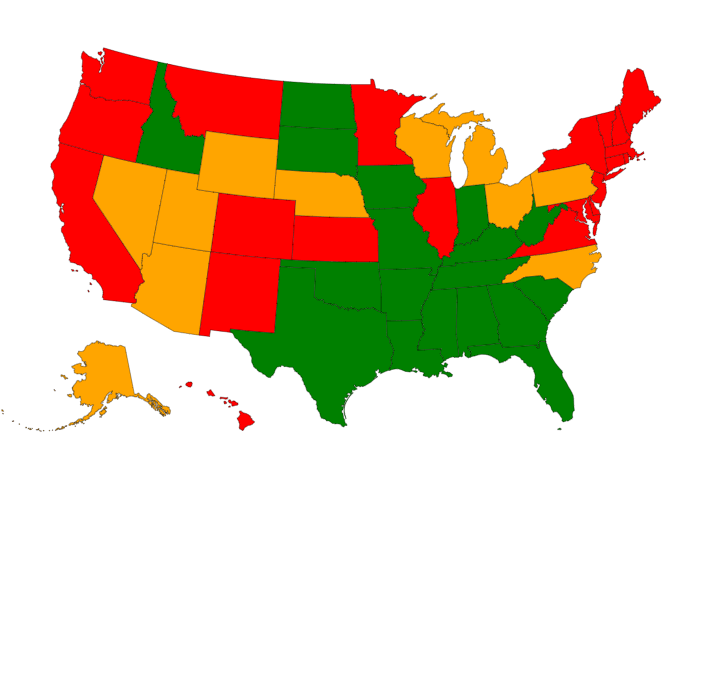
Take a look at the map below to see where abortion pills are legal, and where they aren’t:

Green is illegal, yellow is limited, and red is legal (go to Abortion pills: Where are they legal and illegal? to click on each state’s specific law)

As the author states:

“At the federal level, mifepristone is approved to abort an unborn child up to 10 weeks’ gestation, having been first approved for such use in 2000. 

The drug kills the child by blocking the hormone progesterone, which cuts off the child’s supply of oxygen and nutrients. A second pill, misoprostol, is taken between 24 to 48 hours after mifepristone to induce contractions and expel the child’s body.

Several states, most of which have some pro-life laws in place, have also passed restrictions on abortion pills designed to protect women, including requirements that only physicians may dispense them. These states include Alaska, Arizona, Florida, Georgia, Iowa, Michigan, Nebraska, Nevada, North Carolina, Ohio, Pennsylvania, South Carolina, and Utah. (Emphasis added)”

and

“A large number of states — most of them concentrated in a contiguous cluster in the South and Midwest — ban abortion in most cases but provide exceptions in cases where the life of the mother is at risk or in cases of rape, incest, or fetal anomaly. In these states, access to abortion pills is likely to be very limited or prohibited entirely. 

States with total bans on abortion pills include Alabama, Arkansas, Idaho, Indiana, Kentucky, Louisiana, Mississippi, Missouri, North Dakota, Oklahoma, South Dakota, Tennessee, and Texas. “

However, as Mr. McKeown. also writes,

” just because these states have bans on abortion pills in place does not mean the drugs are not accessible; women in those states can still receive them in the mail. Under then-President Donald Trump during the COVID-19 pandemic in 2020, the FDA was given the ability to distribute the drug via mail. The administration of President Joe Biden eventually solidified the practice as a norm in 2023. (Emphasis added)

A group of state attorneys general, led by Missouri, is currently suing the Food and Drug Administration (FDA) over its deregulation of the drug, arguing that abortion drugs have been “flooding states like Missouri and Idaho [where abortion is otherwise regulated] and sending women in these states to the emergency room.”

In addition, Texas Attorney General Ken Paxton recently filed a lawsuit against an abortionist in New York, alleging that she illegally provided abortion drugs to a woman in Texas, which killed the unborn child and caused serious health complications for the mother.”

Sadly, as Mr. McKeown writes:

President-elect Trump has committed to keeping abortion pills accessible during his second term — a major disappointment for pro-life advocates, who have urged Trump to use the FDA’s power to enforce a Comstock Act prohibition on the delivery of “obscene” and “vile” products through the mail, which includes the delivery of anything designed to produce an abortion.”

CONCLUSION

As I wrote in my June 16, 2024 blog “The Supreme Court Rejects Challenge by Pro-life Doctors on Abortion Pill“:

“As Life News reported on June 13, 2024:

“The Supreme Court on Thursday rejected a challenge to the abortion pill mifepristone, meaning the abortion drug will be widely available to continue killing babies and injuring doctors nationwide.

The 9-0 decision says the pro-life doctors who brought the case do not have standing – they were not injured, and so the court does not interveneThat’s even though they sued on behalf of women who were injured by the abortion drug by the thousands – including women who have been killed.” (Emphasis added)”

I have a personal interest in this because I had an unwed daughter who became pregnant and started bleeding without telling me because of embarrassment.

She went to a local ER, where the doctors said she was just having a miscarriage and sent her home.

When the pain and bleeding increased, she called me. I took her back to the ER to demand an ultrasound.

As I suspected as a nurse, her pregnancy was ectopic and emergency surgery was performed.

Afterward, the surgeon showed me the picture he had taken (unasked) during the surgery to remove the then-deceased first-trimester baby, my grandchild. The picture was personally so sad to see but I was comforted that the surgeon cared enough to take a picture of this tiny person and show respect.

We need more respect and help for women with an unexpected pregnancy and their babies than a pill without medical safeguards!”

Related

“Safer Than Tylenol” is Deliberate Medical Abortion Disinformation February 26, 2023

Planned Parenthood Sues Kansas to Challenge a New State Law Requiring Abortion Reversal Information to be Provided Before Abortion June 12, 2023

SUPREME COURT RULES THAT STATES MAY DEFUND PLANNED PARENTHOOD

Supreme Court clears way for states to kick Planned Parenthood out of Medicaid – POLITICO

A stunning 6-3 Supreme Court decision on June 26, 2025 has now cleared the way for states to exclude Planned Parenthood from their Medicaid programs, concluding that federal law doesn’t allow health care providers or patients to sue if a state violates a provision of federal law guaranteeing the Medicaid patients can visit their preferred provider.

According to Politico:

“The decision rejected a challenge to South Carolina’s 2018 expulsion of Planned Parenthood from its Medicaid program. It will likely allow other conservative states to similarly expel reproductive and sexual health clinics — shrinking the already narrow network of providers available in the health insurance program for low-income Americans.”

and

“Defunding” Planned Parenthood is a goal of many conservatives, who object to its abortion services. Federal law has long banned federal money from being used for abortions. But Planned Parenthood clinics provide many other health care services that are typically eligible for payment under Medicaid.

Thursday’s ruling will make it easier for states to deprive Planned Parenthood — and other clinics that provide abortions — from receiving Medicaid payments for any of their non-abortion-related care.”

BACKGROUND

As I wrote in my December 14, 2018 blog, “Why is the US Supreme Court Ducking the Issue of States Defunding Planned Parenthood?”:

Most of Planned Parenthood’s federal funding is from Medicaid reimbursements for preventive care, and some is from Title X. At least 60% of Planned Parenthood patients rely on public health programs like Medicaid and Title X for preventive and primary care.” (Emphasis added)

According to a Lozier Institute Report, in its latest report 2016-2017, Planned Parenthood received “$543.7 million in funds from all levels of government in that fiscal year…primarily from the Medicaid program”. (All emphasis added)

CONCLUSION

Ironically, although the brief by Planned Parenthood of Gulf Coast  to the Supreme Court insisted that their clinics “..provide essential medical care to thousands of low-income Louisiana residents through Medicaid” and “offer a range of services, including annual physical exams, screenings for breast cancer and cervical cancer, contraception, pregnancy testing and counseling, and other preventative health services”, the reality is that there are many more places, such as federally qualified community health centers (which do not provide abortions) that provide more comprehensive health care services than those offered by Planned Parenthood.

On a personal note, several years ago my late daughter Marie secretly went to a Planned Parenthood clinic for a possible sexually transmitted disease. She finally admitted this to me when her symptoms grew worse. I immediately took her to my own gynecologist who had to perform surgery to remove part of her cervix to deal with the damage.

Planned Parenthood had missed the diagnosis.

“Suicide Helpline” in Canada Suggested Euthanasia for a Person with Disabilities

In a stunning article on Ales Schadenberg’s May 31, 202 blog titled “Suicide helpline suggested euthanasia for my disabled friend”, Meghan Schrader, a disability justice advocate and scholar, warns that “it is best to nip the USA assisted suicide movement in the bud and not let that movement get its foot in the door” and tells the story of her Canadian friend “Amy”. (Emphasis added)

Ms. Schrader writes that Amy reached out to her for help after Canada legalized euthanasia for disabled people in 2021.

“Amy had endured child abuse, which left Amy with PTSD and physical injuries that caused severe chronic pain. As an indigent disabled person Amy was unable to access thorough medical treatment for these disabilities, so even though Amy wanted to live and was deeply offended by Canada’s decision to expand euthanasia to people with disabilities, Amy’s suffering was so great that Amy thought constantly of dying by “MAiD” (Medical Aid in Dying).”

“However, when Amy called a mental health and suicide crisis support hotline for poor people and asked the operator for help fighting against these thoughts, the operator said, “Well, MAiD is a legit and legal option. Maybe it’s something you should consider. The medical system seems to be failing you. And you are never going to get the opiate pain medication that you think you need.” (Emphasis added)”

“With help from about ten different people, including the Euthanasia Prevention Coalition, Amy was eventually able to take a train four hours away from home and show up in the emergency room of a hospital that opposes “MAiD” and specializes in chronic pain and mental illness. Amy finally received excellent care. Although Amy sometimes still has symptoms of chronic pain and PTSD and life is still often quite a struggle, Amy’s symptoms are manageable and Amy is not planning to die by “MAiD.” It was my honor to attend Amy’s Zoom birthday party recently.

But thanks to Compassion and Choice’s friends in Canada and the systemic ableism that is enabling their cause, the Canadian medical system would have killed Amy before providing adequate medical treatment or support.”

She ends by stating:

“I’ve read statements from proponents of recent assisted suicide bill’s saying that their supporters are “real people with grief and loss, not hypothetical scenarios.” Well, Amy and Rachel are not hypothetical scenarios, they are my friends. I’ve read statements describing myself and other disability rights movement opponents of assisted suicide as “abusive, bullying and cruel.” (Emphasis added)

But I can think of few things more abusive, bullying and cruel than for a suicide prevention hotline operator to tell a caller to go ahead and be killed. I don’t want to live in that world, and like others in the disability justice movement, I won’t be quiet while the proponents lay the scaffolding for that to happen.

I’m sorry if that makes me cruel.”

CONCLUSION

As I wrote in 2015:

“In 2009, I lost my 30 year old daughter Marie to assisted suicide after using an assisted suicide technique after a 16 year battle with addiction.

Marie’s suicide hit our family, her friends, and her therapists like an atom bomb. We had all tried for years to help her, with periods of success. Suicide was always our greatest fear, and we made sure she was armed with crisis helpline numbers and our cell phone numbers at all times. I trust in an all-merciful God Who loves my daughter as much as I do, and I don’t regret one minute of those 16 years of trying to save her.

Both personally and professionally, as a nurse, I’ve cared for many suicidal people whose lives were saved. It’s a myth that suicidal people are destined to commit suicide eventually, and studies have shown that only 10 percent (or less, according to some studies) complete a suicide.1 I’m still determined to save vulnerable people from suicide, regardless of their age, socioeconomic status, or condition. Giving up hope is not an option.

Not surprisingly, since suicide contagion is a recognized risk factor for suicide, one of Marie’s close friends became suicidal on the first anniversary of her suicide but was saved. Is it really just a coincidence that Oregon, which doesn’t include assisted suicide in its suicide statistics, now reports a suicide rate that’s 41 percent above the national average?4

But the “assisted suicide/ euthanasia” machine still rolls on in the US.

The Patients Rights Action organization keeps track of states with bills to legalize assisted suicide and those states that defeated assisted suicide. (see state status updated 5/29/2025)

Please check the status in your state and take the necessary action.

We cannot become like Canada!

FEEDING IS NOT EXTRAORDINARY CARE– DECISION IN THE NANCY CRUZAN CASE ADDS TO THE LIST OF EXPENDABLE PEOPLE

Before the famous Terri Schiavo food and water case gained national attention 20 years ago, Dr. Harvath and I wrote this Op-Ed in the St. Louis Post-Dispatch (no longer online) about the Nancy Cruzan casw, an earlier case of withdrawing food and water from a “so-called “vegetative state”‘ My family was furious when it was pusblished and told me that I was being “mean” to the family.

Unfortunately, such removal has become common and even recently, has resulted in a brother’s death.

Not surprisingly, so-called “assisted suicide” is now allowed in many states and countries

Nancy Valko, RN

Here is our op-ed:
Friday, August 12, 1988
FEEDING IS NOT EXTRAORDINARY CARE– DECISION IN THE NANCY CRUZAN CASE ADDS TO THE LIST OF EXPENDABLE PEOPLE

By Susan Harvath and Nancy Guilfoy Valko                                                                    

Just a few years ago the Missouri Legislature passed a ”living will” law that specifically excluded food and water from the kinds of care that may be withdrawn from a patient. In 1984, the National Conference of Catholic Bishops stated that legislation should ”recognize the presumption that certain basic measures such as nursing care, hydration, nourishment and the like must be maintained out of respect for the human dignity of every patient.”

Therefore, it is hoped that the Missouri Court of Appeals will overturn the recent Circuit Court decision that would deny tube feedings for Nancy Cruzan, a severely disabled woman cared for at the Missouri Rehabilitation Center. The anguish felt by the Cruzan family, which initiated the suit, is understandable. However, directly causing the death of an innocent person – even for reasons of mercy – violates that person’s basic human rights.

The Cruzan case is perceived by many to be an issue of allowing a person to die. Cruzan has been categorized by some experts as being in a ”persistent vegetative state,” an unfortunate and imprecise term at best. However, she is not dying or brain-dead. Rather, she is severely disabled from brain damage and needs no special technology to survive. Withdrawing her feeding tube would not ”allow” her to die – it would ”force” her to die. She would not die from her injuries, but rather from starvation and dehydration.

Also, starvation and dehydration cause a protracted, agonizing death in a fully conscious person. Some experts have stated that Cruzan would feel no pain if her feedings were stopped. Yet Cruzan’s nurses have testified that she has cried, smiled and even laughed in response to stimuli.

The possibility of pain during the length of time before death occurs has led some to propose lethal injections as a more ”humane” way to cause death than starvation. The passive euthanasia of withdrawing feeding logically leads to active euthanasia by injection or other means. Both are unacceptable.

A recent trend has been to classify tube feedings as medical treatment. However, unlike other medical treatments, denial of food from any person (sick or healthy, in or out of coma) will always result in that person’s death.

Ethically, treatments may be withdrawn if they are useless or burdensome to the patient. However, tube feedings are not excessively expensive or burdensome to the patient and do maintain life and prevent the discomfort of hunger and thirst. In deciding what treatment may ethically be withdrawn one must be careful to judge the treatment itself, not the ”quality” of the patient’s life. A person’s limitations do not decrease a person’s humanity or worth.

In the past few years, we have seen many court cases similar to Cruzan’s in other states. Some have involved people less severely disabled than Cruzan. A recent case in North Dakota resulted in a judgment that even feedings by mouth may be stopped. In most cases, it is not the patient who requests that feedings be stopped but rather a third party, usually a family member. Often, as in the Nancy Cruzan case, there is no clear and convincing evidence that the patient would even want the feedings stopped.

Some courts have gone even further and have stated that third parties do not need the approval of a court before a patient’s food and water is withdrawn unless there is disagreement, for example, among family members. This trend has unfortunate implications for all people with mental impairments.

There is a vast difference between not prolonging dying and causing death. In the last two decades, we have seen killing promoted as a humane and compassionate response to unwanted unborn children, newborns with handicaps, and the terminally ill. Let us not add a new category of people (the non-dying, severely disabled) to the list of expendable human lives.

Nancy Guilfoy Valko, R.N., is co-chairperson, and Sue Harvath is program director of the St. Louis Archdiocesan Pro-Life Committee.

Vindication: The Great Barrington Declaration

President-elect Donald Trump has just nominated Dr. Jay Bhattacharya, a Stanford professor and an outspoken critic of Covid lockdowns as well as the co-author of The Great Barrington Declaration, to head the National Institutes of Health. I am delighted, especially since I wrote a March 2021 blog titled “Is it possible that there is a light at the end of the Covid tunnel?”

Here are some excerpts from my 2021 blog:

“My husband and I just returned from a trip to Florida where we were happily surprised to find the closest place to normal since the Covid 19 pandemic started. Everyone wore masks (except one young man we saw at a distance) and everyone was careful about social distancing. Hand sanitizers were everywhere.

Best of all, people seemed happy and we saw very few stores closed.

When we returned home, we both finally received the first of our 2 Covid 19 vaccination doses.

IS FLORIDA A HARBINGER OF GOOD NEWS?

Florida was among the last states to go into lockdown and one of the first states to ease restrictions.Florida’s Governor Ron DeSantis was vilified by many in the media for adopting something similar to Sweden’s strategy of protecting the vulnerable while keeping businesses and schools open but a year after the pandemic hit the US, that strategy seems to be working.

Despite having the second largest number of elderly people by state, Florida’s Covid death rate numbers are better than New York’s and California’s. And, unlike so many other states, Florida’s economy is thriving.

Now, Governor Abbott of Texas and Governor Reeves of Mississippi have announced that they would be lifting their states’ mask mandates and rolling back many of their Covid-19 health mandates.”

WHAT HAPPENED?

It has been almost a year since the U.S. went on lockdown for Covid 19 when President Trump declared Covid 19 a national emergency on March 13, 2020.

At first, the lockdown was only supposed to be for a few weeks to “flatten the curve” of infections and prevent hospitals from being overwhelmed by Covid patients.

However, as the lockdowns wore on for months, some doctors and other experts started warning about the emotional and health damage occurring.

Although it received little media notice, a May 19, 2020 letter titled “600 Physicians Say Lockdowns Are A ‘Mass Casualty Incident’” was sent to President Trump that detailed the physical and mental impact of the lockdown in the US due to Covid 19, calling it a “mass casualty incident” with “exponentially growing negative health consequences” to millions of non-COVID patients. 

The doctors’ letter also stated that: “Keeping schools and universities closed is incalculably detrimental for children, teenager and young adults for decades to come.”

Then on October 4, 2020, the Great Barrington Declaration was written and released and eventually signed by thousands of doctors and experts from around the world. The Declaration encouraged governments to lift lockdown restrictions on young and healthy people while focusing protection measures on the elderly, stating:

“Current lockdown policies are producing devastating effects on short and long-term public health. The results (to name a few) include lower childhood vaccination rates, worsening cardiovascular disease outcomes, fewer cancer screenings and deteriorating mental health – leading to greater excess mortality in years to come, with the working class and younger members of society carrying the heaviest burden. Keeping students out of school is a grave injustice. “

CONCLUSION

Now it is 4 years since the Covid pandemic started and we can see that Dr. Jay Bhattacharya and the other medical and public health scientists, medical practitioners, etc. who signed the Great Barrington Declaration were right, despite all the criticism from the media and others.

I personally hope that Dr. Jay Bhattacharya is confirmed as head of the National Institutes of Health.

One In Four Brain Injury Patients Who Appear Unresponsive Respond Covertly

Back in May, I wrote the blog “New Study: Brain-injured patients who died after life support ended may have recovered” about a 7 1/2 year study of 1392 traumatic brain injury patients in ICU at 18 US trauma centers.

The researchers designed a mathematical model to calculate the likelihood that life-sustaining treatment would be discontinued “based on demographic, socioeconomic factor and injury characteristics” and then “paired patients continuing on life-sustaining treatment to individuals with similar moded scores but for whom life-sustaining treatment was stopped.”

They found that of the survivors who did not have life-sustaining treatment withdrawn, “more than 40% recovered at least some independence.” (Emphasis added)

This led one researcher to conclude that:

““Predicting who will recover following severe traumatic brain injury, and to what degree, can be challenging. Yet, families are often asked to make decisions about continuing or withdrawing life support, such as mechanical breathing, within just 72 hours of the injury,” Bodien said.

“This decision is based largely on whether the clinical team believes that recovery is possible,” she added. “It is unknown whether some people who died because life support was discontinued could have survived and recovered had life support been continued.” (All emphasis added)

NEW STUDY

Now a newer study, published in August, states that one in Four Brain Injury Patients Who Appear Unresponsive Respond Covertly | MedPage Today, finding that functional MRI and EEG tests can detect awareness in coma or vegetative states.

The authors explain that:

“Cognitive-motor dissociation — a phenomenon that occurs when patients who appear unresponsive perform cognitive tasks that can be detected on functional MRI (fMRI) or electroencephalography (EEG) — occurred in one in four people with severe brain injury, a prospective cohort study found.”

The study evaluated 241 unresponsive patients with brain injury who were given verbal commands, such as to imagine playing tennis or opening and closing their hands.

Of these, 60 patients (25%) repeatedly showed brain activation on fMRI or EEG indicating they were covertly following instructions, reported Nicholas Schiff, MD, of Weill Cornell Medicine in New York City, and co-authors in the 

Cognitive-motor dissociation was associated with younger age, longer time since injury, and brain trauma as an etiologic factor. In total, 11 patients with cognitive-motor dissociation were assessed with fMRI only, 13 were assessed with EEG only, and 36 with both techniques.

“This research shows that a substantial fraction of apparently unresponsive, severely brain-injured persons are aware and can engage in sustained cognitive activity,” Schiff told MedPage Today. These findings importantly point to the need to establish infrastructure to evaluate patients and to begin efforts to test possible therapies to help them.” (All emphasis added)

CONCLUSION

I have worked with brain-injured patients for decades both as a nurse and as a volunteer and I personally saw many amazing recoveries or improvements despite dire predictions and/or recommendations of life support removal.

One of the most amazing cases was a woman with disabilities whose husband wanted to remove life support as the doctors recommended.

As she personally told me, she frantically tried to move her hands to protest but her gestures were seen as seizures and she was given sedatives.

She persisted until finally, one nurse said she might be trying to tell us something and gave her a paper and pencil.

The patient wrote d-i-v-o-r-c-e.

She not only lived but became active in the disability community fighting assisted suicide!

Shocking Article in Academic Medicine: Helping Patients Die: Implementation of a Residency Curriculum in Medical Aid in Dying

“First, do no harm” is attributed to Hippocrates and is one of the principal precepts of bioethics that all healthcare providers are (or were) taught in school and is a fundamental principle throughout the world.

But today,  the Hippocratic Oath, the oldest and most widely known treatise on medical ethics that forbade actions such as abortion and euthanasia that medical students routinely took upon graduation, has now been revised or dropped at many medical schools.

So we should not be surprised that we now have an article in the August issue of Academic Medicine (lww.com) titled Helping Patients Die: Implementation of a Residency Curriculum in Medical Aid in Dying by Spielvogel, Ryan MD, MS; Schewe, Savannah MD

The authors state the need for such a program is because:

“As more states legalize medical aid in dying (MAID), there is an ever-increasing need of physicians trained in this type of end-of-life care. However, resident curricula in MAID have not been previously reported or assessed. The authors describe a residency curriculum in MAID and evaluate the resident outcomes of this program.” (Emphasis added)

They describe the program they started in California:

“Since 2018, the Sutter Family Medicine Residency Program in California has offered training in MAID to its residents. Residents attend lectures, evaluate patients for MAID, write prescriptions for aid-in-dying medications, and attend the planned deaths of their patients if desired. In February 2023, an anonymous branching survey was sent to graduates of the program from 2019 to 2022 to evaluate residency graduation year, receipt of MAID training, currently practicing MAID, how rewarding MAID is compared with other clinical responsibilities, how stressful MAID is compared with other clinical responsibilities, comfort discussing MAID with colleagues, comfort discussing end-of-life care generally, personal view of MAID as a practice, and works where MAID is permitted.”

RESULTS OF THE SURVEY

“The authors surveyed 28 graduates and collected data from 21 former residents (response rate, 75%). Of these 21 former residents, 17 (81%) reported having opted to receive training in MAID during residency. Of the 12 residents who received training and were currently practicing in a location that allowed MAID, 7 (58%) were still practicing aid-in-dying, and of these 7 residents, 5 (71%) reported that their aid-in-dying work was more rewarding than their other clinical responsibilities.” (Emphasis added)

The authors of this study conclude that there is:

“promising preliminary evidence that MAID training in residency may be an effective strategy in the long term at closing the suspected patient access gap that purportedly exists. This preliminary evidence can be inferred by the fact that 7 of the 21 responding graduates (33%) in this study reported actively practicing MAID compared with the 30 of approximately 5,000 physicians (approximately 0.6%) practicing MAID group-wide at the large institution described above.” (All emphasis added)

CONCLUSION

Ominously, an August Gallup poll titled ” Most Americans Favor Legal Euthanasia ” stated that ” 71% of Americans polledbelieve doctors should be ‘allowed by law to end the patient’s life by some painless means if the patient and his or her family request it’.”

That is a change from polling in 1950 showing only 36% support for “ending a patient’s life through painless means”. (All emphasis added)

Tragically, too many Americans are falling for the lie that it is better to be made dead than disabled or dying. Assisted suicide laws are tragically wrong and I have personally testified against them. It’s not about politics. It’s about medical ethics and the need for trust in both our healthcare system and our healthcare providers.

We Will Not Comply

In an excellent article in the June 28, 2024 Christian Post Reporter titled “‘Despair over hope’: Pro-life nurses group ‘will not comply’ with Delaware’s assisted suicide bill”,

As reporter Samantha Kamman reported:

“A national coalition of pro-life nurses (NAPN, the National Association of Prolife Nurses) says they “will not comply” with Delaware’s assisted suicide bill that passed in the Senate Tuesday as the state’s lone Catholic diocese is calling on people of faith to urge Democratic Gov. John Carney to veto the legislation. “

Ms Kamman explains that:

H.B. 140 passed in the Senate with an 11-10 vote and will become law unless Carney vetoes it. Under the proposed law, adult patients who are “terminally ill” or have received the prognosis that they have six months or less to live can request or self-administer drugs to hasten their deaths.

Both the individual’s attending physician or attending advanced practice registered nurse (APRN) and a consulting physician or APRN must agree on the patient’s condition and decision-making capacity. Two waiting periods must pass before the patient can receive the drugs to end their life, and medical professionals who prescribe the medication must provide the patient the opportunity to rescind the request to kill themselves. 

The law would also grant immunity to medical professionals who offer life-ending drugs to patients, so long as they are “acting in good faith and in accordance with generally accepted health-care standards under this Act.” As the bill states, those “acting with negligence, recklessness, or intentional misconduct do not have criminal or civil immunity.” (All emphasis added)

THE RESPONSE

The National Association of Pro-Life Nurses, which has advocated against assisted suicide legislation for over 30 years, condemned the bill, calling it a “moral catastrophe that corrupts the very soul of healthcare.”

Marie Ashby, NAPN’s executive director, argued in a statement to The Christian Post that the bill “preys” on “the desperate and devalues the disadvantaged,” adding that it offers “poison as a perverse form of mercy” to people society deems “inconvenient.”

“Legitimate healthcare heals; it doesn’t kill,” Ashby added. “This law perverts our profession’s sacred duty, turning nurses from guardians of life into agents of death. We will not be silent. We will not comply.”

NAPN President Dorothy Kane contends, “Delaware has chosen death over dignity, despair over hope.” (All emphasis added)

CONCLUSION-two personal stories

My Daughter Marie Killed Herself Using an Assisted Suicide Technique

In 2009, I lost a beautiful, physically well 30-year-old daughter, Marie, to suicide after a 16-year battle with substance abuse and other issues. Her suicide was like an atom bomb dropped on our family, friends and even her therapists.

Despite all of our efforts to save her, my Marie told me that she learned how to kill herself from visiting suicide/assisted suicide websites and reading Derek Humphry’s book Final Exit. The medical examiner called Marie’s suicide technique “textbook final exit” but her death was neither dignified nor peaceful.

Marie was not mere collateral damage in the controversy over physician-assisted suicide. She was a victim of the physician-assisted suicide movement, seduced by the rhetoric of a painless exit from what she believed was a hopeless life of suffering.

Adding to our family’s pain, at least two people close to Marie became suicidal not long after her suicide. Luckily, these two young people received help and were saved, but suicide contagion, better known as “copycat suicide”, is a well-documented phenomenon. Often media coverage or publicity around one death encourages other vulnerable people to commit suicide in the same way.

The Effect on our Healthcare System

Think the assisted suicide won’t affect you or our healthcare system?

Think again.

As I wrote in my 2018 blog “They are Lying to Us“:

“Several years after Oregon’s law was passed, I was threatened with termination from my job as an intensive care unit nurse after I refused to participate in a deliberate overdose of morphine that neither the patient nor his family requested after an older patient experienced a crisis after a routine surgery.

The patient had improved but did not wake up within 24 hours after sedatives used with a ventilator were stopped. It was assumed that severe brain damage had occurred and doctors recommended removing the ventilator and letting the patient die.

However when the ventilator was removed, the patient unexpectedly continued to breathe even without oxygen support. A morphine drip was started and rapidly increased but the patient continued to breathe.

When I refused to participate in this, I found no support in my hospital’s “chain of command” so I basically stopped the morphine drip myself, technically following the order to “titrate morphine for comfort, no limit.”

The patient eventually died (without food or other treatment) after I left but ironically, a later autopsy requested by the family showed no lethal condition or brain injury as suspected.

The physician who authorized the morphine demanded that I be fired.

I was spared because I argued that I followed the order to “titrate morphine for comfort” by stopping the morphine when he was comfortable!

The family never knew the real story.

We need to reject legalized healthcare provider assisted suicide not only for seriously ill, elderly and disabled but also for ourselves, our loved ones and the integrity of our medical system!