Baby Doe and Karen-35 Years Later

When I started nursing school 50 years ago, medical ethics was not a course but rather common sense principles incorporated into our education. There was no controversy about not harming patients, integrity, equality of treatment regardless of status, etc.

So, of course, abortion and euthanasia were unacceptable and even thinkable in those days.

I particularly remember one teacher who told us about the hypothetical situation of a child with Down Syndrome whose parents wanted to let their baby die and how we naturally had to put the interests of the child first. This kind of protection for patients was routine both ethically and legally in those days.

In 1982, I remembered that situation when Baby Doe,  a newborn baby boy with an easily correctable hole between his esophagus (food pipe) and trachea (windpipe), was denied this lifesaving surgery by his parents and a judge because he also had Down Syndrome. Six days later, Baby Doe starved and dehydrated to death while his case was being appealed to the Supreme Court after the Indiana Supreme Court ruled 3-1 against saving him.

My husband, a doctor, and I were appalled when we first read about Baby Doe in the newspaper and my husband suggested that we adopt the baby ourselves and pay for the surgery.

I said yes but with some reluctance since I was already pregnant with our third child and our other children were just 5 and 3. But who else was better situated than us to care for a child with a disability who needed surgery?

In the end, we were too late to save Baby Doe. We found out that Baby Doe’s parents had already rejected the many other families who tried to adopt him.

Five months later, I gave birth to my daughter Karen who also happened to have Down Syndrome and a life-threatening condition that needed surgery.  Karen was born with a complete endocardial cushion defect of the heart  that the cardiologist told us was inoperable. We were told to just take her home and our baby would die within 2 weeks to 2 months.

I was heartbroken and cried for 3 days in the hospital before I finally got mad. My obstetrician never came back to check on me in the hospital even though I had a C-section and I demanded a second opinion on her heart condition in case the cardiologist was biased against children with Down Syndrome.

I insisted on leaving the hospital early with my daughter because I wanted as much time as possible with her and especially because I realized that I needed to research Karen’s heart condition to effectively advocate for her.

I joined the St. Louis Down Syndrome Association which helped me enormously, especially with my research and emotional support. Fortunately, it turned out that the initial prognosis was wrong and the cardiologist told us that Karen’s heart could be fixed with just one open-heart operation at age 6 months.

I was elated until the cardiologist told me that he would support my decision to operate “either way”, meaning I could refuse surgery just like Baby Doe’s parents.

I was furious and told him that the issue of Down Syndrome was irrelevant to Karen’s heart condition and that my daughter must be treated the same as any other child with this condition. I also added that if he were biased against people with Down Syndrome, he could not touch my daughter.

To his credit, this doctor recognized the injustice and because of Karen, he eventually became one of the strongest advocates for babies with Down Syndrome.

Unfortunately, I ran into other medical professionals caring for Karen who were not so accepting. One doctor actually told us that “people like you shouldn’t be saddled with a child like this” and another doctor secretly wrote a DNR (do not resuscitate) order against my instructions at the time. It was then that I realized that my so-called “choice” to save my daughter was really a fight.

Tragically, Karen died of complications of pneumonia when she was just 5 ½ months old and just before her scheduled open-heart surgery. I will always miss her but I am so grateful that I was her mother. Karen changed many lives for the better, especially mine.

I became active in the Down Syndrome Association, promoted President Reagan’s “Baby Doe” rules ,  provided babysitting/respite for many children with various disabilities, and even got a chance to talk to then Surgeon General C. Everett Koop about setting up a national hotline for new parents of children with disabilities to find resources.

But most importantly, I was determined to find out what had happened to medical ethics  over the years since nursing school that resulted in the Baby Doe tragedy and hopefully help reverse the mindset that people with disabilities were “better off dead”.

What I discovered was a landmark 1979 book titled “Principles of Biomedical Ethics” written by Tom Beauchamp PhD, a professor of philosophy, and James Childress PhD, a theologian and also a professor of philosophy. Neither one had a medical degree.

They devised these four principles for medical ethics:

  • Autonomy – The right for an individual to make his or her own choice.
  • Beneficence – The principle of acting with the best interest of the other in mind.
  • Non-maleficence – The principle that “above all, do no harm,” as stated in the Hippocratic Oath.
  • Justice – A concept that emphasizes fairness and equality among individuals.

Although all these principles were considered equal, it wasn’t long before autonomy became the cornerstone principle in ethics and law, ultimately leading not only to Baby Doe but also to the legalization of assisted suicide/euthanasia.

Ironically, all these principles have been used to justify cases like Baby Doe’s as well as assisted suicide/euthanasia.

Beneficence and non-maleficence have become a ways to see death as an actual blessing to real, perceived or potential suffering. Ominously, the justice principle has become the rationale for rationing under the guise of supposedly not wasting scarce healthcare resources .

CONCLUSION

35 years after Baby Doe, some things like medical technologies and education for people with disabilities are better but many things like assisted suicide/euthanasia have pushed the ethics of death even farther and are a threat to all of us and our loved ones.

The Baby Doe tragedy should have been a fire alarm for the evils we see today but it is never too late or impossible to try to promote a culture of respect for all lives.
Do Pro-Lifers Really Believe That “Life Begins at Conception and Ends at Birth”?

meeting Kaylee

One of the most frequently repeated myths in the abortion debate is that pro-lifers really don’t care about life. Some abortion supporters even maintain that pro-lifers believe “life begins at conception and ends at birth”   and do nothing for women and babies after birth.

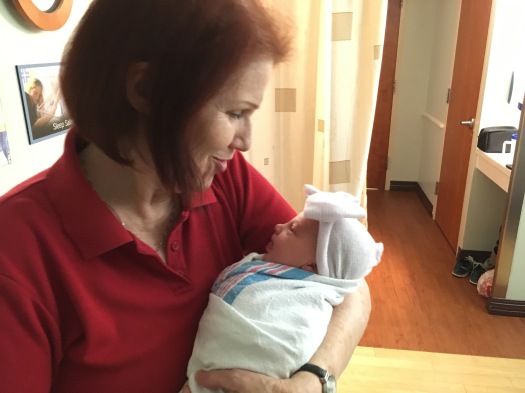
The picture above is of me holding my newest granddaughter Kaylee Marie for the first time on May 17, 2017. Of course, we think she is gorgeous and are thrilled that she is a healthy 7 lb. 8 oz.

Some babies are not born so fortunate. Kaylee’s late Aunt Karen was born in 1982 with a severe heart defect as well as Down Syndrome and faced medical discrimination regarding heart surgery. The ones who stepped up to help were not the so-called “pro-choice” people but rather people who were pro-life.

It was after Karen that I actively joined the pro-life movement and learned that pro-lifers not only helped women and babies in crisis pregnancies but were also active in helping people of all ages and conditions as an antidote to the culture of death.

These wonderful people inspired me to get into personally helping families caring for babies with disabilities, working with people who had severe brain injuries and volunteering with people who had terminal illnesses, dementia or suicidal ideation.

And now, of course, I am also helping my daughter and her husband to get some sleep and adjust to the awesome responsibility and joy of their first child, baby Kaylee.

CONCLUSION

Kaylee’s mom was my next child after Karen. Foregoing medically unnecessary prenatal testing, I happily carried my daughter Joy with the certain knowledge that every child is truly a gift from God and that you can never lose when you love.

Abortion of any baby is ultimately a failure of  that love and reality. We in the pro-life movement are committed to promoting the best for all babies-even the planned and dearly wanted ones like Kaylee Marie-as well as their moms.

This is because pro-life is really an attitude of caring and helping, not political ideology.

How Can Belgian Catholic Psychiatric Hospitals “Adjust” for Euthanasia?

I was in disbelief when I read Michael Cook’s article “Belgian Catholic psychiatric hospitals ‘adjust’ their view of euthanasia”.  I had to read the translated version on the Brothers of Charity order’s statement itself  myself to see if this was “fake news”.

Thankfully, Brother Rene Stockman, the superior general of the Brothers of Charity order, spoke out and said he was devastated by the news and then did three things:

“(F)irst we informed the whole congregation that as general superior we cannot accept this decision, because it is going totally against our charism of the charity. Secondly, we informed the Belgian Bishops conference about the situation and I am in contact with the president, Cardinal De Kesel. Also the Nuncio is informed. Thirdly, we informed the Vatican and all the information has been given to the Secretariat of State. In the meantime we continue to offer our clear arguments why we can never accept euthanasia.”

Brother Rene also warned that:

“In reality, only a few brothers are still involved in the government of the organization, so the majority are lay-people. Yes, there was a lot of pressure, but pressure doesn’t mean that we have to capitulate”

And

“Indeed, the presence of the brothers is not nearly sufficient, but also secularization is also poisoning the congregation in Belgium.”

Ironically, this comes less than 2 years after a pro-assisted suicide UK news service documentary titled “24 and Ready to Die” about Emily, a depressed young Belgian woman, was released but ended with the young woman changing her mind at the last moment.    Despite this, the documentary continued to support euthanasia even though one psychiatric “expert” who treated Emily was obviously wrong when she claimed that Emily’s suffering was so bad that it was “not compatible with life” and that her life did not have “sufficient quality”.

Emily is not the only one to change her mind. A 2014 Belgian study of 100 psychiatric patients  asking for euthanasia  showed that  “8 postponed or cancelled the procedure”. The study’s authors rationalized that these cancellations were “because simply having this option gave them enough peace of mind to continue living”! (Emphasis added)

Fortunately in 2016, the American Psychiatric Association passed a resolution opposing assisted suicide for the mentally ill.

Conclusion

As at least 3 European countries now allow assisted suicide for people with psychiatric problems and other countries like Canada are debating similar measures. Ethicists now write articles like ”Euthanasia for Reasons of Mental Health”  exploring the concept of including people with mental illness.

In the meantime, families like mine will continue to struggle with safety and treatment issues for our severely and chronically mentally ill relatives. We want real help for our loved ones, not assisted suicide or euthanasia. It is not compassionate, supportive or humane to have our loved ones “put down” like dogs.

My Trip to Georgetown University: The Inspiration of a New Generation

I was honored to be asked to give a talk at the annual Cardinal O’Connor Conference On Life at Georgetown University in Washington D.C. on January 28, 2017, the day after the annual March for Life. To be honest, I believe that I received more from the conference and students than I could ever contribute!

The title of my talk was “Killing or Caring? A Nurse’s Professional and Personal Journey”. I spoke about the progression of the Culture of Death through 4 professional and personal stories from abortion through assisted suicide. My stories included my 1982 fight to save the life of my newborn daughter with Down Syndrome and a severe heart defect against some lethal medical discrimination based on her disability. The second story was about how a young man in a car accident in the early 1970s “miraculously” recovered when we nurses refused to give up after the doctor initially predicted that the young man would at best be a so-called “vegetable” if he lived. The third story was about my daughter who died by suicide in 2009 at the age of 30 using an assisted suicide technique she read about and the tragedy of suicide contagion when assisted suicide is normalized and even glamorized. My last story was how I was almost fired from my ICU unit when I refused to participate in a withdrawal of treatment/terminal sedation euthanasia.

I was so moved by the enthusiastic response of the students to the message that the Culture of Death cannot be ignored or tolerated because evil will always expand until we stop it by demanding the recognition that every life is valuable and worthy of protection. I also loved getting a chance to talk to so many of the students after the talk. They inspired me!

Even on my trips to and from Georgetown University, I met two other inspiring young people. One was a lovely young African-American woman seated next to me on the flight to Washington, D.C. She told me about her career as a police officer patrolling the toughest area in Oakland, California. She also spoke about her passion to help the community and how she embraced the challenges of her choice. Who could not be inspired by that?

The Uber driver who drove me to the airport after my talk was similarly inspiring. It turned out that he was a young nurse who emigrated here from Ethiopia last year and was now studying for his national nursing exam to practice in the U.S. His story was fascinating and when he learned I was a veteran nurse, we had a wonderful discussion about nursing as a great career.

CONCLUSION

We sometimes hear the pessimistic opinion that our next generation is self-absorbed and only interested in money and the next cultural fad.

Based on my experiences in Georgetown, I think that our next generation may prove to be one of the best!

Should Ethics Committees be Death Panels?

I volunteered to serve on a newly started hospital ethics committees in the 1990s. While I wanted to help analyze difficult cases and serve as a resource for hospital personnel with ethical concerns, I became increasingly alarmed when I saw cost containment and judgments based on “quality of life” brought up as decisive factors by others on the committee.

I understood more when I researched the beginnings of ethics committees.

BACKGROUND

After numerous failed attempts to legalize euthanasia, the Euthanasia Society of America invented the “living will” in 1967 as a first step in gaining public acceptance of euthanasia by promoting a so-called “right to die”. The group achieved much success by publicly promoting “living wills” as a patient rights document that would give people and/or their families  choice and control at the end of life or, especially after the 1976 Karen Quinlan case, if their quality of life was considered too poor.

Karen Quinlan’s case (where despite predictions,  she continued to live for years after her ventilator was removed) effectively extended the “right to die” to non-terminally ill people said to be in a “persistent vegetative state”, a term invented in 1972 to describe brain-injured people who were awake but assumed unaware.

The later cases of Nancy Cruzan and Terri Schiavo  further extended the “right to die” to withdrawal of feeding tubes and other basic medical care.

Eventually the Euthanasia Society of American became The Society for the Right to Die and finally evolved into Compassion and Choices and the “right to die” became “death with dignity” by lethal overdose.

ETHICS COMMITTEES

Ethics committees in hospitals began to emerge after the Quinlan case as an alternative to controversial court cases and became more prevalent in the 1980s, especially after the Baby Doe case in 1982. That case involved a newborn boy with Down Syndrome and an easily correctable defect that prevented him from eating safely. The parents refused the surgery and were upheld by a judge. An appeal was started but the baby died of starvation and dehydration before his appeal could be heard. Disability, pro-life and other groups and individuals were outraged.

Concerns about lethal medical discrimination against infants with disabilities resulted in the Baby Doe Regulations mandating maximal care to any impaired infant, unless certain exceptions are met.

However, there was much medical and legal opposition to these rules and:

“By the end of 1984,  the American Academy of Pediatrics and the American Hospital Association issued statements supporting the use of interdisciplinary ethics committees as an alternative to governmental investigation in such cases.” (Emphasis added)

AN UNEXPECTED PROBLEM

But a surprising development happened on the way to privatizing life and death decisions through ethics committees.

Some people and families resisted and insisted that medical treatment be continued for themselves or their loved ones despite a “hopeless” prognosis and the recommendations of doctors and/or ethicists to stop treatment. Many doctors and ethicists were appalled that their expertise would be challenged and they theorized that such families or patients were unrealistic, “in denial” about the prognosis or were mired in guilt or dysfunctional family relationships.

However, these doctors and ethicists were shocked when in 1991, a court ruled in favor of the husband of Helga Wanglie when he insisted that treatment be continued for his wife despite a “persistent vegetative state” diagnosis.

That court decision was widely criticized in ethics circles and in 1999, Texas enacted a medical futility law.

THE TEXAS ADVANCE DIRECTIVES ACT

In 1999, Texas became the first state to expressly permit doctors to stop life sustaining treatment without consent after a review process by an ethics committee. According to the Texas Advance Directives Act, when care is deemed “futile” or “inappropriate” and the patient or family disagrees,  the patient or family is given 10 days to find another health facility for the patient and pay for “any costs incurred” in the transfer. “If a provider cannot be found willing to give the requested treatment within 10 days, life-sustaining treatment may be withdrawn unless a court of law has granted an extension. “ (Emphasis added)

Thus an ethics committee becomes the equivalent of a death panel.

This kind of ethics committee overreach has now spread far beyond Texas. For example in 2002, I was involved in a similar a case in Missouri involving a brain-injured man despite the state not having a Texas-style law.  It was difficult to find another health care facility to accept the man within the 2 week deadline given by the hospital but ultimately the man not only survived but recovered after the transfer.

The Texas law is now being challenged in the case of Evelyn Kelly, individually, and on behalf of the estate of David Christopher Dunn v Harris Methodist Hospital, a case where a terminally ill, conscious man’s mother fought the ethics committee’s decision to remove his ventilator.

Although Mr. Dunn has since died, the case continues on the question of whether the Texas law is constitutional or not.

In the summary judgement motion filed, Ms. Kelly and her lawyers state that the ethics committee’s action “is an alarming delegation of power by the state law” and “is a far cry from the due process intended to protect the first liberty mentioned in Article 1, Section 19 of the Texas Constitution and that of the Fourteenth Amendment”. (Emphasis added)

Mrs. Kelly and her lawyers make a good point. How can a life and death decision be automatically delegated by law to an unregulated, unaccountable group of individuals outside the legal system?

Even worse, how can the right to live have less legal protection than the “right” to be dead?

The answers to these questions are critically important.

Parent Power

During the last few months, I have been writing about efforts by some legislators in Missouri and now Kansas to block the passage of Simon’s Law, a bill that exposed and sought to change the secret futility polices in hospitals that led to the death of Simon Crosier, a baby with Trisomy 18. I even wrote my own testimony in support of the bill.

But now in a stunning development, Dr. John Lantos wrote an opinion editorial in the Journal of the American Medical Association (JAMA) admitting that withholding life-sustaining treatment from babies with Trisomy 13 and 18 was really a value judgment rather than a medical judgment:

Thirty years ago, pediatric residents were taught that trisomy 13 and 18 were lethal congenital anomalies. Parents were told that these conditions were incompatible with life. There was a tacit consensus that life-sustaining treatment was not medically indicated. Clinical experience usually was consistent with this self-fulfilling prophecy.

But with social media, this changed.  Parents share stories and videos, showing their happy 4 and 5 year old children with these conditions. Survival, it turns out, is not a rare as once thought.”

This survival is even more impressive in light of a related JAMA article titled “Outcomes of Surgical Interventions in Children with Trisomies 13 and 18”   which stated that although “The median age of survival was 13 and 9 days, respectively, in children with trisomies 13 and 18”:

Among children with trisomies 13 and 18 who lived to 6 months, survival at age 10 years was 51% and 60%, respectively.

Note that what is changing the former medical perception of “incompatible with life” is not any new medical advance but rather loving parents who refused to accept the predicted death sentences for their babies, insisted on treatment and then used Facebook and other social and regular media to show off their children’s real lives. I call this Parent Power and it is based on love.

That power may help bills like Simon’s Law to finally pass.

DOWN SYNDROME (Trisomy 21)  AND PARENT POWER

I personally  learned about parent power when my daughter Karen was born in 1982 with Down Syndrome and a severe heart defect. 20+ years before Karen’s birth,  children with Down Syndrome were routinely institutionalized as accepted medical practice. But by the time Karen was born, almost all newborns with Down Syndrome went home with their parents and eligible early childhood programs.

What caused this dramatic change?

Again, it was primarily parent power.

Parents like Kay and Marty McGee not only ignored the standard medical advice to institutionalize their daughter but also fought for support and help for their daughter and others like her. They eventually founded the National Association for Down Syndrome in 1960 (http://www.nads.org/about-us/history-of-nads/ )

By working with other parents and reaching out to willing educational, legal and medical professionals, they helped change medical attitudes, the educational system and public acceptance of people with Down Syndrome who are now achieving goals once thought impossible.

Although it continues to be a long-term effort to ensure non-discriminatory medical treatment for people with Down Syndrome or other disabilities, people with Down Syndrome who were once predicted to die at an early age now have a life expectancy of 60 years and are achieving goals once thought impossible.

THE FIGHT  IS STILL FAR FROM OVER

Unfortunately and on the heels of the welcome editorial comment on babies with Trisomy 13 and 18, comes the news about the tragic circumstances surrounding the death of little Israel Stinson.

Two-year old Israel died after a judge suddenly and unexpectedly rescinded a court order that prevented a California hospital from removing the ventilator from little Israel before his parents could get an opinion from another neurologist after conflicting medical opinions about whether or not Israel was brain dead.

In this case, parent power was overturned by a single judge after the family thought that Israel was protected by a court order.

Not only is this personally tragic for Israel and his parents but this development also serves to devastate the crucial trust needed in our medical and legal systems.


Can We Choose to Live?

In a 2016 study “What does “futility” mean? An empirical study of doctors’ perceptions” in the Medical Journal of Australia distilled this definition from the majority of responses:

Futile treatment is treatment that has only a very low chance of achieving meaningful benefit for the patient in terms of:

  • improving quality of life;

  • sufficiently prolonging life of acceptable quality; or

  • bringing benefits that outweigh the burdens of treatment

Alarmingly, the article also states: “Doctors may reach a view that treatment is futile, informed by their definition of futility and clinical indicators such as functional status, disease severity, and age.” (Emphasis added.)

Over 10 years ago, I wrote an article “Futility Policies and the Duty to Die” about little-known futility policies being promoted, even in Catholic hospitals. These policies allow doctors and ethics committees to overrule patients’ or families’ decisions to continue  care or treatment when a person’s prognosis or “quality of life” was considered too poor.

In February, I wrote about the still not passed Simon’s Law here in Missouri that exposed the secret futility policies that led to the death of Simon Crosier, a baby with Trisomy 18.

However, a couple of weeks ago, a horrified nurse friend showed me two health care directive she recently received as a patient. One was from a Catholic  health care facility and the other was a standard Missouri durable power of attorney directive . The wording in both made her question whether such futility policies were now being incorporated into such directives.

I understand her concern.

THE CATHOLIC  DURABLE POWER OF ATTORNEY FOR HEALTH CARE DIRECTIVE

A person signs such a directive in order to have a family member or other trusted person make health care decisions when they are incapacitated. An legally incapacitated person is  defined as  a “Person unable to make rational decisions or engage in responsible actions. Mental and/or physical deficiency, disability, illness, drug use causing temporary or permanent impairment.”

“Living wills” and other advance health care directives,  invented by so-called “right to die” groups, claimed to give people the power to choose at the end of life

Remembering the prolonged dehydration deaths of Nancy Cruzan and Terri Schiavo, two non-terminally ill but severely brain-injured women said to be in the so-called “persistent vegetative state”, a person might sign a directive but want to prevent such a terrible death for himself or herself.

However, while this Catholic directive has a section to make such a decision, it also an asterisked section attached to both withdrawal and refusal of withdrawal:

I DO NOT AUTHORIZE my Agent/Proxy to direct a health care provider to withhold or withdraw artificially supplied nutrition and hydration (including tube feeding of food and water) as  permitted by law.*

*(In a XXXXX health care facility, nutrition and hydration may be withheld or withdrawn if I have an irreversible condition which is end-state or terminal AND if the means of preserving my life have likely risks and burdens which outweigh the expected benefits or are disproportionate without a reasonable hope of benefit.) (Emphasis added)

Using such terms as “end-state or terminal”  could, for example, apply  not only to a “persistent vegetative state” but also to Alzheimer’s or other dementia. “Artificially supplied” could encompass a simple IV while the asterisked section inexplicably does not even include the words “artificially supplied” before the food and water.  Along with using terms like “disproportionate without a reasonable hope of benefit” without stating who makes that determination or what the criteria is for benefit, the average person could be understandably confused in a real life situation.

THE MISSOURI DURABLE POWER OF ATTORNEY DIRECTIVE

Many, if not most, Missouri hospitals have this directive.

This directive has a section stating:

If I am persistently unconscious or there is no reasonable expectation of my recovery from a seriously incapacitating or terminal illness or condition, I direct that all of the life-prolonging procedures that I have initialed below be withheld or withdrawn. (Emphasis added)

This list includes not only “artificially supplied nutrition and hydration” but also antibiotics, CPR and “all other life-prolonging medical or surgical procedures that are merely intended to keep me alive without reasonable hope of improving my condition or curing my illness or injury.” (Emphasis added) Note that, according to the directive, a person need not have a terminal illness or be in a coma to qualify for withdrawal.

The next section can seem reassuring if a person has qualms about a decision to withdraw treatment or care being made too quickly or influenced by age or disability.  However, the directive only states that such treatments or care may  be tried-at the doctor’s  discretion-for an undefined “reasonable”period of time before withdrawal. Unfortunately, this section also includes automatic consent to pain relief, even in dosages that can suppress breathing and appetite as in terminal sedation:

3. However, if my physician believes that any life-prolonging procedure may lead to a recovery significant to me as communicated by me or my Agent to my physician, then I direct my physician to try the treatment for a reasonable period of time.  If it does not cause my condition to improve, I direct the treatment to be withdrawn even if it shortens my life.  I also direct that I be given medical treatment to relieve pain or to provide comfort, even if such treatment might shorten or suppress my appetite or my breathing, or be habit-forming. (Emphasis added)

The Catholic health directive also includes this section, almost verbatim.

CONCLUSION

With the help of the media, mentally disabling conditions like Alzheimer’s are often portrayed to the public as a fate worse than death and a terrible burden on a family. Tragically, the “right to die” mentality has led many people to conclude that they should die if they develop such conditions or, if dying, that their death may be accelerated to spare their families.

As a nurse who has seen the problems with advance directives firsthand, I helped design my own durable power of attorney advance directive without exemptions or checkoffs that could be misused or misinterpreted. I also educated my husband and family about the medical ethics involved.

As I wrote in my blog Living with “Living Wills”, there are better alternatives available to the standard kinds of advance directives even though no directive is foolproof.

Adequately informed consent is required for legal consent to surgery. Shouldn’t advance directives that involve life or death be held to the same standard before signing?


Canada and Assisted Suicide for Psychiatric Patients

My first husband and the father of my children was a caring man and dedicated psychiatrist who himself eventually became disabled by mental illness. Early in our marriage, I helped him write his medical journal articles and we planned to eventually include me in his psychiatric practice to work with the families of his patients. As a nurse, I always believed that families were ideally the best support system for patients and our goal was to improve the care and outcomes of people with mental illness.

Tragically, my husband’s mental illness worsened despite intensive treatment. He ultimately abandoned our family and lived the next 26 years in and out of hospitals and assisted living places before he died of natural causes in 2014.

Thus I have a unique perspective on the legal, medical and personal aspects of mental illness.

At one point, a family member sympathetically suggested that it might be better for everyone if he committed suicide. I was horrified. You don’t give up on sick people and I told this person that I would do anything in my power to stop him if he tried to kill himself. Suicide would be the ultimate tragedy.

Canada and Its New Assisted Suicide Law

In February 2015, the Canadian Supreme Court ruled unanimously in the Carter v. Canada case to legalize physician-assisted suicide for competent, consenting adults whose suffering is due to a “grievous and irremediable” medical condition and gave Parliament a year to develop a regulatory regime along these “parameters.”

The Parliamentary Special Joint Committee on Physician-Assisted “Dying” suggested that the “grievous and irremediable” criterion includes nonterminal medical conditions, including psychiatric disorders.

The federal government’s Bill C-14, on the other hand, defined “grievous and irremediable” as an “advanced state of irreversible decline in capabilities” in a person for whom “natural death has become reasonably foreseeable.”  The Senate ultimately passed the bill but the controversy about assisted suicide for psychiatric patients is still raging.

In a June 21, 2016 commentary in the Canadian Medical Association Journal “Should assisted dying for psychiatric disorders be legalized in Canada?”, authors Scott Y.H. Kim MD PhD and Trudo Lemmens LLM DCL warn against this.

As they note:

In Belgium and the Netherlands, medical assistance in dying has been provided to people with chronic schizophrenia, posttraumatic stress disorder, severe eating disorders, autism, personality disorders and even prolonged grief.

The authors conclude that:

Because of the necessarily broad criteria used to regulate assisted dying (in Canada), legalizing the practice for psychiatric conditions will likely place already vulnerable patients at risk of premature death.

However, others like Belgium psychiatrist Joris Vandenberghe, MD, PhD disagree:

“I think the current approach taken by the Canadian government is a bit too strict because it doesn’t fully recognize the enormous impact that psychiatric disorders can have on patients,” Dr Vandenberghe told Medscape Medical News. (Emphasis added)

However, even Dr. Vandenberghe recognizes the problems while still calling for more “safeguards”:

“I am generally not opposed to our euthanasia legislation and agree that patients suffering from psychiatric conditions should not be excluded from our legislation. However, extra precautions are urgently needed.

“I’m not happy with the way things work here [in Belgium]. Sometimes euthanasia is used with insufficient reluctance on the part of the healthcare professionals involved. We’re missing opportunities for treatment, and we need more safeguards,” said Dr. Vandenberghe.

So for me, the answer lies in a thorough evaluation of a patient prior to euthanasia. There really is no time pressure in psychiatric disorders, and if you have a multidisciplinary committee involved in the evaluation, you can take care of lot of the concerns we now have about euthanasia in the setting of psychiatric illness.”

The reality is that very few psychological or psychiatric referrals are even now made for anyone considering assisted suicide either in the US or in Europe. The answer is not more “safeguards” for assisted suicide practitioners to disregard while enjoying virtual legal immunity but rather an emphatic “No!” from the public as well the legal and medical systems. We also need an unbiased media to publicly expose the real facts about legalized medical killing.

 Conclusion

I have seen both the legal and medical systems often fail people with mental illness like my ex-husband who desperately need treatment and safety.

On the medical side, I begged for direction from my ex-husband’s doctors about what I could do to help him but I was told that there was nothing I could do or not do since the doctors were seeing him regularly. I was not allowed to even know his diagnosis without his permission.

On the legal side, I had problems getting supervised visitation even after a hostage situation.  Due to almost constant harassment, I had multiple orders of protection violated without adequate legal response. And despite being on mental illness disability, my ex-husband was allowed to file and lose several frivolous lawsuits-until he ran out of money.

It was a heartbreaking situation.

However, I always hoped that my ex-husband would improve so that he could at least have a better relationship with his children. Even though that did not happen, I am grateful that he did not die by suicide, assisted or otherwise.

Unfortunately, my family’s experience is not unique among families with a member who is mentally ill.

If our medical and legal systems are already often failing people with mental illness and their families, how can we allow them the power to “assist” our loved ones’ suicide?

That would be the ultimate betrayal of an already stigmatized and vulnerable group of people.

My Submission to the New Zealand Parliment on Physician-assisted Suicide

On January 30, 2016, I wrote this submission to the New Zealand Parliament’s Health Committee. Today I received an email that it was accepted.

Here is my submission:

Please Reject Physician-assisted Suicide by Nancy Valko, RN ALNC

Nancy Valko, RN ALNC

I have been a registered nurse in the US since 1969. After working in critical care, hospice, home health, oncology, dialysis and other specialties for 45 years, I am currently working as a legal nurse consultant and volunteer. Over the years, I have cared for many suicidal people as well as people who attempt suicide.

I have served on medical and nursing ethics committees, served on disability and nursing boards. I have written and spoken on medical ethics-especially end of life issues-since 1984.

Submission

marievalko Picture of Marie Valko 1979-2009

As a nurse and the mother of a suicide victim, I am alarmed to learn that New Zealand is considering the legalization of physician-assisted suicide. I beg you to uphold the legal and ethical standard that the medical profession must not kill their patients or help them kill themselves. Suicide is a tragedy to be prevented if possible, not a civil right. I am also willing to make an oral submission to the New Zealand parliament.

My Daughter Marie Killed Herself Using an Assisted Suicide Technique

In 2009, I lost a beautiful, physically well 30-year-old daughter, Marie, to suicide after a 16-year battle with substance abuse and other issues. Her suicide was like an atom bomb dropped on our family, friends and even her therapists.

Despite all of our efforts to save her, my Marie told me that she learned how to kill herself from visiting suicide/assisted suicide websites and reading Derek Humphry’s book Final Exit. The medical examiner called Marie’s suicide technique “textbook final exit” but her death was neither dignified nor peaceful.

Marie was not mere collateral damage in the controversy over physician-assisted suicide. She was a victim of the physician-assisted suicide movement, seduced by the rhetoric of a painless exit from what she believed was a hopeless life of suffering.

Suicide Contagion

Adding to our family’s pain, at least two people close to Marie became suicidal not long after her suicide. Luckily, these two young people received help and were saved, but suicide contagion, better known as “copycat suicide”, is a well-documented phenomenon. Often media coverage or publicity around one death encourages other vulnerable people to commit suicide in the same way.

Study Shows Legalizing Physician-Assisted Suicide is Associated with an increased rate of Total Suicides

A recent article in the Southern Medical Journal titled “How Does Legalization of Physician-Assisted Suicide Affect Rates of Suicide?” came to these conclusions:

“Legalizing PAS has been associated with an increased rate of total suicides relative to other states and no decrease in nonassisted suicides. This suggests either that PAS does not inhibit (nor acts as an alternative to) nonassisted suicide, or that it acts in this way in some individuals but is associated with an increased inclination to suicide in other individuals.”

The Health and Economic Costs of Suicide

My Marie was one of the almost 37,000 reported US suicides in 2009. In contrast, only about 800 assisted-suicide deaths have been reported in the past 16 years in Oregon, the first state to legalize physician-assisted suicide. According to the Centers for Disease Control (CDC) suicide was the 10th leading cause of death for Americans in 2012, with “More than 1 million people reported making a suicide attempt in the past year” and “More than 2 million adults reported thinking about suicide in the past year.” The CDC estimates that suicide “costs society approximately $34.6 billion a year in combined medical and work loss costs”, not to mention the emotional toll on families.

Obviously our real health-care crisis here is a staggering and increasing rate of suicides, not the lack of enough assisted suicides.

Brittany Maynard

There was a media frenzy in October 2014 when of Brittany Maynard, a young newlywed woman with a brain tumor, announced plans to commit physician-assisted suicide on November 1 and raise money to have physician-assisted suicide legalized in all US states. There was an immediate and unprecedented media frenzy surrounding Ms. Maynard’s tragic story that routinely portrayed her pending assisted suicide as “heroic” and even counting down the days to her suicide. Personally, I thought this looked like a crowd on the street shouting for a suicidal person on a window ledge to jump.

In the end, Brittany hesitated for a day before she went through with her pledge to take the lethal overdose.

Now, assisted suicide supporters even deny that physician-assisted suicide is suicide, insisting that media stories use euphemisms like “aid-in-dying” and “death with dignity” in cases like Ms. Maynard’s to make assisted suicide more palatable to the public. However, this defies common sense when the definition of suicide is the intentional taking of one’s own life.

Physician-assisted Suicide and Medical Discrimination

I have been a registered nurse for 46 years, working in intensive care, oncology, hospice and home health among other specialties. Personally and professionally, I have cared for many people who attempt or consider killing themselves.

Some of these people were old, chronically ill or had disabilities. Some were young and physically healthy. A few were terminally ill. I cared for all of them to the best of my ability without discrimination as to their condition, age, socioeconomic status, race or gender. I will do anything to help my patients — except kill them or help them kill themselves.

Suicide prevention and treatment works, and the standards must not be changed just because some people insist their desire for physician-assisted suicide is rational and even a civil right

Why New Indiana Law Bans Abortions Based on Race, Sex or Disabilities like Down Syndrome

Just three days after World Down Syndrome Day, Governor Mike Pence of Indiana signed a law that, among other provisions, bans abortion doctors from knowingly aborting an unborn baby solely because of an unborn baby’s race, sex, or genetic disability such as Down Syndrome.

Predictably, there was an immediate backlash from groups like Planned Parenthood, the mainstream media and others.

A Bit of History

In 2008, the  Prenatally and Postnatally Diagnosed Conditions Awareness Act was signed into law by President George W. Bush. This law, co-sponsored by Senators Edward Kennedy (D-MA) and Sam Brownback (R-KS), was meant to provide parents receiving a pre- or post-natal diagnosis of Down syndrome or other disabilities – like cystic fibrosis and spina bifida – more information and support than had been available in the past. It was inspired by the words and actions of Brian Skotko , who has a sister with Down Syndrome and who is now a board-certified medical geneticist and Co-Director of the Down Syndrome Program at Massachusetts General Hospital.
Among other provisions, the law was written to:

coordinate the provision of, and access to, new or existing supportive services for patients receiving a positive diagnosis for Down syndrome or other prenatally or postnatally diagnosed conditions, including—

the establishment of a resource telephone hotline accessible to patients receiving a positive test result or to the parents of newly diagnosed infants with Down syndrome and other diagnosed conditions

the establishment of a national registry, or network of local registries, of families willing to adopt newborns with Down syndrome or other prenatally or postnatally diagnosed conditions, and links to adoption agencies willing to place babies with Down syndrome or other prenatally or postnatally diagnosed conditions, with families willing to adopt

the establishment of awareness and education programs for health care providers who provide, interpret, or inform parents of the results of prenatal tests for Down syndrome or other prenatally or postnatally diagnosed conditions, to patients. (Emphasis added)

However, the law was never funded due to disputes among members of Congress “over how the topic of abortion would be handled in the materials accepted for distribution.”

But while such positive initiatives went unfunded, funding has been no problem for companies developing prenatal screening tests that can be done ever more easily and earlier in pregnancy. Currently, there is a “cell-free DNA” blood test for expectant mothers that can be done as early as 10 weeks into a pregnancy that claims near perfect accuracy in detecting Down Syndrome and other conditions.

However, a three month examination of these unregulated tests by the non-profit New England Center for Investigative Reporting reported

“companies are overselling the accuracy of their tests and doing little to educate expecting parents or their doctors about the significant risks of false alarms.”

And the Center also noted that “prenatal screening tests prompt abortions”.

Even the abortion-supporting American Congress of Obstetrician and Gynecologists’ (ACOG) current position expresses concerns and states that :

“Given the potential for inaccurate results and to understand the type of trisomy  for recurrence-risk counseling, a diagnostic test should be recommended for a patient who has a positive cell-free DNA test result.”

and

“Management decisions, including termination of the pregnancy, should not be based on the results of the cell-free DNA screening alone.” (Emphasis added)

Nevertheless, a recent study showed that abortion after prenatal diagnosis of Down Syndrome reduced the Down Syndrome community by 30%.

“Disclosing Down Syndrome to Pregnant Patients: Must You Give an Upside?”

In this rather offensively titled opinion article by Arthur Caplan, PhD. who heads the Division of Medical Ethics at NYU’s Langone Medical Center, he criticizes laws like Indiana’s:

One reason that women seek abortions is because they don’t want to have a child with Down syndrome. Recently there has been a movement among people who have had children with Down syndrome to say, “That rate of abortion indicates bias. It’s not really choice. It’s fear of Down syndrome. It’s prejudice against Down syndrome.” Some families who have had children with Down syndrome say that they mean a lot to their family; that it has been a great experience to have a child even though the child has Down syndrome; they accomplish a lot, they’re happy, and people have the wrong view about it.

Some have gone further and started to change state laws to say that when you get a positive test for Down syndrome, you are required to get in touch with the Down syndrome associations in your state and get the message that balances the bias that no one wants a kid with Down syndrome.

The problem is that far too many medical professionals themselves seem to have a negative bias when it comes to conditions like Down Syndrome and see no “upside” to Down Syndrome versus abortion. New or expectant parents deserve better, especially when that professional is giving them their baby’s diagnosis.

I found that out personally not only when I had my daughter Karen but also when I talked to other parents who encountered negative attitudes from some medical professionals.

Eventually, we developed an educational program for hospital maternity divisions about how to help new parents of children born with disabilities. I always brought a child with Down Syndrome and his or her parent to these programs and the reaction was amazing. Doctors and nurses who only saw upset parents before now heard from these same parents about the challenges and very real joys of life with their child. Even better, these professionals were charmed by meeting the children themselves.

We found that changes in attitudes and information can change future outcomes for the better for children and their parents.

Conclusion

It is natural to feel shocked and overwhelmed when you are told either before or after birth that your baby has a condition. Panic and fear is not uncommon.

But it is at this vulnerable time that parents especially need the accurate information, resources and support that the Kennedy-Brownback law was designed to provide.

Unfortunately, we have groups like Planned Parenthood that demand legalized abortion at any time during pregnancy for any or no reason at all as a civil right. However, that must not stop us from continuing to strive for a compassionate society that protects every human life, promotes accurate information and fights discrimination at the same time.