My Amazing Operation

Last week, I underwent a minimally invasive (small incision) operation that I hadn’t heard of before but which appears to be already making a big difference in my health. The operation is called a parathyroidectomy.

The parathyroid glands are four small glands located behind the thyroid in the neck whose sole function is to control the amount of calcium in our bodies within a tight blood range of about 8.5-10.5 mg/dL, depending on a particular laboratory’s values.

As the American Association of Endocrine Surgeons’ website notes:

“Every cell and organ in the body uses calcium as a signal to regulate their normal function. Therefore, it is crucial that calcium levels are tightly controlled. Abnormally high blood calcium levels can damage every organ in the body gradually over time.” (Emphasis added)

If one or more of these small parathyroid glands starts growing (called an adenoma and rarely cancerous), this causes the parathyroid to release too much parathyroid hormone which causes abnormally high calcium in the bloodstream. This can cause serious health problems like cardiovascular disease, osteoporosis (bone loss which can lead to fractures), depression , increased risk of cancer and even premature death.

In the US, about 100,000 people of all ages develop this condition called primary hyperparathyroidism each year which predominantly affects older “populations and women two to three times as often as men.

The diagnosis of hyperparathyroidism is sometimes missed because the blood calcium is not especially high at first and symptoms can be unnoticed, mild or confused with other conditions like normal aging.  Also, doctors often take a wait and see approach if patients have no symptoms.

In primary hyperthyroidism, the diagnosis is usually made by discovering a high blood calcium level (often checked routinely at yearly visits) and a high parathyroid level in the blood (PTH) if other causes of high blood calcium have been ruled out. The PTH blood test is NOT a routine test and must be ordered separately.

In the 1990s, calcium levels above 12 mg/dL and age less than 50 were the National Institutes of criteria for parathyroidectomy when a patient did not have the classic symptoms of hyperparathyroidism, especially because the operation was such a big surgery.  However, now we have a minimally invasive parathyroid surgery that is usually low risk and only involves a small incision that can often even be done on an outpatient basis.  In the 2000s, the high calcium criteria for surgery on patients without symptoms was recommended to be reduced to just 1 mg/dL above the normal range (about 11.5 mg/dL).  However, my surgeon just told me last month that the criteria may be changing again down to an even lower level but that scientific paper will not be published until December.

MY EXPERIENCE

For the last few years, my blood calcium was at the upper end of normal and I had a diagnosis of borderline osteoporosis despite taking calcium pills daily and taking osteoporosis medication in the past.

When my blood calcium rose to 11.9, I researched the topic and I was alarmed by what I read. It was then that I realized that the symptoms of bone pain and increased fatigue that I never thought to mention to my doctor could actually be symptoms of an adenoma in my parathyroid.

I asked my doctor about getting a PTH test. That test turned out to be high and I was quickly referred to a surgeon well-experienced with hyperparathyroidism.

I underwent a short, minimally invasive surgery and I was one of the lucky ones who had this experience as described on the endocrineweb.com site:

Even though half of patients with this hyperparathyroidism (Parathyroid Disease) will state that they feel just fine, after a successful parathyroid operation more than 85 percent of these patients will claim to “feel much better”! Some say it’s like “someone turned the lights on”.

In my case, my bone pain was gone and I felt more energetic than I had in a long time.

I am happy that this operation is expected to start relieving my bone loss by returning the blood calcium to my bones. I am also relieved that I am avoiding long term damage to my body from high blood calcium.

I hope that this information will help others who may have this disease find better health!

CONCLUSION

There is still controversy over when and how to treat mild hyperparathyroidism without symptoms. Some experts have made extravagant claims about parathyroid surgery that make it sound like a miracle cure while others are more cautious about treatments and surgery. There is a tremendous amount of information available, especially on the internet, but I always recommend discussing health concerns with your doctor first.

Do Pro-Lifers Really Believe That “Life Begins at Conception and Ends at Birth”?

meeting Kaylee

One of the most frequently repeated myths in the abortion debate is that pro-lifers really don’t care about life. Some abortion supporters even maintain that pro-lifers believe “life begins at conception and ends at birth”   and do nothing for women and babies after birth.

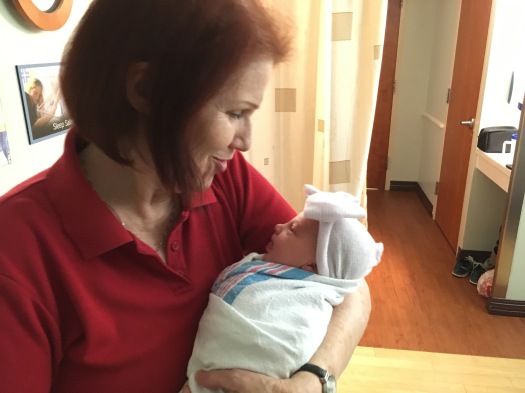
The picture above is of me holding my newest granddaughter Kaylee Marie for the first time on May 17, 2017. Of course, we think she is gorgeous and are thrilled that she is a healthy 7 lb. 8 oz.

Some babies are not born so fortunate. Kaylee’s late Aunt Karen was born in 1982 with a severe heart defect as well as Down Syndrome and faced medical discrimination regarding heart surgery. The ones who stepped up to help were not the so-called “pro-choice” people but rather people who were pro-life.

It was after Karen that I actively joined the pro-life movement and learned that pro-lifers not only helped women and babies in crisis pregnancies but were also active in helping people of all ages and conditions as an antidote to the culture of death.

These wonderful people inspired me to get into personally helping families caring for babies with disabilities, working with people who had severe brain injuries and volunteering with people who had terminal illnesses, dementia or suicidal ideation.

And now, of course, I am also helping my daughter and her husband to get some sleep and adjust to the awesome responsibility and joy of their first child, baby Kaylee.

CONCLUSION

Kaylee’s mom was my next child after Karen. Foregoing medically unnecessary prenatal testing, I happily carried my daughter Joy with the certain knowledge that every child is truly a gift from God and that you can never lose when you love.

Abortion of any baby is ultimately a failure of  that love and reality. We in the pro-life movement are committed to promoting the best for all babies-even the planned and dearly wanted ones like Kaylee Marie-as well as their moms.

This is because pro-life is really an attitude of caring and helping, not political ideology.

“13 Reasons Why”and Why Not

Today, it is hard to keep up with the constant stream of information coming not only from TV and movies but also from the social network. But to understand and hopefully to protect and help our children and others in today’s culture, it is important to keep up with current media and trends as much as possible.

This is why, after reading articles like “13 Reminders About Netflix’s ‘Thirteen Reasons Why’” about a popular Netflix series featuring a high school girl named Hannah who gruesomely kills herself and leaves 13 tapes for the people she blames for her suicide, I decided to watch this often acclaimed  and controversial TV series myself.

After watching several episodes, I recognized some of the factors that made “Pretty in Pink” and “The Breakfast Club” so popular when my children were teenagers. The characters are attractive and bright high school students who wrestle with problems of self-esteem, setbacks, hormones and popularity.  In the end, most of the characters in those older movies were happier and/or wiser.

But the story arc and characters in “13 Reasons Why” are much darker. So far in the episodes I have watched, these teenagers are apathetic about school, seem to have no sense of humor and they dislike or barely tolerate their parents. Their overwhelming self-absorption with real or perceived offenses often leads them to be thoughtlessly cruel even to their friends. The adults in the series fare little better as they struggle with their own anger, sadness and guilt in trying to understand the tragedy.

The main character Hannah sounds almost triumphant in the tapes while chronicling the deficiencies in the people she holds responsible for her suicide. The people hearing the tapes are understandably devastated but revenge seems to be Hannah’s goal.

Even worse, the series’ depiction of Hannah’s descent to suicide, making the tapes and the reactions of her classmates tends to sensationalize suicide with little to no insight about prevention and treatment. The big lesson seems to be that bullying and sexual assault can be life-threatening to vulnerable teens.

Because this deliberately shocking series is so accessible to young people and teen suicides are rising,  many schools are now concerned about this series as are mental health experts  who recognize the phenomenon of suicide contagion.

In response to complaints and concerns from as far away as Canada and New Zealand, Netflix has now issued the following statement:

 There has been a tremendous amount of discussion about our series 13 Reasons Why. While many of our members find the show to be a valuable driver for starting important conversation with their families, we have also heard concern from those who feel the series should carry additional advisories. Currently the episodes that carry graphic content are identified as such and the series overall carries a TV-MA rating. Moving forward, we will add an additional viewer warning card before the first episode as an extra precaution for those about to start the series and have also strengthened the messaging and resource language in the existing cards for episodes that contain graphic subject matter, including the URL 13ReasonsWhy.info  — a global resource center that provides information about professional organizations that support help around the serious matters addressed in the show.

As a nurse who has worked professionally and personally with suicidal people as well as the mother of a daughter who died by suicide, I am glad Netflix is acknowledging at least some of the problems with the series. However, this series and the plight of our young people growing up in an increasingly secularized, materialistic and divided world that rejects God demands more.

We need to give our young people hope and support as they navigate the often rocky road to adulthood. And we also need to show them that the real heroes are those people whose dedication, moral virtues, hard work, selflessness and idealism inspire all of us to make a better world where no one will want to watch the so-called “entertainment” of a “13 Reasons Why”.


How Can Belgian Catholic Psychiatric Hospitals “Adjust” for Euthanasia?

I was in disbelief when I read Michael Cook’s article “Belgian Catholic psychiatric hospitals ‘adjust’ their view of euthanasia”.  I had to read the translated version on the Brothers of Charity order’s statement itself  myself to see if this was “fake news”.

Thankfully, Brother Rene Stockman, the superior general of the Brothers of Charity order, spoke out and said he was devastated by the news and then did three things:

“(F)irst we informed the whole congregation that as general superior we cannot accept this decision, because it is going totally against our charism of the charity. Secondly, we informed the Belgian Bishops conference about the situation and I am in contact with the president, Cardinal De Kesel. Also the Nuncio is informed. Thirdly, we informed the Vatican and all the information has been given to the Secretariat of State. In the meantime we continue to offer our clear arguments why we can never accept euthanasia.”

Brother Rene also warned that:

“In reality, only a few brothers are still involved in the government of the organization, so the majority are lay-people. Yes, there was a lot of pressure, but pressure doesn’t mean that we have to capitulate”

And

“Indeed, the presence of the brothers is not nearly sufficient, but also secularization is also poisoning the congregation in Belgium.”

Ironically, this comes less than 2 years after a pro-assisted suicide UK news service documentary titled “24 and Ready to Die” about Emily, a depressed young Belgian woman, was released but ended with the young woman changing her mind at the last moment.    Despite this, the documentary continued to support euthanasia even though one psychiatric “expert” who treated Emily was obviously wrong when she claimed that Emily’s suffering was so bad that it was “not compatible with life” and that her life did not have “sufficient quality”.

Emily is not the only one to change her mind. A 2014 Belgian study of 100 psychiatric patients  asking for euthanasia  showed that  “8 postponed or cancelled the procedure”. The study’s authors rationalized that these cancellations were “because simply having this option gave them enough peace of mind to continue living”! (Emphasis added)

Fortunately in 2016, the American Psychiatric Association passed a resolution opposing assisted suicide for the mentally ill.

Conclusion

As at least 3 European countries now allow assisted suicide for people with psychiatric problems and other countries like Canada are debating similar measures. Ethicists now write articles like ”Euthanasia for Reasons of Mental Health”  exploring the concept of including people with mental illness.

In the meantime, families like mine will continue to struggle with safety and treatment issues for our severely and chronically mentally ill relatives. We want real help for our loved ones, not assisted suicide or euthanasia. It is not compassionate, supportive or humane to have our loved ones “put down” like dogs.

“Physician-Assisted Dying: Is a Patient’s Despair Reversible?” by Arthur Caplan, PhD. And Maurie Markman, MD

A while back, I received a phone call asking me to talk to a man in another state who was desperately seeking physician-assisted suicide. He was in the later stages of a degenerative disease and wanted to die before his condition “got too bad”.

I talked to this man I will call “John” for quite a while about his life, his frustrations, his strengths, some resources, etc. He said he had told his caregivers at the nursing home that he would like to talk to someone about his concerns months ago but nothing happened. With his permission, I spoke to his caregivers and I asked John to keep in touch.

About a month later, John contacted me and said that he had changed his mind about assisted suicide and was enjoying being with friends and going out on trips with other residents.

He said the biggest help was talking with someone like me who listened and who cared.  Best of all, he said “I do deserve a better life!”

I thought about John when I read an April 06, 2017 commentary from Medscape, a password protected news site for medical professionals, titled “Physician-Assisted Dying: Is a Patient’s Despair Reversible?” 

The commentary was a discussion between Arthur Caplan, PhD, a prominent ethicist  who was against legalizing assisted suicide until the Brittany Maynard case, and Maurie Markman, MD, an oncologist and professor who also supports assisted suicide, that I found disturbing.

For example, Dr. Markman says that:

 “My concern is that the reason someone may ask for death, which is their right, is because of despair. Despair may be potentially temporary or it may be permanent, but death itself is permanent. My concern would be that some part of an individual patient’s despair may be reversible; I would want to be certain that it is not reversible before deciding that this (physician-assisted suicide) makes sense for that person, from my perspective.”
(Emphasis added)

But amazingly, neither Dr. Markman or Dr. Caplan even mentions or recommends  mental health evaluations for people considering assisted suicide-something which no assisted suicide law now requires because such suicides are considered “rational”.

Instead, there is this exchange:

Dr Caplan: I remember when Jack Kevorkian was bringing people to Michigan and helping them die in the back of Volkswagen vans and so on. One problem I had was that he did not know these people.

Dr Markman: That’s right.

Dr Caplan: They would show up, and 24 hours later, they would be gone to the hereafter; some of them were terminally ill, and some were not, as a matter of fact. Given the constraints that physicians face in terms of time and other activities they have to engage in—paperwork and so on—can they get to know patients well enough to have reliable discussions about the authenticity of their wishes to die?

Dr Markman: That is a concern. Physicians don’t have enough time to do a lot of things. The kind of conversation we are talking about would involve a lot of time and effort. I would suggest that physicians would want to be able to spend that time with their patients, but it does not mean they have that time. Quite frankly, it may be relatively immediate time. A patient comes in at a particular point and says, I’m thinking of doing this and I’m thinking of doing it now, and the doctor has a full schedule. The physician would want to take that time, would want to bring in the family, but it is difficult with time constraints. (Emphasis added)

There is another discussion of financial burdens impacting assisted suicide, with Dr. Caplan saying:

Dr. Caplan: Here is a source of growing despair: These treatments (for cancer) are causing me to go broke. I cannot afford a $100,000 biologic or immunotherapy, or I simply do not want to linger on and on while my grandson’s tuition is spent, or whatever. We have come to think about this as the problem of financial toxicity: more tools, but more associated cost. How does physician-assisted dying fit into this emerging area of financial burden?

Dr. Markman: … The potential for bankruptcy is becoming a major issue among patients with cancer. We know that during the Great Depression, people went bankrupt and committed suicide. Why could it not happen now, when we are talking about therapies that cost hundreds of thousands of dollars a year and patients have copays of 20%? Financial toxicity is real.” (Emphasis added)

CONCLUSION

Where is the compassion for these suicidal people grappling with issues that lead them to consider physician-assisted suicide?

This dispassionate discussion of some qualms that these supposed experts seem to have about physician-assisted suicide still leaves assisted suicide laws intact and does nothing to promote non-discriminatory suicide prevention and treatment or even conscience rights for those of us who oppose physician-assisted suicide.

Health Care Bullying Over Conscience Rights

Years ago, some of my fellow nurses were talking about assisted suicide and two of them supported physician-assisted suicide. I asked if they were comfortable with participating in an assisted suicide. Both were shocked and said no.

They believed the myth that doctors just write lethal prescriptions that patients then go home and take privately. It never occurred to them that they could be involved if the assisted suicide occurred in a healthcare institution, home health situation, etc. where they-unlike the doctor-could not just walk away.

These nurses were unaware that there were already nursing journal articles like “Assisted Suicide: What Role for Nurses?”  (2000) that quoted one Oregon hospice administrator:

“Initially, when the law was designed, the assumption was that physicians would be the first ones to explore PAS with patients…but in reality, nurses are usually the ones in the line of fire.

While Compassion and Choices leaders now talk about “integrating” and “normalizing” assisted suicide in end of life care , this 17 year old article already stated that “Much of nurses’ roles lies behind the scenes long before the drama of PAS unfolds. Home care and hospice nurses actively help patients understand their rights, acting as advocates for those who are considering PAS.” (Emphasis added)

Now, two recent articles expose the lengths that assisted suicide activists will go to  legally bully health care professionals to participate in medically assisted suicide.

VERMONT

In an April 5, 2017 article titled “This State is Trying for Force Doctors and Health Care Workers to Give Patients Info on Assisted Suicide”, the Alliance Defending Freedom organization  filed a lawsuit against Vermont’s Act 39, arguing that

“Vermont’s Act 39 makes the State the first and only one to mandate that all licensed healthcare professionals counsel terminal patients about the availability and procedures for physician-assisted suicide, and refer them to willing prescribers to dispense the death-dealing drug. Act 39 coerces professionals to counsel patients about the ‘benefits’ of assisted suicide—benefits that Plaintiffs’ members do not believe exist—and in addition stands in opposition to a federal law protecting healthcare professionals who cannot participate in assisted suicide for conscientious reasons.” (Emphasis added)

CANADA

In a stunning March 28, 2017 Canadian Catholic Register article titled “Doctors being ’bullied’ over assisted suicide, legislators told at Bill 84 hearings” , doctors in Ontario, Canada spoke out about “being bullied, silenced and coerced in a pro-euthanasia environment which is forcing those who object to medically assisted suicide to provide an “effective referral” for patients who wish to die”. (Emphasis added)

Dr. Jane Dobson testified about the pressure she has faced: “If I don’t comply, I face fines and the possible suspension of my license.”

University of Toronto School of Medicine professor Dr. Maria Wolfs added that medical schools are facing pressure to “weed out students who might object to assisted suicide”. (Emphasis added)

Psychiatrist Dr. Janice Halpern testified that the policy is also “at odds with the subtleties of a psychiatric doctor-patient relationship and asked how long can a psychiatrist work with a patient “on finding their will to live again” before referring the patient for assisted suicide.

The Canadian Supreme Court legalized physician-assisted suicide in 2015 and as of the end of 2016, at least 744 people have died from physician assisted suicide with Ontario having the highest number.

One doctor who assisted the suicide of at least 40 patients in 2016 said that those numbers will increase “to the point of the Netherlands and Belgium because their laws are similar to ours, and that would mean about 5 % of all deaths.”

UNEXPECTED CONSEQUENCES

Ironically, there has been an unusual backlash in Canada.

According to a February 2017 article in Canada’s National Post newspaper , an increasing number of doctors performing assisted suicide are now saying “‘Take my name off the list, I can’t do any more”.  As the article states:

“In Ontario, one of the few provinces to track the information, 24 doctors have permanently been removed from a voluntary referral list of physicians willing to help people die. Another 30 have put their names on temporary hold.”

And

“The Canadian Medical Association says reports of doctors backing away from the act are not just anecdotal. “I can’t tell you how many, but I can tell you that it’s enough that it’s been noted at a systemic level,” said Dr. Jeff Blackmer, the CMA’s vice-president of medical professionalism.”

CONCLUSION

Groups like Compassion and Choices depend on assisted suicide being portrayed as a victimless and necessary medical intervention while, at the same time, they oppose conscience rights for ethical doctors and nurses trying to help and protect their patients and their professions.

However, it is hard to escape the reality that legally forced participation in medically assisted suicide damages the health care system, health care providers and even patients.

Why Physician-assisted Suicide Cannot be a Civil Right

Although groups like Compassion and Choices insist that assisted suicide is a civil right despite the 1997 US Supreme Court unanimously finding no constitutional right to assisted suicide,  this is a recipe for disaster.

Civil rights means equality under the law so equality in assisted suicide means that the “right” to assisted suicide logically cannot remain limited to just mentally competent adults with a prognosis of 6 months and able to give themselves lethal overdoses by mouth. What about the non-terminally ill person with paralysis who can’t take the lethal overdose by himself or herself? What about the person with Alzheimer’s who is no longer mentally competent to make the decision for medically assisted suicide? What about the lucid chronically mentally ill person who wants to end years of struggling?

It is inevitable that assisted suicide as a civil right must necessarily expand to anyone using any prescribed method for any situation deemed intolerable.

We have already seen this happen in European countries like Holland and Belgium as well as the current lethal injection assisted suicides in Canada and now even paired with organ donation.

ECONOMICS AND BURDENS

A recent Canadian study predicted that physician-assisted suicide could save Canada up to $139 million dollars each year.

The study’s author states that “Neither patients nor physicians should consider costs when making the very personal decision to request, or provide, this intervention” but the reality is that people, especially older individuals, do worry about being a financial and/or physical burden on their families and almost 50% of assisted suicide victims in the latest 2016 Oregon report cited “burden on family, friends/caregivers” as a concern.

I am not surprised. My own mother often told me that she never wanted to be a burden on her family even before she developed Alzheimer’s and terminal cancer. Mom thought she was just being a loving mother without realizing that such an attitude and statement can have lethal consequences even outside of assisted suicide.

For example, years ago when I worked in oncology, I cared for a delightful elderly woman with cancer whose doctors recommended another chemo treatment. My patient confided that she did want to try it but feared becoming more of a “burden” on her daughter’s family with whom she lived.

I told her that I had just spoken to her daughter the day before and the daughter told me how grateful she was for her mother’s presence and help. For example, the daughter said that since she and her husband both worked, they were relieved to have the mother there for their school-age children when classes ended. The daughter told me how the children loved climbing into bed with grandma and telling her about their day.

My elderly patient was almost reduced to tears by this revelation but then she laughed and admitted that sometimes she fell asleep when the children were talking to her.

I told my patient that whatever else she needed to consider before agreeing to the chemo, fear about being a “burden” should be eliminated.

CONCLUSION

People with disabilities are especially right to be concerned about the coercion of economics and perceived “burdens” of living when assisted suicide is legalized.

I learned this first hand when my daughter Karen was born with Down Syndrome and a severe heart defect. Even though I insisted that my daughter be treated the same as any other child with this condition, I was shocked by the responses of some fellow health care providers.

One doctor actually said that “People like you shouldn’t be saddled with a child like that”.  I was shocked and challenged him that, since my husband and I were medical professionals and especially able to care for a child with a heart problem and Down Syndrome, exactly who were these “right kind” of parents? Apparently none.

Later on, when Karen was secretly made a Do Not Resuscitate while hospitalized for pneumonia because I was supposedly “too emotionally involved with that retarded baby”,  I was shocked to how easily choice can indeed become an illusion when it comes to people with disabilities.

Unfortunately, it is a very small step from “I wouldn’t want to live (or have a child) like that” to “no one should have to live (or have a child) like that”.

Legalizing the demand for medical professionals to help end the lives of only certain people cannot be a true civil right or ultimately  even limited to “just” the mentally competent terminally ill.

Good News for Now


After sending written testimony to the Hawaiian health committee considering a physician-assisted law, I received the following email from a nurse:

“Hallelujah! The measure is deferred and will not become law in this session…. The testimony opposed (to assisted suicide) was very passionate. It really became clear that although Hawaii tends to be a very liberal, democratic state, the people are much more life-oriented than folks in Washington, Oregon, and the Netherlands. To hear a Native Hawaiian kamaka alii testify her opposition in the Hawaiian language was beautiful. I learned of even more reasons to oppose assisted suicide, and the legislators now have a long list of the flaws in this measure. The testimony changed the hearts of some committee members that were in support of the concept, but now seem to appreciate the risks.”

The bill failed despite public polls showing 80% support for assisted suicide.

Compassion and Choices as well as a lot of other people really thought this bill would make it out of committee but facts and passionate efforts seem to have made the difference!

In additional good news, a physician -assisted suicide bill in New Mexico also failed in the state Senate  by a vote of 22-20 .

Also,  legislation to legalize assisted suicide looks to have suffered final defeat this year in Indiana, Mississippi, New Mexico and Tennessee.

Of course, this will not stop the well-funded Compassion and Choices organization that will continue to reintroduce such legislation-often even yearly -in states that have rejected such laws in the past. Assisted suicide activists hope that their relentless public campaigns and the routinely positive mainstream media coverage of assisted suicide will sway more and more people to support assisted suicide.

With such support, Compassion and Choices can then even bypass state legislators and courts that usually study such bills more closely and just get assisted suicide passed by state voter referendums.

This happened in Colorado where assisted suicide bills were defeated in the legislature for 20 years until the strategy was changed to a state voter referendum placed on the ballot in 2016 that then passed.

Is your state at risk of legalizing assisted suicide this year?  Death with Dignity has a map of all US states and their status on assisted suicide as of March 28, 2017– although it does not include the failures in New Mexico and Hawaii yet.

In the end, ongoing public education about the factsthe very real “slippery slope” and the dangers to society and our health care system from legalized assisted suicide can not only defeat the pro-death movement but also spur a renewed commitment to the life and well-being of every person, especially those who are seriously ill or who have disabilities.

That is a goal worth fighting for!


My Oral Submission to the New Zealand Health Committee Regarding Physician-assisted Suicide on March 5, 2017

As a nurse and legal consultant in the USA with 47 years of experience in the most challenging areas of medicine such as critical care, oncology, burn unit and hospice, I have seen many of the most challenging cases in medicine. I also have professional and personal experience with suicidal people, including my own 30 year old daughter Marie who died using an assisted suicide technique that she found searching the internet and after a 16 year struggle with drug addiction. I have worked with many suicidal people, including some with terminal illness. To my knowledge, my daughter was the only one lost to suicide.

I have previously submitted written testimony about physician-assisted suicide and I would like to follow up with two crucial issues that I feel must be addressed.

First I will discuss how physician-assisted suicide empowers doctors, not patients. Second, I’ll share a nurse’s perspective.

1. Physician-assisted suicide empowers doctors, not patients.

Society has long insisted that health care professionals adhere to the highest standards of ethics as a form of protection for society. The vulnerability of a sick person and the inability of society to monitor every health care decision or action are powerful motivators to enforce such standards.

However in physician-assisted suicide, unlike any other medical intervention, any licensed doctor of any experience or specialty is granted immunity from “civil or criminal liability or professional disciplinary action for participating in good faith compliance “with an assisted suicide law[1].  The doctor or doctors involved are the ones to decide whether or not the patient is eligible, not the patient.

All the doctor is required to do is fill out a prescription and state forms. The usual standards for caring for a suicidal person including  intensive management[2]  are changed in physician-assisted suicide to “If, in the opinion of the attending physician or the consulting physician, a patient may be suffering from a psychiatric or psychological disorder or depression causing impaired judgment, either physician shall refer the patient for counseling.”[3] (Emphasis added). Not surprisingly, only 3.8% of people using physician-assisted suicide in Oregon were referred for psychiatric evaluation in 2016[4].

This is dangerous medical discrimination in treatment standards for suicidal people.

In addition, since the doctor is not required to be present or examine the patient after death, any complications or other problems must be self-reported by the doctor to the state. Even the death certificate must be falsified to report the death as from natural causes rather than the lethal overdose.[5]  This violates the standards set by the Centers for Disease Control which require accuracy because, among other issues, “The death certificate is the source for State and national mortality and is used to determine which medical conditions receive research and development funding, to set public health goals, and to measure health status at local, State, national, and international levels.”[6]

The  immunity protections and the secrecy of even the minimal self-reporting standards in US assisted suicide laws eliminates the possibility of future potential lawsuits or prosecutions and keeps the myth of “no problems, no abuses” alive.

2. A Nurse’s Perspective

The dangers of the legalization of physician-assisted suicide are especially acute for us nurses. Unlike doctors, we nurses cannot refuse to care for a patient in a situation like assisted suicide unless another willing nurse can be found which can be impossible. If we do refuse, that is considered abandonment and cause for discipline and even termination. And we are necessarily involved when the assisted suicide act occurs in home health, hospice or health care facility even though the prescribing doctor is not required to be there.

And these deaths are not guaranteed quick, painless or even possible in some circumstances. As a new December 21, 2016 Kaiser Health News article revealed, doctors are trying new drugs because the old drugs are becoming too expensive and taking too long to work. Unfortunately, some new alternative drugs have “turned out to be too harsh, burning patients’ mouths and throats, causing some to scream in pain”.[7]

Like most nurses, I have worked over the years with a variety of doctors who are at various points on the spectrum on competency and integrity.

Years ago, I was threatened with termination after I refused to increase a morphine drip “until he stops breathing” on a man who would not stop breathing after his ventilator was removed and no other nurse was available to take over the patient. The patient was presumed to have had a stroke when he did not wake up from sedation after 24 hours. I reported the situation up the chain of command at my hospital but no one supported me. I loved my profession and at that time, I was the sole support of three young children but I knew that nothing was worth betraying the trust of my patients.

I escaped termination that time but I refused to back down. Soon after, every nurse on a medical division of nurses refused to give an overdose to a patient and told the doctor that he would have to give it himself. The doctor cancelled the order.

Legalizing physician-assisted suicide can force nurses like us to leave healthcare, leaving no reliable safe haven for people who don’t want to end their lives.

Does anyone really want to entrust our healthcare system just to people who are comfortable with ending lives? I don’t.

FOOTNOTES

[1] “Oregon Revised Statute. 127.885s.01. Online at: https://public.health.oregon.gov/ProviderPartnerResources/EvaluationResearch/DeathwithDignityAct/Pages/ors.aspx

2 “Evaluation and Treatment of the Suicidal Patient” . American Family Physician. Online at http://www.aafp.org/afp/2012/0315/p602.html

3 “Evaluation and Treatment of the Suicidal Patient” .American Family Physician. Online at http://www.aafp.org/afp/2012/0315/p602.html

4 “Oregon Death with Dignity Act Date Summary” .Online at https://public.health.oregon.gov/ProviderPartnerResources/EvaluationResearch/DeathwithDignityAct/Documents/year19.pdf

5 : “Washington state “Death with Dignity Act”. Online at http://www.doh.wa.gov/YouandYourFamily/IllnessandDisease/DeathwithDignityAct/DeathCertificateInstructions

6 CDC Medical Examiners’ and Coroners’ Handbook on Death Registration and Fetal Death Reporting”. CDC. Online at https://www.cdc.gov/nchs/data/misc/hb_me.pdf

7 “Docs  In Northwest Tweak Aid-In-Dying Drugs To Prevent Prolonged Deaths” by JoNel Aleccia. Kaiser Health News. February 21, 2017. Online at http://khn.org/news/docs-in-northwest-tweak-aid-in-dying-drugs-to-prevent-prolonged-deaths/

Reports of My Death are Greatly Exaggerated-Again

In 2009, I began to get emails and calls from people who had read reports about the death of Nancy Valko from physician-assisted suicide in Oregon. Even our ages were almost the same.

After assuring people that I was not only very much alive but just as committed to opposing assisted suicide, I did a google search and found the obituary and information about another Nancy Valko who had planned and publicized a kind of party around her suicide.

Now almost 8 years later, I received an email from a friend who just read an article about the assisted suicide of Nancy Valko. I thought she had just run across an old article but she sent me the article “I will be dancing once again-Nancy Valko’s controversial final act brought her life, but not her legacy, to an end” from the current April 2017 issue of Woman’s Day, a well-known and long-running women’s magazine often displayed at grocery store checkout lines.

The article painted quite a  picture that was”carefully planned” by this Nancy : sunlight streaming through fir trees, bouquets of spring flowers, a manicured backyard and a friend playing classical music on a harp.

She was surrounded by her children and her former husband when she swallowed the lethal mixture. According to the article, her family continued to talk to her for the last two hours of her life telling her they loved her and praising her as an amazing mom.

The article notes that this Nancy was following a healthy lifestyle before she started have mobility problems and was eventually diagnosed with amyotrophic lateral sclerosis (ALS), also known as Lou Gehrig’s disease. In November 2008, she decided to move to Oregon to use its physician-assisted suicide law. The article states that she wanted to be around for her kids but she “knew that dying from ALS could be brutal-in late stages, sufferers typically remain mentally alert but lose the ability to move, swallow or breathe on their own.” She would eventually have to rely on family, friends or others.

By March when this Nancy started having more trouble talking and thus might not be able to swallow the drugs, she saw a doctor who determined that she was within 6 months of dying and able to swallow the lethal dose by herself. The article notes that “nearly everyone” in Nancy’s circle stood behind her decision to die and friends and family in other states “sent bubbles toward the sky” on April 19, 2009.

After Nancy’s assisted suicide, her older sister Marnie “was inspired” to fight for an assisted suicide law in Vermont that was signed into law in 2013.

The article ends with:

“Nancy wanted her life to matter,” says Marnie. “Because this legislation passed, it still does.”

A short section “The Case Against ‘Death with Dignity'” cites the American Medical Association’s opposition against assisted suicide but says that “it will revisit the issue”. The section also mentions that “some religions” like Catholicism and disability groups like Not Dead Yet also oppose assisted suicide but cite a recent Gallup poll showing that only around 40% of Americans now feel assisted suicide is “morally wrong”.

CONCLUSION

Why did Woman’s Day tell this story again after 8 years? It seems like a desperate attempt to show an assisted suicide as a happy party with friends and family celebrating while a loved one takes her life before, as the article states, there is a “loss of autonomy and dignity”.

I see this Nancy’s death as a sad tragedy of despair.

As a former hospice nurse myself, I felt privileged to be able to help people with life-threatening illnesses and their families achieve a peaceful and comfortable natural death. The traditional hospice philosophy of neither hastening nor prolonging dying allows a natural and truly dignified death that benefits both the patient and his or her family. Personally, these patients and their families inspired me with their devotion and love for each other. People should never feel that they are a burden to themselves, their families or to society.

Physician-assisted suicide is never the answer and I would never inflict it on my family and friends.