Is Nursing the Surefire New Path to American Prosperity?

In an April 1, 2026 article in the Wall Street Journal titled “Nursing Is the Surefire New Path to American Prosperity”, author Jeanne Whalen writes that;

“Factory work used to be Americans’ most reliable ticket to the middle class. Office jobs offered another dependable route. But as automation, globalized manufacturing, and now artificial intelligence threaten or narrow some of these paths, healthcare jobs have become the surest bet. At a time of uncertainty in the labor market, nursing offers not only stability but, for some, a pathway to real prosperity.” (emphasis added)

And:

Factory work used to be Americans’ most reliable ticket to the middle class. Office jobs offered another dependable route. But as automation, globalized manufacturing, and now artificial intelligence threaten or narrow some of these paths, healthcare jobs have become the surest bet. At a time of uncertainty in the labor market, nursing offers not only stability but, for some, a pathway to real prosperity.” (Emphasis added)

Ms. Whalen relates Miranda Mammen’s story:

“Miranda Mammen became a licensed practical nurse after earning a community-college diploma. Later, she went back to school for a bachelor’s in nursing and worked in an emergency room during the pandemic. Four years ago, she got her doctorate and became a nurse practitioner.

With each step, the 33-year-old has boosted her pay and responsibilities. These days she is working at a primary-care clinic in Lincoln, Neb., earning about $120,000 a year. She conducts annual physicals, treats respiratory illness and abdominal pain, and manages chronic conditions.

She and her husband, a garage-door technician, own a three-bedroom home, contribute to their 401(k)s, and are taking their child on a trip to Florida this summer.

“We don’t really have to worry about getting our bills paid,” Mammen said. “That definitely takes away the stress of the economy that I know a lot of people are experiencing.”

Ms. Whalen writes that now:

“The median annual wage for registered nurses in the U.S. is $93,600, compared with $49,500 for all occupations, according to the Labor Department. For nurse practitioners and others with advanced degrees, it is $132,050.”

and that:

“Healthcare has generated some of the most consistent job growth of any U.S. profession since the early 1980s, thanks to soaring healthcare spending and the aging population. Total jobs in the industry overtook those in the manufacturing and retail sectors in the early 2000s, and the gap has continued to widen since then, according to an analysis of federal data released by the University of Chicago

The sector was the largest source of job creation in the U.S. last year, as many other industries cooled or contracted. That trend continued in January, though employment in the sector dropped in February, partly because of nursing strikes in New York City and elsewhere.

and that:

“Gone are the days when nursing was confined to the provision of basic care and feeding. More than two-thirds of registered nurses these days have a bachelor’s degree, while others with graduate degrees can prescribe medication, deliver anesthesia, and handle primary-care visits.”

COST FACTORS

Ms . Whalen also writes that:

“Insurers and healthcare companies have pushed to move more care out of the hospital and into the hands of lower-cost providers, allowing nurses to perform more work previously reserved for physicians. The Affordable Care Act of 2010 turbocharged demand by expanding medical insurance to millions more Americans.

Loyola’s nursing school has grown in recent years to keep up with demand, said Lorna Finnegan, the dean. Last year, it enrolled 305 freshmen in its bachelor of nursing program, up from about 200 a few years earlier, and it aims to admit 400 a year once a new building opens. About 13% of registered nurses in the U.S. last year were men, up from 8% in 2005according to the Labor Department.

“Nursing, I think, is really recession proof,” Finnegan said. “We have an aging population. We have growing chronic illnesses in our population. We also have healthcare expanding outside the hospital.”

DOWNSIDES:

Ms Whalen also writes:

“The downsides of the job are also real. Night shifts, weekend duty and long days caring for physically and emotionally fragile patients can lead to burnout. The pandemic was especially tough on many, contributing to a steep drop in the registered-nurse workforce in 2021, studies showed. Those ranks rebounded in 2022.

2024 survey of 800,000 U.S. nurses by the National Council of State Boards of Nursing found that among those planning to leave the profession within five years, 41% attributed that to stress and burnout, second only to retirement. Thousands of nurses in California, Hawaii and New York City went on strike early this year to protest staffing shortages and push for higher wages.( Emphasis added)

CONCLUSION

I agree with Mar’i Fox who said:

““We’re exposing ourselves to these different infections…And, oh my goodness, bodily fluids,” said Mar’i Fox, a 28-year-old hospital nurse in Chicago who earns about $80,000 a year. She appreciates the job’s pay and stability and is currently saving to buy a home with her husband. Ultimately, though, she chose nursing because she felt a calling to care for others, she said.” (Emphasis added)

““I think nursing, and medical professions in general, you have to have a connection to something that will keep you beyond the money,” she said. “Because if you don’t, you won’t survive.”

I myself knew I wanted to become a nurse since I was 5 and read the Golden Book “Nurse Nancy” and knew I wanted to become a nurse. I became an RN in 1967 and worked in critical care, dialysis, home health, and oncology until I retired at 65. I took care of my parents at the end of their lives and later helped friends and their parents as a volunteer.

What I learned and felt was worth more than any salary!
Share this:

Customize buttons

Physician Group Opposes Youth Gender Transition Surgery— Plastic surgeons support waiting until patients are at least 19 years old

In a stunning February 3, 2026 Medpage article “Physician Group Opposes Youth Gender Transition Surgery” by Kristina Fiore, Director of Enterprise & Investigative Reporting, MedPage Today reports:

“For the first time, a major U.S. physician group has recommended against gender transition surgeries for youths.

On Tuesday, the American Society of Plastic Surgeons (ASPS) sent a position statement to its 11,000 members recommending against gender-related breast/chest, genital, and facial surgery until a patient is at least 19 years old.”

and

ASPS said its understanding has evolved in light of “additional comprehensive evidence reviews” on gender dysphoria, including an HHS report that was issued last May. Both the HHS report and the U.K.’s Cass Review concluded that the “natural course of pediatric gender dysphoria remains poorly understood,” according to the position statement.

“The HHS report underscores that this uncertainty has significant ethical implications: when the likelihood of spontaneous resolution is unknown and when irreversible interventions carry known and plausible risks, adhering to the principles of beneficence and non-maleficence … requires a precautionary approach,” the statement said.

ASPS emphasized that its advice comes in the form of a policy statement, not a clinical practice guideline, given the “current state of the evidence and variability in legal and regulatory environments.”

It also advised its members to “remain aware of state laws concerning transgender and gender-diverse individuals that may impact their practices,” as many states have banned gender-affirming care in youths.

The ASPS statement comes just a few days after a jury in New York awarded $2 million to a patient who had accused her psychologist and plastic surgeon of failing to obtain adequate consent before performing a double mastectomy on her when she was a teenager. It’s the first malpractice verdict against providers of youth gender care.” (Emphasis added)

She also writes that:

“The position statement breaks with other major medical associations in the U.S., most notably the American Academy of Pediatrics (AAP) and the Endocrine Society, which support gender-affirming care. It’s also a departure from ASPS’s past stance in 2019, which was that gender surgery can help patients improve their mental health, according to the Washington Post.

The American Medical Association said in a statement that it supports evidence-based treatment, including gender-affirming care. The association agreed with ASPS in part, but stopped short of saying surgeries should be deferred to adulthood in all cases.

“Currently, the evidence for gender-affirming surgical intervention in minors is insufficient for us to make a definitive statement,” the group said in a statement. “In the absence of clear evidence, the AMA agrees with ASPS that surgical interventions in minors should be generally deferred to adulthood.”

However,

“The World Professional Association for Transgender Health (WPATH), which develops standards of care for transgender patients globally, reiterated its support for access to surgical care for minors under “cautious guidelines and criteria.”

The group’s guidelines oppose a “definitive age or ‘one-size-fits-all’ approach for every patient.” Decisions should be case-by-case, based on the evaluations of multiple types of health experts and experts in adolescent development.

“WPATH stands firm in its commitment to advancing evidence-informed clinical guidelines to help improve the lives and well-being of transgender people around the world,” the group said in a statement.

and:

“AAP president Andrew Racine, MD, PhD, said his organization “does not include a blanket recommendation for surgery for minors” with gender dysphoria. “The AAP continues to hold to the principle that patients, their families, and their physicians — not politicians — should be the ones to make decisions together about what care is best for them.”

Fewer than 1,000 children under age 19 receive gender surgery in the U.S. each year, and the vast majority of those cases are mastectomies, according to a 2023 cohort study.

CONCLUSION

As the Medpage article states:

Nonetheless, the Trump administration has been cracking down on gender-affirming care in the U.S., through the HHS report, as well as through proposed CMS rules that would prohibit hospitals from performing gender surgeries for people under 18 as a condition of participation in Medicare and Medicaid programs.

HHS issued a press release supporting the ASPS position statement, with Secretary Robert F. Kennedy Jr. congratulating the group for “standing up to the overmedicalization lobby and defending sound science.”

CMS Administrator Mehmet Oz, MD, also applauded the move: “When the medical ethics textbooks of the future are written, they’ll look back on sex-rejecting procedures for minors the way we look back on lobotomies. I applaud the American Society of Plastic Surgeons for placing itself on the right side of history by opposing these dangerous, unscientific experiments.”

This will continue to be a hot topic.

What do YOU think?

Share this:

Customize buttons

Two States Are Facing Challenges in Death Decisions Regarding Death Determination Errors and Assisted Suicide

Delaware and Kentucky are facing challenenges to lasws r4gatding end of life deicisions.

In Kentucky, Thaddeus Pope in his January 29th blog Death Determination Errors Addressed in New Legislation states:

“The goal in death determination is 100% accuracy: zero false positives. So, it is regrettable that we need legislation to address roles and responsibilities when a patient who was determined and declared dead is not dead. But we now have such legislation. 

Kentucky H.B. 510 provides that “during any organ donation recovery, preservation, or procurement activity … a pause in procedure shall be initiated if any individual … reports on any of the following: (1) Observed or suspected change in neurological status; (2) Observed or suspected indication of life; or (3) Uncertainty regarding the accuracy or completeness of neurological status or death declaration assessments.” (Emphasis added)

The goal in death determination is 100% accuracy: zero false positives. So, it is regrettable that we need legislation to address roles and responsibilities when a patient who was determined and declared dead is not dead. But we now have such legislation. 

Kentucky H.B. 510 provides that “during any organ donation recovery, preservation, or procurement activity … a pause in procedure shall be initiated if any individual … reports on any of the following: (1) Observed or suspected change in neurological status; (2) Observed or suspected indication of life; or (3) Uncertainty regarding the accuracy or completeness of neurological status or death declaration.”

And in Delaware, a lawsuit has been filed by several disability organizations and others, after the bill was signed by the governor and took effect January 1, 202. the plaintiffs state that:


  1. Delaware’s End of Life Options Act, 16 Del. C. § 2501C, et seq. (“EOLOA” or the
    “Act”), is scheduled to go into effect on January 1, 2026 (or as soon as final regulations are in
    place), and will allow providers, including Advanced Practice Registered Nurses (“APRN”), to
    prescribe drugs—not to alleviate pain or suffering—but to cause the death of the patient and
    intentionally facilitate suicide.

  2. Plaintiffs, people with life-threatening disabilities and organizations that represent
    and advocate for people with life-threatening disabilities, belong to a class of protected individuals
    who are at imminent risk of harm if the Act is allowed to go into effect. To protect themselves
    from this fast-approaching threat, Plaintiffs bring this action to stop Defendants, government
    officials, from putting in place this deadly and discriminatory system. The Act—if allowed to go
    into effect—will steer people with life-threatening disabilities away from necessary lifesaving and
    mental health care, medical care, and disability supports, and toward death by suicide under the
    guise of “mercy” and “dignity” in dying.

  3. Throughout the country, a state-endorsed narrative is rapidly spreading that threatens people with disabilities: namely, that people with life-threatening disabilities should be directed to suicide help and not suicide prevention. This world view is being touted as a common-sense objective: people who have life-threatening disabilities should be able to readily obtain physician-assisted suicide. At its core, this is discrimination plain and simple. With cuts in healthcare spending at the federal level, persons with life-threatening disabilities are now more vulnerable than ever.

  4. EOLOA’s passage is clear and present danger to people with life-threatening
    disabilities in Delaware. Persons who are identified as “terminal”—i.e., people with life-threatening disabilities- are able to obtain assisted suicide. The new law does not require any evaluation, screening, or treatment by a mental health professional for serious mental illness, depression, or treatable suicidality, all of which could are necessary for informed consent and a
    truly autonomous choice, before the lethal prescription is written. The provider need not have
    expertise with the patient’s specific illness or condition and need not be trained on mental health
    symptoms or side effects associated with the patient’s illness or treatment. While the provider is
    supposed to discuss “feasible” alternatives to suicide, including available treatment options and
    the foreseeable risks and benefits of each, the provider is not required to do anything to help the
    patient obtain access to these frequently difficult to obtain services, nor are insurers required to
    cover them.
  1. Assisted suicide under EOLOA violates federal disability rights laws and the U.S.
    Constitution’s Equal Protection clause, which protects people with disabilities from discrimination,
    exclusion, and life-threatening state action. Under federal law, a public entity may not withhold
    services or make services available on unequal terms based on disability. EOLOA, however, does
    just that. EOLOA is offered to people with life-threatening disabilities. Not only is this facially
    discriminatory, it also places persons with disabilities in a much more vulnerable position.

The lawsuit makes several other important points. I suggest anyone concerned with this issue read them all, especially those of us fighting assisted suicide laws.

Forgiveness is a Decision, Not a Feeling

I was shocked when I turned on the tv September 10, 2025 and saw the assassination of Charlie Kirk, the founder of Turning Point USA, on September 10, 2025 debate while speaking at Utah Valley University on the first stop this fall of his “The American Comeback Tour,” which invited students on college campuses to debate hot-button issues.

I admired the 31-year-old’s efforts to engage college students and others in open and respectful debate about some of the most divisive issues roiling politics today.

As Emily Standley Allard wrote for MSN:

“(h)e built a political platform that resonated deeply with young conservatives while provoking equally strong opposition from progressives.

Kirk presented himself as a combatant in America’s culture wars, speaking directly to students, churchgoers, and millions of podcast listeners about what he considered existential battles over freedom, faith, and America’s future. “

Since then, his wife, Erica Kirk, has become the head of Turning Point USA while raising their two young children.

Erica Kirk’s Response to Her Husband’s Murder

As The Hill reported:

“I’ve had so many people ask, ‘Do you feel anger toward this man? Like, do you want to seek the death penalty?” Kirk said. “I’ll be honest. I told our lawyer, I want the government to decide this. I do not want that man’s blood on my ledger.”

Kirk reiterated that message during her eulogy on Sunday. The 36-year-old received a lengthy standing ovation when she was called to the stage, and was emotional throughout her remarks.”

“Erika Kirk, the widow of Charlie Kirk, said Sunday that she forgives the man accused of killing her husband.

“On the cross, our savior said, ‘Father, forgive them. For they do not know what they do.’ That man. That young man. I forgive him,” Erika Kirk said at her husband’s memorial, with her voice softening and tears streaming down her face.

“The answer to hate is not hate,” she said. “The answer we know from the Gospel is love, and always love.”

CONCLUSION

Erica Kirk’s forgiveness of her husband’s killer shocked many people, but I understand the power of forgiveness.

In 1983, we lost a daughter with Down syndrome and a severe heart defect, and my husband had a breakdown and was hospitalized several times.

I thought he was getting better, but in 1987, my three children and I returned home from church, and he was gone. I discovered that he had taken all our money and fled to Illinois.

Our 10-year-old son was devastated and said, “I will never forgive him!”

I told him that he will and he must. He was shocked and asked me if I could forgive him.

“I already have”, I told him.

I explained that forgiveness is a decision, not a feeling, and that refusing to forgive his father would hurt him more. Faith and forgiveness would heal all of us.

It was a difficult time for all three children with a divorce, selling our house, moving to another home, and the children going to new schools- not to mention my having to go back to working as a nurse because Missouri did not cross state lines to enforce child support.

However, I did allow the children to visit with their father with a guardian supervising.

I was so happy when my son eventually told me that he was starting to feel forgiveness in his heart! He was healing!

Although my ex-husband never got better mentally and eventually died, we visited him in his last days, and that was a blessing for all of us!

Thank you, Erica Kirk, for your example of faith and forgiveness!

Share this:

The Choice Was "Comfort Care" or a Trial of Life

In a November 19, 2025, article by Kevin Reece titled “”Micro-preemie’ born at less than one pound thrives after state-of-the-art careMicro-preemie’ born at less than one pound thrives after state-of-the-art care”, he describes a mother’s dilemma when Annie Babcock gave birth to a daughter at just 24 weeks gestation:

“Annie Babock was in trouble. The baby she was carrying had been diagnosed with intrauterine growth restriction and Annie, her pregnancy at just 24 weeks gestation, was diagnosed with preeclampsia and placental abruption. 

Her doctors in Bedford delivered a sentence she will never forget.

“They said we can either deliver here and do comfort care and let the baby pass, or go to Texas Health in Fort Worth and do a trial of life.” (Emphasis added)

THE PARENTS CHOOSE THE TRIAL OF LIFE

“Nora Babcock was born March 10. She weighed 13.1 ounces and was just 10.5 inches long – roughly the size of a soda can. Rushed into the Neonatal Intensive Care Unit at Texas Health Harris Methodist Fort Worth, Nora would need prolonged respiratory assistance and a delicate procedure to repair a heart defect. It would be 10 days before Annie Babcock was able to hold her. 

“It was terrifying,” Annie Babcock said. 

“It was our first bonding experience, but it sure was scary,” she said of holding her tiny daughter while the infant was supported by multiple wires, monitors, and tubes.

EIGHT MONTHS LATER

“She came home July 10,” Babcock said. “So we’ve been in the NICU more days than we’ve been out of the NICU.”

Nora weighs 10 pounds now and is, according to her doctors, the picture of health.

“It was a huge shock when they said she was going to be born at 24 weeks,” Babcock said. “I had no idea a baby less than a pound could be born and also live. It was terrifying, but also like miraculous.”

“You look at her now, and it’s hard to even think about that,” Owen Babcock said of his daughter’s precarious start at life.

“When she was born so small I didn’t think she could live,” Annie Babcock said. “And the nurses are like, no, she’s going to thrive.”

A DOCTOR SPEAKS

“A case like Nora is still quite rare, mostly because of her size,” said Dr. Megan Schmidt, neonatologist at Pediatrix Neonatology of Texas and Texas Health Harris Methodist Fort Worth Hospital

Nora is considered a “micro-preemie” – a baby born before 26 weeks gestation or less than 2.2 pounds.

You’re really battling against nature,” Schmidt said. “And trying to get this body that is not ready to be in this world and be in the outside world, you’re trying to force it to stay in this outside world and to function. It takes highly highly specialized care to even be able to have a chance to have these babies survive.”

“These sorts of things and these innovations that have been developed over the last 10-plus years are things that are making big changes for our babies now,” Schmidt said. “We couldn’t have done these things as early as 30 years ago that we can do now. So there is hope.”

The Parents Speak

“Just the advancements that have been made over the last decade are incredible,” said Owen Babcock.

Owen and Annie Babcock will tell you they have taken a “ridiculous” amount of pictures. They were also allowed to keep Nora’s first blood pressure cuff – barely big enough to fit on an adult finger.

“I think of this little fighter who was ready to come into the world too soon, but she was ready to come fighting, and she never gave up,” Annie Babcock said while looking at the handprints and footprints the hospital gave them – the footprint barely the size of an adult thumb.

“I will tell her she’s the strongest person I’ve ever met in my whole life,” Annie Babcock said when asked what she will tell her daughter when she is older. “I really hope she’s a neonatologist someday. I’m trying to manifest it.”

There is a photo wall in the Babcock’s dining room that includes the phrase – “I still remember the days I prayed for the things I have now.” After their ordeal, they are truly thankful

“I can’t thank Dr. Schmidt enough for just believing in her and not like never giving up hope,” Annie Babcock said.

Hope that they want other parents of preemie babies to know is possible for them too.

“What they do as their work,” she added, “it’s amazing.”

CONCLUSION

This story is heartwarming but also disturbing.

The choice between “comfort care” and more aggressive care can mean life or death for any critically ill person of any age. Families deserve ALL pertinent information and options!

Please Read: I Was Almost Scammed by AI

I had heard of scams where family members were called by someone who claimed to have kidnapped a family member and demanded ransom money, but I had never heard of what happened to me.

Yesterday, I received a frantic phone call from my daughter, who said her car had hit the rear end of the vehicle in front of her when it stopped suddenly, leaving a dent in the car she hit. She was hysterical and said that two men exited the vehicle and told her not to call the police or take pictures. I asked where she was and that I would come, but one man took her phone away and told me not to call the police because they had illegal drugs in the car. They told me they would kill her if the police came.

I told them that I just wanted to pick up my daughter, and they said they would tell me directions to a nearby Walmart on the phone.

I frantically started driving, but the directions were wrong. I kept asking the man where to go, but he just called me horrible names and said that he and his friend were going to rape my daughter. She was screaming hysterically in the background.

I called 911 from my car, explained the situation, and gave the 911 operator the number that the men had used to contact me.

Then I called my daughter and found that she was safe and sound at home!

She told me that she had heard of these scams using AI (artificial intelligence) to replicate the voices of victims. This was news to me.

The St. Louis County Police Department is continuing to investigate this case.

I wanted to write this blog to warn others of this scam.

Share this:

New Dementia Directive Developed to Avoid Late-Stage Dementia

In the September 25, 2025, issue of the Journal of Law, Medicine and Ethics, there is a shocking article titled “New VSED Advance Directive: Improved Documentation to Avoid Late-Stage Dementia.” VSED means voluntary stopping of eating and drinking.

The authors state:

“People use advance directives to express preferences that direct their future care when they lack decision-making capacity. One form of advance directive, a “dementia directive,” records preferences about living in various stages of dementia. This is important because many Americans want to avoid living with advanced progressive dementia. Unfortunately, traditional advance directives cannot dependably achieve this goal. In contrast, some dementia directives can achieve this goal by directing cessation of manually assisted feeding and drinking. (Emphasis added)

We proceed in six stages. First, we review the prevalence of advanced dementia. Second, we identify the disadvantages of another option for accomplishing the goal of not living into advanced dementia, preemptive VSED. Third, we distinguish notable court cases where dementia directives were unsuccessful. Fourth, we review nine prominent dementia directives, noting how the Northwest Justice Project’s Advance Directive for VSED remedies those shortcomings. Fifth, we review this directive’s legal status. Sixth, we articulate its ethical justification.”

CONCLUSION

I have had a lot of experience caring for people with Alzheimer’s, both personally and professionally. I have written several blogs over the years, such as “Five Things my Mother (and Daughter) Taught Me about Caring for People with Dementia” (2016), Marketing Death and Alzheimer’s Disease (2019), and Alzheimer’s Association Ends Agreement with Compassion and Choices, Marketing Death and Alzheimer’s Disease (2023). In 1988, I wrote an op-ed published in the St. Louis Post-Dispatch titled “FEEDING IS NOT EXTRAORDINARY CARE– DECISION IN THE NANCY CRUZAN CASE ADDS TO THE LIST OF EXPENDABLE PEOPLE

I remember when my mother was first diagnosed with Alzheimer’s and thyroid cancer. She needed a tracheostomy (a tube in her windpipe), but was able to eat by mouth.

I was shocked when one doctor asked if we wanted her fed, and I responded angrily, “She gets up and eats ice cream out of the refrigerator! Do you want me to tackle her?!”

Of course, I knew what he meant, but he got the message.

Eventually, my mother died peacefully in her sleep at a nursing home after enjoying a meal and laughter with the whole family. It was the kind of death she told me she wanted.

Unfortunately, my younger brother developed Alzheimer’s and diabetes and was critically injured in a fall down the stairs last October. I was able to calm him and carefully feed him.

The doctor recommended a feeding tube to ensure he was getting adequate nutrition, especially for his diabetes.

However, a palliative care team was called in and disagreed with the doctor, telling my sister-in-law that my brother was not going to get better anyway.

I explained to the family that a small feeding tube was available and comfortable, but the family rejected that option.

It took several long days for him to die.

No wonder assisted suicide is being considered for Alzheimer’s patients!

Abortion pills: Where are they legal and illegal?

In a January 8, 2025, article by the Catholic News Agency titled Abortion pills: Where are they legal and illegal?, author Jonah McKeown writes:

“As states continue to legislate on abortion in the post-Roe v. Wade landscape, a major point of contention as a new presidential administration takes office is the two-drug medication abortion regimen, commonly referred to as the abortion pill.

Abortions done via medication, also called chemical abortions, currently account for about half of the abortions that are done in the United States every year. However, many states restrict the use of abortion pills, specifically the first drug in the two-drug regimen, mifepristone. (Emphasis added)”

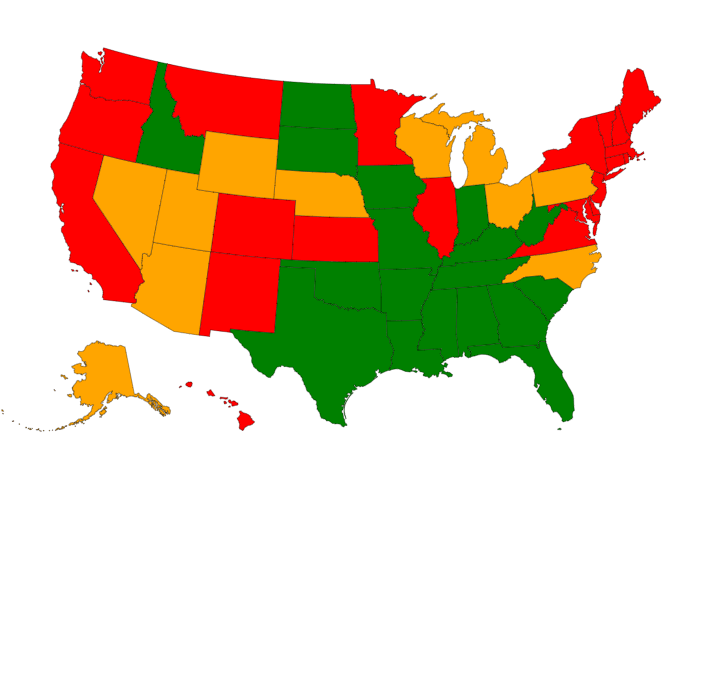
Take a look at the map below to see where abortion pills are legal, and where they aren’t:

Green is illegal, yellow is limited, and red is legal (go to Abortion pills: Where are they legal and illegal? to click on each state’s specific law)

As the author states:

“At the federal level, mifepristone is approved to abort an unborn child up to 10 weeks’ gestation, having been first approved for such use in 2000. 

The drug kills the child by blocking the hormone progesterone, which cuts off the child’s supply of oxygen and nutrients. A second pill, misoprostol, is taken between 24 to 48 hours after mifepristone to induce contractions and expel the child’s body.

Several states, most of which have some pro-life laws in place, have also passed restrictions on abortion pills designed to protect women, including requirements that only physicians may dispense them. These states include Alaska, Arizona, Florida, Georgia, Iowa, Michigan, Nebraska, Nevada, North Carolina, Ohio, Pennsylvania, South Carolina, and Utah. (Emphasis added)”

and

“A large number of states — most of them concentrated in a contiguous cluster in the South and Midwest — ban abortion in most cases but provide exceptions in cases where the life of the mother is at risk or in cases of rape, incest, or fetal anomaly. In these states, access to abortion pills is likely to be very limited or prohibited entirely. 

States with total bans on abortion pills include Alabama, Arkansas, Idaho, Indiana, Kentucky, Louisiana, Mississippi, Missouri, North Dakota, Oklahoma, South Dakota, Tennessee, and Texas. “

However, as Mr. McKeown. also writes,

” just because these states have bans on abortion pills in place does not mean the drugs are not accessible; women in those states can still receive them in the mail. Under then-President Donald Trump during the COVID-19 pandemic in 2020, the FDA was given the ability to distribute the drug via mail. The administration of President Joe Biden eventually solidified the practice as a norm in 2023. (Emphasis added)

A group of state attorneys general, led by Missouri, is currently suing the Food and Drug Administration (FDA) over its deregulation of the drug, arguing that abortion drugs have been “flooding states like Missouri and Idaho [where abortion is otherwise regulated] and sending women in these states to the emergency room.”

In addition, Texas Attorney General Ken Paxton recently filed a lawsuit against an abortionist in New York, alleging that she illegally provided abortion drugs to a woman in Texas, which killed the unborn child and caused serious health complications for the mother.”

Sadly, as Mr. McKeown writes:

President-elect Trump has committed to keeping abortion pills accessible during his second term — a major disappointment for pro-life advocates, who have urged Trump to use the FDA’s power to enforce a Comstock Act prohibition on the delivery of “obscene” and “vile” products through the mail, which includes the delivery of anything designed to produce an abortion.”

CONCLUSION

As I wrote in my June 16, 2024 blog “The Supreme Court Rejects Challenge by Pro-life Doctors on Abortion Pill“:

“As Life News reported on June 13, 2024:

“The Supreme Court on Thursday rejected a challenge to the abortion pill mifepristone, meaning the abortion drug will be widely available to continue killing babies and injuring doctors nationwide.

The 9-0 decision says the pro-life doctors who brought the case do not have standing – they were not injured, and so the court does not interveneThat’s even though they sued on behalf of women who were injured by the abortion drug by the thousands – including women who have been killed.” (Emphasis added)”

I have a personal interest in this because I had an unwed daughter who became pregnant and started bleeding without telling me because of embarrassment.

She went to a local ER, where the doctors said she was just having a miscarriage and sent her home.

When the pain and bleeding increased, she called me. I took her back to the ER to demand an ultrasound.

As I suspected as a nurse, her pregnancy was ectopic and emergency surgery was performed.

Afterward, the surgeon showed me the picture he had taken (unasked) during the surgery to remove the then-deceased first-trimester baby, my grandchild. The picture was personally so sad to see but I was comforted that the surgeon cared enough to take a picture of this tiny person and show respect.

We need more respect and help for women with an unexpected pregnancy and their babies than a pill without medical safeguards!”

Related

“Safer Than Tylenol” is Deliberate Medical Abortion Disinformation February 26, 2023

Planned Parenthood Sues Kansas to Challenge a New State Law Requiring Abortion Reversal Information to be Provided Before Abortion June 12, 2023

New York Times: A PUSH FOR MORE ORGAN TRANSPLANTS IS PUTTING DONORS AT RISK

A bombshell article in the July 20, 2025, New York Times titled “A Push forA Push for More Organ Transplants Is Putting Donors at Risk More Organ Transplants Is Putting Donors at Risk” states:

“People across the United States have endured rushed or premature attempts to remove their organs. Some were gasping, crying or showing other signs of life.” (Emphasis added).

and:

“Organ transplantation had another record year in 2024. That’s great news for all the recipient patients. But there is increasing scrutiny on the costs of the regulatory incentives pushing this success. An alarming number of donors were still alive as transplantation began. “ (Emphasis added)

The next day, the US HHS (Health and Human Services) published a report, “HHS Finds Systemic Disregard for Sanctity of Life in Organ Transplant System,” that reported:

“The U.S. Department of Health and Human Services (HHS) under the leadership of Secretary Robert F. Kennedy, Jr., today announced a major initiative to begin reforming the organ transplant system following an investigation by its Health Resources and Services Administration (HRSA) that revealed disturbing practices by a major organ procurement organization.

Our findings show that hospitals allowed the organ procurement process to begin when patients showed signs of life, and this is horrifying,” Secretary Kennedy said. “The organ procurement organizations that coordinate access to transplants will be held accountable. The entire system must be fixed to ensure that every potential donor’s life is treated with the sanctity it deserves.” (Emphasis added)

HRSA directed the Organ Procurement and Transplantation Network (OPTN) to reopen a disturbing case involving potentially preventable harm to a neurologically injured patient by the federally-funded organ procurement organization (OPO) serving Kentucky, southwest Ohio, and part of West Virginia. Under the Biden administration, the OPTN’s Membership and Professional Standards Committee closed the same case without action.

Under Secretary Kennedy’s leadership, HRSA demanded a thorough, independent review of the OPO’s conduct and the treatment of vulnerable patients under its care. HRSA’s independent investigation revealed clear negligence after the previous OPTN Board of Directors claimed to find no major concerns in their internal review.

HRSA examined 351 cases where organ donation was authorized, but ultimately not completed. It found:

  • 103 cases (29.3%) showed concerning features, including 73 patients with neurological signs incompatible with organ donation.
  • At least 28 patients may not have been deceased at the time organ procurement was initiated—raising serious ethical and legal questions.
  • Evidence pointed to poor neurologic assessments, lack of coordination with medical teams, questionable consent practices, and misclassification of causes of death, particularly in overdose cases. (All emphasis added)

Vulnerabilities were highest in smaller and rural hospitals, indicating systemic gaps in oversight and accountability. In response to these findings, HRSA has mandated strict corrective actions for the OPO and system-level changes to safeguard potential organ donors nationally. The OPO must conduct a full root cause analysis of its failure to follow internal protocols—including noncompliance with the five-minute observation rule after the patient’s death—and develop clear, enforceable policies to define donor eligibility criteria. Additionally, it must adopt a formal procedure allowing any staff member to halt a donation process if patient safety concerns arise.

Secretary Kennedy will decertify the OPO if it fails to comply with these corrective action requirements [PDF].

HRSA also took action to make sure that patients across the country will be safer when donating organs by directing the OPTN to improve safeguards and monitoring at the national level. Under HRSA’s directive, data about any safety-related stoppages of organ donation called for by families, hospitals, or OPO staff must be reported to regulators and the OPTN must update policies to strengthen organ procurement safety and provide accurate, complete information about the donation process to families and hospitals.

These findings from HHS confirm what the Trump administration has long warned: entrenched bureaucracies, outdated systems, and reckless disregard for human life have failed to protect our most vulnerable citizens. Under Secretary Kennedy’s leadership, HHS is restoring integrity and transparency to organ procurement and transplant policy by putting patients’ lives first. These reforms are essential to restoring trust, ensuring informed consent, and protecting the rights and dignity of prospective donors and their families.

HHS recognizes House Committee on Energy and Commerce Chairman Brett Guthrie’s (KY-02) bipartisan work to improve the organ transplant system and looks forward to working with him and other issue-area champions in Congress to deliver reforms.” (All emphasis added)”

CONCLUSION

As I wrote in my October 18, 2022, blog “PLEASE READ BEFORE YOU AGREE TO BE AN ORGAN DONOR”:

“But are ethical lines being crossed in the zeal to obtain organs to transplant?

While most people presume that organs can be removed and transplanted only after all efforts to save your life have been exhausted” and brain death has been determined, that presumption is no longer necessarily true. (Emphasis added)

Now, organ donation can occur with a person who is in a coma and considered close to death but who does not meet the criteria for brain death. In those cases, an organ donor card or relatives who have agreed to withdraw a ventilator (a machine that supports or maintains breathing) and have the person’s organs removed for transplant if or when the heartbeat stops. This was called DCD or donation after cardiac death until some doctors found that the stopped heart could be successfully restarted it in the patient receiving the transplant!

Now, that ethically questionable procedure is called donation after circulatory death (also DCD) since circulation stops when the heart stops.

If circulation does not stop within 60 minutes, the organs are deemed to be too damaged for transplant and the patient dies without donating organs.

IT GETS WORSE

A September 29, 2022, article in Medpage titled “No Brain Death? No Problem. New Organ Transplant Protocol Stirs Debate-Is it ethical to pull the plug in patients who aren’t brain dead, then restart their hearts?” reported on a new procedure to get more organs:

“With little attention or debate, transplant surgeons across the country are experimenting with a kind of partial resurrection: They’re allowing terminal patients to die, then restarting their hearts while clamping off blood flow to their brains. The procedure allows the surgeons to inspect and remove organs from warm bodies with heartbeats.” (Emphasis added)

The article also said that this new procedure is being criticized by doctors like Dr. Wes Ely and the American College of Physicians, who warned that the procedure raises “profound ethical questions regarding determination of death, respect for patients, and the ethical obligation to do what is best.”

and

“PRESUMED CONSENT AND LAW

Another problem is “presumed consent,” which is the assumption that everyone is willing to donate his/her organs unless there is evidence that they would not want to donate. Illinois narrowly avoided a “presumed consent” statute a few years ago in which people who didn’t want to donate had to file an opt-out document with the Secretary of State. (Emphasis added)

Some countries already have “presumed consent” laws, most recently in England, which states:

“it will be considered that you agree to become an organ donor when you die, if:

  • you are over 18;
  • you have not opted out;
  • you are not in an excluded group

Even more horrifying, there have also been proposals to link organ donation and assisted suicide as “a potential solution to the organ scarcity problem”Countries like Belgium and the Netherlands already allow this.

CONCLUSION

Organ donation can truly be “the gift of life”, and innovations such as adult stem cells. The donation of a kidney or part of a liver by a living person generally poses no ethical problems and holds much promise to increasingly meet the needs of people with failing organs. I have a grandson whose life was saved by a stem cell transplant, and another relative who has had 2 kidney transplants.

Personally, I have offered to be a living donor for friends, and my family knows that I am willing to donate tissues, such as bone, corneas, and skin, that can be used after natural death.

Everyone can make his or her own decision about organ donation, but we all must have the necessary information to make an informed decision. (Emphasis added)

SUPREME COURT RULES THAT STATES MAY DEFUND PLANNED PARENTHOOD

Supreme Court clears way for states to kick Planned Parenthood out of Medicaid – POLITICO

A stunning 6-3 Supreme Court decision on June 26, 2025 has now cleared the way for states to exclude Planned Parenthood from their Medicaid programs, concluding that federal law doesn’t allow health care providers or patients to sue if a state violates a provision of federal law guaranteeing the Medicaid patients can visit their preferred provider.

According to Politico:

“The decision rejected a challenge to South Carolina’s 2018 expulsion of Planned Parenthood from its Medicaid program. It will likely allow other conservative states to similarly expel reproductive and sexual health clinics — shrinking the already narrow network of providers available in the health insurance program for low-income Americans.”

and

“Defunding” Planned Parenthood is a goal of many conservatives, who object to its abortion services. Federal law has long banned federal money from being used for abortions. But Planned Parenthood clinics provide many other health care services that are typically eligible for payment under Medicaid.

Thursday’s ruling will make it easier for states to deprive Planned Parenthood — and other clinics that provide abortions — from receiving Medicaid payments for any of their non-abortion-related care.”

BACKGROUND

As I wrote in my December 14, 2018 blog, “Why is the US Supreme Court Ducking the Issue of States Defunding Planned Parenthood?”:

Most of Planned Parenthood’s federal funding is from Medicaid reimbursements for preventive care, and some is from Title X. At least 60% of Planned Parenthood patients rely on public health programs like Medicaid and Title X for preventive and primary care.” (Emphasis added)

According to a Lozier Institute Report, in its latest report 2016-2017, Planned Parenthood received “$543.7 million in funds from all levels of government in that fiscal year…primarily from the Medicaid program”. (All emphasis added)

CONCLUSION

Ironically, although the brief by Planned Parenthood of Gulf Coast  to the Supreme Court insisted that their clinics “..provide essential medical care to thousands of low-income Louisiana residents through Medicaid” and “offer a range of services, including annual physical exams, screenings for breast cancer and cervical cancer, contraception, pregnancy testing and counseling, and other preventative health services”, the reality is that there are many more places, such as federally qualified community health centers (which do not provide abortions) that provide more comprehensive health care services than those offered by Planned Parenthood.

On a personal note, several years ago my late daughter Marie secretly went to a Planned Parenthood clinic for a possible sexually transmitted disease. She finally admitted this to me when her symptoms grew worse. I immediately took her to my own gynecologist who had to perform surgery to remove part of her cervix to deal with the damage.

Planned Parenthood had missed the diagnosis.