The Choice Was “Comfort Care” or a Trial of Life

In a November 19, 2025, article by Kevin Reece titled “”Micro-preemie’ born at less than one pound thrives after state-of-the-art careMicro-preemie’ born at less than one pound thrives after state-of-the-art care”, he describes a mother’s dilemma when Annie Babcock gave birth to a daughter at just 24 weeks gestation:

“Annie Babock was in trouble. The baby she was carrying had been diagnosed with intrauterine growth restriction and Annie, her pregnancy at just 24 weeks gestation, was diagnosed with preeclampsia and placental abruption. 

Her doctors in Bedford delivered a sentence she will never forget.

“They said we can either deliver here and do comfort care and let the baby pass, or go to Texas Health in Fort Worth and do a trial of life.” (Emphasis added)

THE PARENTS CHOOSE THE TRIAL OF LIFE

“Nora Babcock was born March 10. She weighed 13.1 ounces and was just 10.5 inches long – roughly the size of a soda can. Rushed into the Neonatal Intensive Care Unit at Texas Health Harris Methodist Fort Worth, Nora would need prolonged respiratory assistance and a delicate procedure to repair a heart defect. It would be 10 days before Annie Babcock was able to hold her. 

“It was terrifying,” Annie Babcock said. 

“It was our first bonding experience, but it sure was scary,” she said of holding her tiny daughter while the infant was supported by multiple wires, monitors, and tubes.

EIGHT MONTHS LATER

“She came home July 10,” Babcock said. “So we’ve been in the NICU more days than we’ve been out of the NICU.”

Nora weighs 10 pounds now and is, according to her doctors, the picture of health.

“It was a huge shock when they said she was going to be born at 24 weeks,” Babcock said. “I had no idea a baby less than a pound could be born and also live. It was terrifying, but also like miraculous.”

“You look at her now, and it’s hard to even think about that,” Owen Babcock said of his daughter’s precarious start at life.

“When she was born so small I didn’t think she could live,” Annie Babcock said. “And the nurses are like, no, she’s going to thrive.”

A DOCTOR SPEAKS

“A case like Nora is still quite rare, mostly because of her size,” said Dr. Megan Schmidt, neonatologist at Pediatrix Neonatology of Texas and Texas Health Harris Methodist Fort Worth Hospital

Nora is considered a “micro-preemie” – a baby born before 26 weeks gestation or less than 2.2 pounds.

You’re really battling against nature,” Schmidt said. “And trying to get this body that is not ready to be in this world and be in the outside world, you’re trying to force it to stay in this outside world and to function. It takes highly highly specialized care to even be able to have a chance to have these babies survive.”

“These sorts of things and these innovations that have been developed over the last 10-plus years are things that are making big changes for our babies now,” Schmidt said. “We couldn’t have done these things as early as 30 years ago that we can do now. So there is hope.”

The Parents Speak

“Just the advancements that have been made over the last decade are incredible,” said Owen Babcock.

Owen and Annie Babcock will tell you they have taken a “ridiculous” amount of pictures. They were also allowed to keep Nora’s first blood pressure cuff – barely big enough to fit on an adult finger.

“I think of this little fighter who was ready to come into the world too soon, but she was ready to come fighting, and she never gave up,” Annie Babcock said while looking at the handprints and footprints the hospital gave them – the footprint barely the size of an adult thumb.

“I will tell her she’s the strongest person I’ve ever met in my whole life,” Annie Babcock said when asked what she will tell her daughter when she is older. “I really hope she’s a neonatologist someday. I’m trying to manifest it.”

There is a photo wall in the Babcock’s dining room that includes the phrase – “I still remember the days I prayed for the things I have now.” After their ordeal, they are truly thankful

“I can’t thank Dr. Schmidt enough for just believing in her and not like never giving up hope,” Annie Babcock said.

Hope that they want other parents of preemie babies to know is possible for them too.

“What they do as their work,” she added, “it’s amazing.”

CONCLUSION

This story is heartwarming but also disturbing.

The choice between “comfort care” and more aggressive care can mean life or death for any critically ill person of any age. Families deserve ALL pertinent information and options!
Please Read: I Was Almost Scammed by AI

I had heard of scams where family members were called by someone who claimed to have kidnapped a family member and demanded ransom money, but I had never heard of what happened to me.

Yesterday, I received a frantic phone call from my daughter, who said her car had hit the rear end of the vehicle in front of her when it stopped suddenly, leaving a dent in the car she hit. She was hysterical and said that two men exited the vehicle and told her not to call the police or take pictures. I asked where she was and that I would come, but one man took her phone away and told me not to call the police because they had illegal drugs in the car. They told me they would kill her if the police came.

I told them that I just wanted to pick up my daughter, and they said they would tell me directions to a nearby Walmart on the phone.

I frantically started driving, but the directions were wrong. I kept asking the man where to go, but he just called me horrible names and said that he and his friend were going to rape my daughter. She was screaming hysterically in the background.

I called 911 from my car, explained the situation, and gave the 911 operator the number that the men had used to contact me.

Then I called my daughter and found that she was safe and sound at home!

She told me that she had heard of these scams using AI (artificial intelligence) to replicate the voices of victims. This was news to me.

The St. Louis County Police Department is continuing to investigate this case.

I wanted to write this blog to warn others of this scam.

Share this:

New Dementia Directive Developed to Avoid Late-Stage Dementia

In the September 25, 2025, issue of the Journal of Law, Medicine and Ethics, there is a shocking article titled “New VSED Advance Directive: Improved Documentation to Avoid Late-Stage Dementia.” VSED means voluntary stopping of eating and drinking.

The authors state:

“People use advance directives to express preferences that direct their future care when they lack decision-making capacity. One form of advance directive, a “dementia directive,” records preferences about living in various stages of dementia. This is important because many Americans want to avoid living with advanced progressive dementia. Unfortunately, traditional advance directives cannot dependably achieve this goal. In contrast, some dementia directives can achieve this goal by directing cessation of manually assisted feeding and drinking. (Emphasis added)

We proceed in six stages. First, we review the prevalence of advanced dementia. Second, we identify the disadvantages of another option for accomplishing the goal of not living into advanced dementia, preemptive VSED. Third, we distinguish notable court cases where dementia directives were unsuccessful. Fourth, we review nine prominent dementia directives, noting how the Northwest Justice Project’s Advance Directive for VSED remedies those shortcomings. Fifth, we review this directive’s legal status. Sixth, we articulate its ethical justification.”

CONCLUSION

I have had a lot of experience caring for people with Alzheimer’s, both personally and professionally. I have written several blogs over the years, such as “Five Things my Mother (and Daughter) Taught Me about Caring for People with Dementia” (2016), Marketing Death and Alzheimer’s Disease (2019), and Alzheimer’s Association Ends Agreement with Compassion and Choices, Marketing Death and Alzheimer’s Disease (2023). In 1988, I wrote an op-ed published in the St. Louis Post-Dispatch titled “FEEDING IS NOT EXTRAORDINARY CARE– DECISION IN THE NANCY CRUZAN CASE ADDS TO THE LIST OF EXPENDABLE PEOPLE

I remember when my mother was first diagnosed with Alzheimer’s and thyroid cancer. She needed a tracheostomy (a tube in her windpipe), but was able to eat by mouth.

I was shocked when one doctor asked if we wanted her fed, and I responded angrily, “She gets up and eats ice cream out of the refrigerator! Do you want me to tackle her?!”

Of course, I knew what he meant, but he got the message.

Eventually, my mother died peacefully in her sleep at a nursing home after enjoying a meal and laughter with the whole family. It was the kind of death she told me she wanted.

Unfortunately, my younger brother developed Alzheimer’s and diabetes and was critically injured in a fall down the stairs last October. I was able to calm him and carefully feed him.

The doctor recommended a feeding tube to ensure he was getting adequate nutrition, especially for his diabetes.

However, a palliative care team was called in and disagreed with the doctor, telling my sister-in-law that my brother was not going to get better anyway.

I explained to the family that a small feeding tube was available and comfortable, but the family rejected that option.

It took several long days for him to die.

No wonder assisted suicide is being considered for Alzheimer’s patients!

Abortion pills: Where are they legal and illegal?

In a January 8, 2025, article by the Catholic News Agency titled Abortion pills: Where are they legal and illegal?, author Jonah McKeown writes:

“As states continue to legislate on abortion in the post-Roe v. Wade landscape, a major point of contention as a new presidential administration takes office is the two-drug medication abortion regimen, commonly referred to as the abortion pill.

Abortions done via medication, also called chemical abortions, currently account for about half of the abortions that are done in the United States every year. However, many states restrict the use of abortion pills, specifically the first drug in the two-drug regimen, mifepristone. (Emphasis added)”

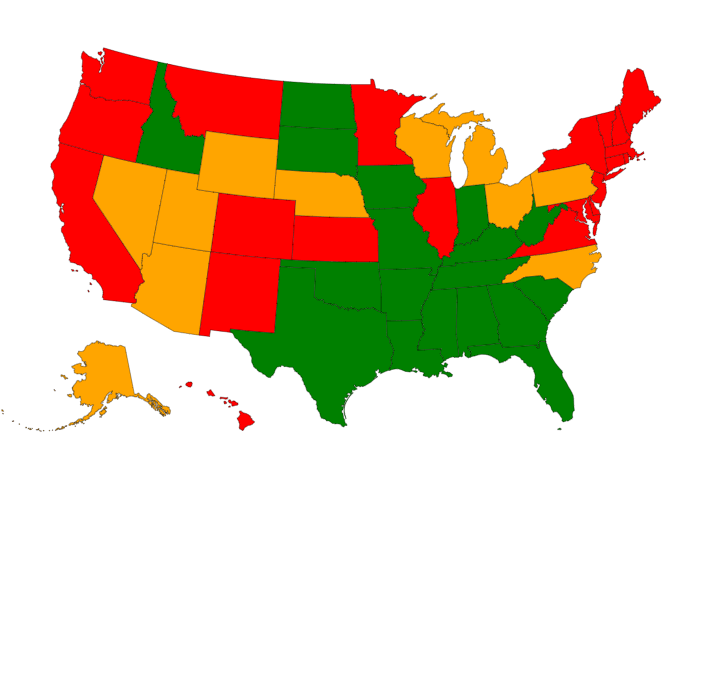
Take a look at the map below to see where abortion pills are legal, and where they aren’t:

Green is illegal, yellow is limited, and red is legal (go to Abortion pills: Where are they legal and illegal? to click on each state’s specific law)

As the author states:

“At the federal level, mifepristone is approved to abort an unborn child up to 10 weeks’ gestation, having been first approved for such use in 2000. 

The drug kills the child by blocking the hormone progesterone, which cuts off the child’s supply of oxygen and nutrients. A second pill, misoprostol, is taken between 24 to 48 hours after mifepristone to induce contractions and expel the child’s body.

Several states, most of which have some pro-life laws in place, have also passed restrictions on abortion pills designed to protect women, including requirements that only physicians may dispense them. These states include Alaska, Arizona, Florida, Georgia, Iowa, Michigan, Nebraska, Nevada, North Carolina, Ohio, Pennsylvania, South Carolina, and Utah. (Emphasis added)”

and

“A large number of states — most of them concentrated in a contiguous cluster in the South and Midwest — ban abortion in most cases but provide exceptions in cases where the life of the mother is at risk or in cases of rape, incest, or fetal anomaly. In these states, access to abortion pills is likely to be very limited or prohibited entirely. 

States with total bans on abortion pills include Alabama, Arkansas, Idaho, Indiana, Kentucky, Louisiana, Mississippi, Missouri, North Dakota, Oklahoma, South Dakota, Tennessee, and Texas. “

However, as Mr. McKeown. also writes,

” just because these states have bans on abortion pills in place does not mean the drugs are not accessible; women in those states can still receive them in the mail. Under then-President Donald Trump during the COVID-19 pandemic in 2020, the FDA was given the ability to distribute the drug via mail. The administration of President Joe Biden eventually solidified the practice as a norm in 2023. (Emphasis added)

A group of state attorneys general, led by Missouri, is currently suing the Food and Drug Administration (FDA) over its deregulation of the drug, arguing that abortion drugs have been “flooding states like Missouri and Idaho [where abortion is otherwise regulated] and sending women in these states to the emergency room.”

In addition, Texas Attorney General Ken Paxton recently filed a lawsuit against an abortionist in New York, alleging that she illegally provided abortion drugs to a woman in Texas, which killed the unborn child and caused serious health complications for the mother.”

Sadly, as Mr. McKeown writes:

President-elect Trump has committed to keeping abortion pills accessible during his second term — a major disappointment for pro-life advocates, who have urged Trump to use the FDA’s power to enforce a Comstock Act prohibition on the delivery of “obscene” and “vile” products through the mail, which includes the delivery of anything designed to produce an abortion.”

CONCLUSION

As I wrote in my June 16, 2024 blog “The Supreme Court Rejects Challenge by Pro-life Doctors on Abortion Pill“:

“As Life News reported on June 13, 2024:

“The Supreme Court on Thursday rejected a challenge to the abortion pill mifepristone, meaning the abortion drug will be widely available to continue killing babies and injuring doctors nationwide.

The 9-0 decision says the pro-life doctors who brought the case do not have standing – they were not injured, and so the court does not interveneThat’s even though they sued on behalf of women who were injured by the abortion drug by the thousands – including women who have been killed.” (Emphasis added)”

I have a personal interest in this because I had an unwed daughter who became pregnant and started bleeding without telling me because of embarrassment.

She went to a local ER, where the doctors said she was just having a miscarriage and sent her home.

When the pain and bleeding increased, she called me. I took her back to the ER to demand an ultrasound.

As I suspected as a nurse, her pregnancy was ectopic and emergency surgery was performed.

Afterward, the surgeon showed me the picture he had taken (unasked) during the surgery to remove the then-deceased first-trimester baby, my grandchild. The picture was personally so sad to see but I was comforted that the surgeon cared enough to take a picture of this tiny person and show respect.

We need more respect and help for women with an unexpected pregnancy and their babies than a pill without medical safeguards!”

Related

“Safer Than Tylenol” is Deliberate Medical Abortion Disinformation February 26, 2023

Planned Parenthood Sues Kansas to Challenge a New State Law Requiring Abortion Reversal Information to be Provided Before Abortion June 12, 2023

New York Times: A PUSH FOR MORE ORGAN TRANSPLANTS IS PUTTING DONORS AT RISK

A bombshell article in the July 20, 2025, New York Times titled “A Push forA Push for More Organ Transplants Is Putting Donors at Risk More Organ Transplants Is Putting Donors at Risk” states:

“People across the United States have endured rushed or premature attempts to remove their organs. Some were gasping, crying or showing other signs of life.” (Emphasis added).

and:

“Organ transplantation had another record year in 2024. That’s great news for all the recipient patients. But there is increasing scrutiny on the costs of the regulatory incentives pushing this success. An alarming number of donors were still alive as transplantation began. “ (Emphasis added)

The next day, the US HHS (Health and Human Services) published a report, “HHS Finds Systemic Disregard for Sanctity of Life in Organ Transplant System,” that reported:

“The U.S. Department of Health and Human Services (HHS) under the leadership of Secretary Robert F. Kennedy, Jr., today announced a major initiative to begin reforming the organ transplant system following an investigation by its Health Resources and Services Administration (HRSA) that revealed disturbing practices by a major organ procurement organization.

Our findings show that hospitals allowed the organ procurement process to begin when patients showed signs of life, and this is horrifying,” Secretary Kennedy said. “The organ procurement organizations that coordinate access to transplants will be held accountable. The entire system must be fixed to ensure that every potential donor’s life is treated with the sanctity it deserves.” (Emphasis added)

HRSA directed the Organ Procurement and Transplantation Network (OPTN) to reopen a disturbing case involving potentially preventable harm to a neurologically injured patient by the federally-funded organ procurement organization (OPO) serving Kentucky, southwest Ohio, and part of West Virginia. Under the Biden administration, the OPTN’s Membership and Professional Standards Committee closed the same case without action.

Under Secretary Kennedy’s leadership, HRSA demanded a thorough, independent review of the OPO’s conduct and the treatment of vulnerable patients under its care. HRSA’s independent investigation revealed clear negligence after the previous OPTN Board of Directors claimed to find no major concerns in their internal review.

HRSA examined 351 cases where organ donation was authorized, but ultimately not completed. It found:

  • 103 cases (29.3%) showed concerning features, including 73 patients with neurological signs incompatible with organ donation.
  • At least 28 patients may not have been deceased at the time organ procurement was initiated—raising serious ethical and legal questions.
  • Evidence pointed to poor neurologic assessments, lack of coordination with medical teams, questionable consent practices, and misclassification of causes of death, particularly in overdose cases. (All emphasis added)

Vulnerabilities were highest in smaller and rural hospitals, indicating systemic gaps in oversight and accountability. In response to these findings, HRSA has mandated strict corrective actions for the OPO and system-level changes to safeguard potential organ donors nationally. The OPO must conduct a full root cause analysis of its failure to follow internal protocols—including noncompliance with the five-minute observation rule after the patient’s death—and develop clear, enforceable policies to define donor eligibility criteria. Additionally, it must adopt a formal procedure allowing any staff member to halt a donation process if patient safety concerns arise.

Secretary Kennedy will decertify the OPO if it fails to comply with these corrective action requirements [PDF].

HRSA also took action to make sure that patients across the country will be safer when donating organs by directing the OPTN to improve safeguards and monitoring at the national level. Under HRSA’s directive, data about any safety-related stoppages of organ donation called for by families, hospitals, or OPO staff must be reported to regulators and the OPTN must update policies to strengthen organ procurement safety and provide accurate, complete information about the donation process to families and hospitals.

These findings from HHS confirm what the Trump administration has long warned: entrenched bureaucracies, outdated systems, and reckless disregard for human life have failed to protect our most vulnerable citizens. Under Secretary Kennedy’s leadership, HHS is restoring integrity and transparency to organ procurement and transplant policy by putting patients’ lives first. These reforms are essential to restoring trust, ensuring informed consent, and protecting the rights and dignity of prospective donors and their families.

HHS recognizes House Committee on Energy and Commerce Chairman Brett Guthrie’s (KY-02) bipartisan work to improve the organ transplant system and looks forward to working with him and other issue-area champions in Congress to deliver reforms.” (All emphasis added)”

CONCLUSION

As I wrote in my October 18, 2022, blog “PLEASE READ BEFORE YOU AGREE TO BE AN ORGAN DONOR”:

“But are ethical lines being crossed in the zeal to obtain organs to transplant?

While most people presume that organs can be removed and transplanted only after all efforts to save your life have been exhausted” and brain death has been determined, that presumption is no longer necessarily true. (Emphasis added)

Now, organ donation can occur with a person who is in a coma and considered close to death but who does not meet the criteria for brain death. In those cases, an organ donor card or relatives who have agreed to withdraw a ventilator (a machine that supports or maintains breathing) and have the person’s organs removed for transplant if or when the heartbeat stops. This was called DCD or donation after cardiac death until some doctors found that the stopped heart could be successfully restarted it in the patient receiving the transplant!

Now, that ethically questionable procedure is called donation after circulatory death (also DCD) since circulation stops when the heart stops.

If circulation does not stop within 60 minutes, the organs are deemed to be too damaged for transplant and the patient dies without donating organs.

IT GETS WORSE

A September 29, 2022, article in Medpage titled “No Brain Death? No Problem. New Organ Transplant Protocol Stirs Debate-Is it ethical to pull the plug in patients who aren’t brain dead, then restart their hearts?” reported on a new procedure to get more organs:

“With little attention or debate, transplant surgeons across the country are experimenting with a kind of partial resurrection: They’re allowing terminal patients to die, then restarting their hearts while clamping off blood flow to their brains. The procedure allows the surgeons to inspect and remove organs from warm bodies with heartbeats.” (Emphasis added)

The article also said that this new procedure is being criticized by doctors like Dr. Wes Ely and the American College of Physicians, who warned that the procedure raises “profound ethical questions regarding determination of death, respect for patients, and the ethical obligation to do what is best.”

and

“PRESUMED CONSENT AND LAW

Another problem is “presumed consent,” which is the assumption that everyone is willing to donate his/her organs unless there is evidence that they would not want to donate. Illinois narrowly avoided a “presumed consent” statute a few years ago in which people who didn’t want to donate had to file an opt-out document with the Secretary of State. (Emphasis added)

Some countries already have “presumed consent” laws, most recently in England, which states:

“it will be considered that you agree to become an organ donor when you die, if:

  • you are over 18;
  • you have not opted out;
  • you are not in an excluded group

Even more horrifying, there have also been proposals to link organ donation and assisted suicide as “a potential solution to the organ scarcity problem”Countries like Belgium and the Netherlands already allow this.

CONCLUSION

Organ donation can truly be “the gift of life”, and innovations such as adult stem cells. The donation of a kidney or part of a liver by a living person generally poses no ethical problems and holds much promise to increasingly meet the needs of people with failing organs. I have a grandson whose life was saved by a stem cell transplant, and another relative who has had 2 kidney transplants.

Personally, I have offered to be a living donor for friends, and my family knows that I am willing to donate tissues, such as bone, corneas, and skin, that can be used after natural death.

Everyone can make his or her own decision about organ donation, but we all must have the necessary information to make an informed decision. (Emphasis added)

SUPREME COURT RULES THAT STATES MAY DEFUND PLANNED PARENTHOOD

Supreme Court clears way for states to kick Planned Parenthood out of Medicaid – POLITICO

A stunning 6-3 Supreme Court decision on June 26, 2025 has now cleared the way for states to exclude Planned Parenthood from their Medicaid programs, concluding that federal law doesn’t allow health care providers or patients to sue if a state violates a provision of federal law guaranteeing the Medicaid patients can visit their preferred provider.

According to Politico:

“The decision rejected a challenge to South Carolina’s 2018 expulsion of Planned Parenthood from its Medicaid program. It will likely allow other conservative states to similarly expel reproductive and sexual health clinics — shrinking the already narrow network of providers available in the health insurance program for low-income Americans.”

and

“Defunding” Planned Parenthood is a goal of many conservatives, who object to its abortion services. Federal law has long banned federal money from being used for abortions. But Planned Parenthood clinics provide many other health care services that are typically eligible for payment under Medicaid.

Thursday’s ruling will make it easier for states to deprive Planned Parenthood — and other clinics that provide abortions — from receiving Medicaid payments for any of their non-abortion-related care.”

BACKGROUND

As I wrote in my December 14, 2018 blog, “Why is the US Supreme Court Ducking the Issue of States Defunding Planned Parenthood?”:

Most of Planned Parenthood’s federal funding is from Medicaid reimbursements for preventive care, and some is from Title X. At least 60% of Planned Parenthood patients rely on public health programs like Medicaid and Title X for preventive and primary care.” (Emphasis added)

According to a Lozier Institute Report, in its latest report 2016-2017, Planned Parenthood received “$543.7 million in funds from all levels of government in that fiscal year…primarily from the Medicaid program”. (All emphasis added)

CONCLUSION

Ironically, although the brief by Planned Parenthood of Gulf Coast  to the Supreme Court insisted that their clinics “..provide essential medical care to thousands of low-income Louisiana residents through Medicaid” and “offer a range of services, including annual physical exams, screenings for breast cancer and cervical cancer, contraception, pregnancy testing and counseling, and other preventative health services”, the reality is that there are many more places, such as federally qualified community health centers (which do not provide abortions) that provide more comprehensive health care services than those offered by Planned Parenthood.

On a personal note, several years ago my late daughter Marie secretly went to a Planned Parenthood clinic for a possible sexually transmitted disease. She finally admitted this to me when her symptoms grew worse. I immediately took her to my own gynecologist who had to perform surgery to remove part of her cervix to deal with the damage.

Planned Parenthood had missed the diagnosis.

MY “WORST” PATIENT

I was a newly divorced mother of three young children when I returned to nursing to support our little family.

I had been a happily stay-at-home mom for years until my husband had a mental breakdown, took all our money, and fled the state after one of our children died, but I was grateful to find a job on an oncology unit and some childcare.

I was a little nervous about being a working nurse again, but when I started my first day back, I was startled by loud shouting from a patient’s room, even through the door was closed.

I asked what was going on and the other nurses told me that the patient was abusive and shouting all the time, even though he didn’t seem in pain.

The other nurses said they had all agreed to change nurses every day because he was so nasty and they told me I was going to be assigned to him later.

I read the man’s chart and talked to the man’s doctor to ask him what was going on. I was shocked when the doctor said he thought the man was “evil”! I asked the doctor “Like Hannibal Lecter in the movie Silence of the Lambs?” He said yes and I felt a cold chill.

So I made a plan.

When my turn came up to care for the man, I asked to have him all week on the night shift. “No problem!”, the other nurses said.

The first night, the man didn’t sleep and kept shouting loudly. He ignored my questioning so I sat next to his bed and tried to understand what he was shouting.

I discovered that he was enraged and cursing God Himself. I listened quietly until he stopped.

After a while, I held his hand and every time he started to yell again, I replied “God still loves you” over and over until he eventually he fell asleep,

This went on night after night until one night he stopped and slept through the night.

The next day, he woke up and said he wanted to take a walk so I took him to the hallway just as the day shift came in.

The man smiled at them and said “Good morning, ladies!” Everyone was stunned but his whole attitude changed from then on.

Weeks later, I met a student nurse who asked how he was doing. She said she had made a big mistake with his portacath IV access and had to have it replaced surgically. She was devastated but when she apologized, he told her not to worry and that he was fine.

The student told me that she was the nicest patient she ever had!

I told her my story and said that sensitively caring for the most difficult patients can be the greatest reward of all!

Share this:

Reblog

Like

“Suicide Helpline” in Canada Suggested Euthanasia for a Person with Disabilities

In a stunning article on Ales Schadenberg’s May 31, 202 blog titled “Suicide helpline suggested euthanasia for my disabled friend”, Meghan Schrader, a disability justice advocate and scholar, warns that “it is best to nip the USA assisted suicide movement in the bud and not let that movement get its foot in the door” and tells the story of her Canadian friend “Amy”. (Emphasis added)

Ms. Schrader writes that Amy reached out to her for help after Canada legalized euthanasia for disabled people in 2021.

“Amy had endured child abuse, which left Amy with PTSD and physical injuries that caused severe chronic pain. As an indigent disabled person Amy was unable to access thorough medical treatment for these disabilities, so even though Amy wanted to live and was deeply offended by Canada’s decision to expand euthanasia to people with disabilities, Amy’s suffering was so great that Amy thought constantly of dying by “MAiD” (Medical Aid in Dying).”

“However, when Amy called a mental health and suicide crisis support hotline for poor people and asked the operator for help fighting against these thoughts, the operator said, “Well, MAiD is a legit and legal option. Maybe it’s something you should consider. The medical system seems to be failing you. And you are never going to get the opiate pain medication that you think you need.” (Emphasis added)”

“With help from about ten different people, including the Euthanasia Prevention Coalition, Amy was eventually able to take a train four hours away from home and show up in the emergency room of a hospital that opposes “MAiD” and specializes in chronic pain and mental illness. Amy finally received excellent care. Although Amy sometimes still has symptoms of chronic pain and PTSD and life is still often quite a struggle, Amy’s symptoms are manageable and Amy is not planning to die by “MAiD.” It was my honor to attend Amy’s Zoom birthday party recently.

But thanks to Compassion and Choice’s friends in Canada and the systemic ableism that is enabling their cause, the Canadian medical system would have killed Amy before providing adequate medical treatment or support.”

She ends by stating:

“I’ve read statements from proponents of recent assisted suicide bill’s saying that their supporters are “real people with grief and loss, not hypothetical scenarios.” Well, Amy and Rachel are not hypothetical scenarios, they are my friends. I’ve read statements describing myself and other disability rights movement opponents of assisted suicide as “abusive, bullying and cruel.” (Emphasis added)

But I can think of few things more abusive, bullying and cruel than for a suicide prevention hotline operator to tell a caller to go ahead and be killed. I don’t want to live in that world, and like others in the disability justice movement, I won’t be quiet while the proponents lay the scaffolding for that to happen.

I’m sorry if that makes me cruel.”

CONCLUSION

As I wrote in 2015:

“In 2009, I lost my 30 year old daughter Marie to assisted suicide after using an assisted suicide technique after a 16 year battle with addiction.

Marie’s suicide hit our family, her friends, and her therapists like an atom bomb. We had all tried for years to help her, with periods of success. Suicide was always our greatest fear, and we made sure she was armed with crisis helpline numbers and our cell phone numbers at all times. I trust in an all-merciful God Who loves my daughter as much as I do, and I don’t regret one minute of those 16 years of trying to save her.

Both personally and professionally, as a nurse, I’ve cared for many suicidal people whose lives were saved. It’s a myth that suicidal people are destined to commit suicide eventually, and studies have shown that only 10 percent (or less, according to some studies) complete a suicide.1 I’m still determined to save vulnerable people from suicide, regardless of their age, socioeconomic status, or condition. Giving up hope is not an option.

Not surprisingly, since suicide contagion is a recognized risk factor for suicide, one of Marie’s close friends became suicidal on the first anniversary of her suicide but was saved. Is it really just a coincidence that Oregon, which doesn’t include assisted suicide in its suicide statistics, now reports a suicide rate that’s 41 percent above the national average?4

But the “assisted suicide/ euthanasia” machine still rolls on in the US.

The Patients Rights Action organization keeps track of states with bills to legalize assisted suicide and those states that defeated assisted suicide. (see state status updated 5/29/2025)

Please check the status in your state and take the necessary action.

We cannot become like Canada!

How to Bury Your Baby After a Miscarriage Today

10 years ago, I wrote my blog “How to Bury Your Baby After a Miscarriage” after my miscarriage:

“In 1983, my daughter Karen, who had Down Syndrome, died at 5 1/2 months from a complication of pneumonia just before her open heart surgery. In 1984, we suffered a miscarriage at 10-12 weeks.

My 7-year-old son and 5-year-old daughter were devastated and asked what the name was. Since the doctors could not determine the sex of the baby, I had each of my children select a boy’s or girl’s name. Naming the baby Jeff Candy helped make my children feel better but then they questioned why Jeff Candy did not have a funeral like their sister Karen. Good question!

I brought this up to my mentor Fr. Joe Naumann (now archbishop of Kansas City) when he headed the St. Louis Archdiocesan Pro-Life Committee and the next thing I knew, I wound up on a committee. Now we have “The Order for the Naming and Commendation for an Infant Who Died Before Birth” (copyright 1989)
.
I am so proud of the results of my children’s long-ago question and I am so happy to see the long-term results in this article, which should be shared with everyone, especially if they are Catholic. Here is an excerpt:

How to Bury Your Baby After a Miscarriage

by JoAnna Wahlund • June 10, AD2015

“The loss of a child is a nightmare for every parent. In the first few hours and days of grief and shock, it’s hard to know what to do. It’s especially hard when the loss occurs in early pregnancy, since our culture isn’t accustomed to treating unborn babies as human beings — and this happens even in pro-life circles.

If you are reading this article because you recently lost a baby via miscarriage, there are three things I want you to know:

1. I am so sorry for the loss of your baby.

2. You have the right to bury your baby.

3. If you did not bury your baby, do not not feel ashamed or guilty. We can only do our best in the circumstances we’re in according to the knowledge that we have.”

A MISCARRIAGE AND FUNERAL TODAY

Recently, I was invited to an ultrasound of a close relative.

“Anne” (not her real name) was so excited about her third pregnancy, and since I was a nurse, she thought I might be able to discern the sex of the baby.

I held her hand as the ultrasound began, but tragically, there was no heartbeat.

A second ultrasound showed the same result, and we both cried as a D&C was scheduled to remove the baby.

I had told Anne about the Naming and Commendation Ceremony and she requested the baby’s remains. The hospital was very respectful and put the remains in a small white box.

We met with her pastor, who not only agreed to bury the baby in the church’s graveyard with a short ceremony, but also to have a stone placed!

What a blessing!

.

FEEDING IS NOT EXTRAORDINARY CARE– DECISION IN THE NANCY CRUZAN CASE ADDS TO THE LIST OF EXPENDABLE PEOPLE

Before the famous Terri Schiavo food and water case gained national attention 20 years ago, Dr. Harvath and I wrote this Op-Ed in the St. Louis Post-Dispatch (no longer online) about the Nancy Cruzan casw, an earlier case of withdrawing food and water from a “so-called “vegetative state”‘ My family was furious when it was pusblished and told me that I was being “mean” to the family.

Unfortunately, such removal has become common and even recently, has resulted in a brother’s death.

Not surprisingly, so-called “assisted suicide” is now allowed in many states and countries

Nancy Valko, RN

Here is our op-ed:
Friday, August 12, 1988
FEEDING IS NOT EXTRAORDINARY CARE– DECISION IN THE NANCY CRUZAN CASE ADDS TO THE LIST OF EXPENDABLE PEOPLE

By Susan Harvath and Nancy Guilfoy Valko                                                                    

Just a few years ago the Missouri Legislature passed a ”living will” law that specifically excluded food and water from the kinds of care that may be withdrawn from a patient. In 1984, the National Conference of Catholic Bishops stated that legislation should ”recognize the presumption that certain basic measures such as nursing care, hydration, nourishment and the like must be maintained out of respect for the human dignity of every patient.”

Therefore, it is hoped that the Missouri Court of Appeals will overturn the recent Circuit Court decision that would deny tube feedings for Nancy Cruzan, a severely disabled woman cared for at the Missouri Rehabilitation Center. The anguish felt by the Cruzan family, which initiated the suit, is understandable. However, directly causing the death of an innocent person – even for reasons of mercy – violates that person’s basic human rights.

The Cruzan case is perceived by many to be an issue of allowing a person to die. Cruzan has been categorized by some experts as being in a ”persistent vegetative state,” an unfortunate and imprecise term at best. However, she is not dying or brain-dead. Rather, she is severely disabled from brain damage and needs no special technology to survive. Withdrawing her feeding tube would not ”allow” her to die – it would ”force” her to die. She would not die from her injuries, but rather from starvation and dehydration.

Also, starvation and dehydration cause a protracted, agonizing death in a fully conscious person. Some experts have stated that Cruzan would feel no pain if her feedings were stopped. Yet Cruzan’s nurses have testified that she has cried, smiled and even laughed in response to stimuli.

The possibility of pain during the length of time before death occurs has led some to propose lethal injections as a more ”humane” way to cause death than starvation. The passive euthanasia of withdrawing feeding logically leads to active euthanasia by injection or other means. Both are unacceptable.

A recent trend has been to classify tube feedings as medical treatment. However, unlike other medical treatments, denial of food from any person (sick or healthy, in or out of coma) will always result in that person’s death.

Ethically, treatments may be withdrawn if they are useless or burdensome to the patient. However, tube feedings are not excessively expensive or burdensome to the patient and do maintain life and prevent the discomfort of hunger and thirst. In deciding what treatment may ethically be withdrawn one must be careful to judge the treatment itself, not the ”quality” of the patient’s life. A person’s limitations do not decrease a person’s humanity or worth.

In the past few years, we have seen many court cases similar to Cruzan’s in other states. Some have involved people less severely disabled than Cruzan. A recent case in North Dakota resulted in a judgment that even feedings by mouth may be stopped. In most cases, it is not the patient who requests that feedings be stopped but rather a third party, usually a family member. Often, as in the Nancy Cruzan case, there is no clear and convincing evidence that the patient would even want the feedings stopped.

Some courts have gone even further and have stated that third parties do not need the approval of a court before a patient’s food and water is withdrawn unless there is disagreement, for example, among family members. This trend has unfortunate implications for all people with mental impairments.

There is a vast difference between not prolonging dying and causing death. In the last two decades, we have seen killing promoted as a humane and compassionate response to unwanted unborn children, newborns with handicaps, and the terminally ill. Let us not add a new category of people (the non-dying, severely disabled) to the list of expendable human lives.

Nancy Guilfoy Valko, R.N., is co-chairperson, and Sue Harvath is program director of the St. Louis Archdiocesan Pro-Life Committee.